
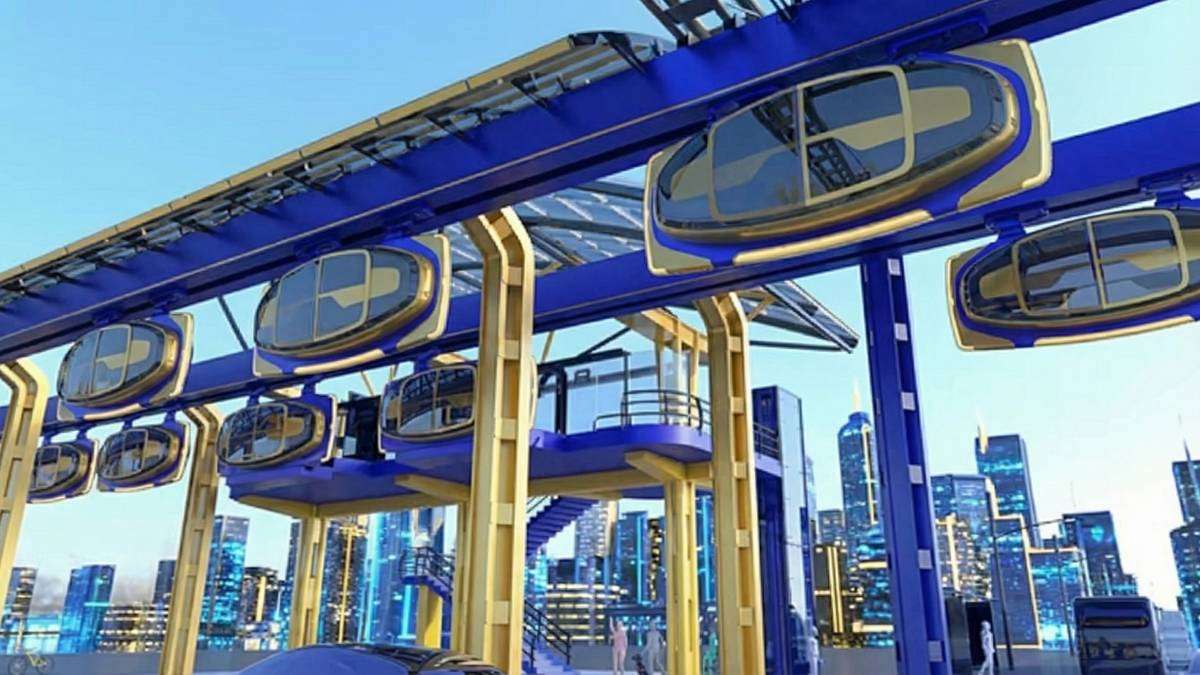

For decades, I’ve been analyzing the intersection of technology and lifestyle, often while building out my own desktop rigs or testing the latest electric vehicle in the high desert of Bend. We’ve seen countless "disruptors," but few projects aim to fundamentally rewrite the human relationship with geography. Solar Skyways isn't just a transit proposal; it’s an attempt to delete the logistical friction of modern life.
In a world where we are moving toward autonomous everything, the question isn’t just how we drive, but why we are still tethered to the ground at all.
The Ghost of Tomorrowland: Learning from Disney’s Dead Ends
To understand why Solar Skyways might actually work, we have to look at why its ancestors failed. If you’ve ever been to a Disney park, you’ve likely seen or ridden the PeopleMover. It was originally envisioned as more than a ride; it was a prototype for the city of the future.
However, Disney’s effort and subsequent Personal Rapid Transit (PRT) projects in the 70s and 80s hit three major walls:
- Capacity vs. Cost: The infrastructure was too expensive for the number of passengers it moved.
- The "Last Mile" Problem: It stopped at a station, not your front door.
- Energy Demands: They were tied to the grid, making them susceptible to the same brownouts as the rest of the city.
Solar Skyways addresses these by decoupling the pod from a massive, singular engine. Think of it like the transition from a mainframe computer to the distributed power of a PC. By using lightweight, solar-integrated guideways, the cost per mile drops significantly compared to digging subways or maintaining eight-lane highways.
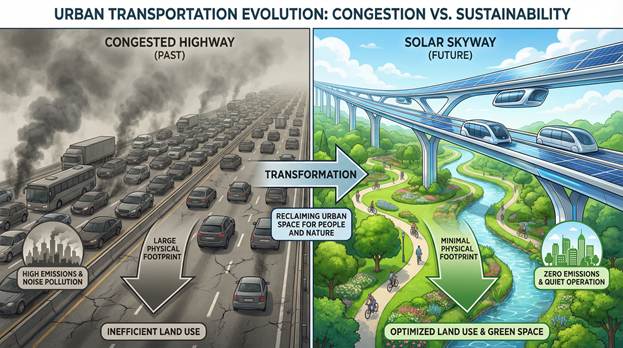
The Environmental Dividend: Beyond the EV
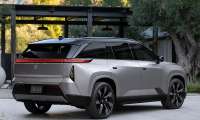
I love my Audi e-tron GT, but I’m the first to admit that EVs are a half-measure. They solve the tailpipe emission problem but do nothing for tire microplastics, road maintenance costs, or the sheer inefficiency of moving a 5,000-pound machine to transport a 180-pound person.
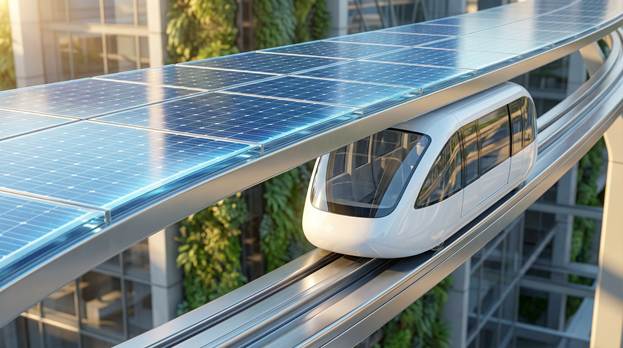
Solar Skyways utilizes active solar collection along the entire length of its tracks. This isn't just "green" transit; it’s a power plant that happens to move people.
- Net-Positive Energy: On sunny days, the system can feed excess power back into the local grid.
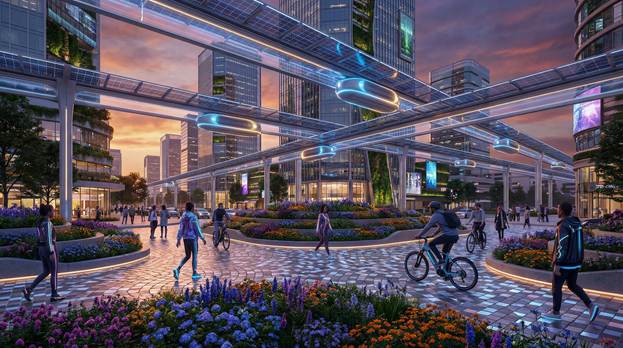
- Reclaiming the Earth: Imagine a city where 30% of the land isn't asphalt. We could turn parking lots into parks and street lanes into bike paths.
The Autonomous Threat: Cars vs. Pods
The biggest hurdle for Solar Skyways isn't tech; it’s the Autonomous Vehicle (AV). We are currently in a race. If Waymo and Tesla's FSD (Full Self-Driving) reach "Level 5" ubiquity first, the incentive to build a physical skyway diminishes.
However, AVs have a "phantom traffic" problem. If everyone has an autonomous car, empty cars will circle the block to avoid parking, actually increasing congestion. Solar Skyways wins on physics. A pod on a dedicated rail will always be faster and more predictable than a car—even a smart one—navigating a crowded intersection.
As for autonomous flying cars (eVTOL), they are the "dragons" of the tech world—majestic and exciting, but incredibly energy-intensive. Lifting a human vertically requires immense power. Solar Skyways is the pragmatic choice: the efficiency of a train with the privacy of a personal car.
The Adoption Cliff: Will We Let Go of the Wheel?
The biggest similarity between Solar Skyways and the failed efforts of the past is the psychological barrier. Humans love the illusion of control that a steering wheel provides.
Broad adoption will likely happen in "Smart Cities" or master-planned communities first. Once the "pain" of car ownership—insurance, charging, maintenance, and traffic—becomes higher than the convenience of the Skyway, the shift will be permanent. It’s like the move from physical media to streaming; we didn't think we'd give up our discs until the convenience of the cloud made them look like clutter.
Wrapping Up
Solar Skyways is the first transit effort that feels like it belongs in this century. By learning from the PeopleMover's limitations and leveraging the solar tech that makes modern EVs viable, it offers a path to a "post-car" world. While autonomous cars and flying taxis will fight for the same space, the sheer energy efficiency and spatial logic of the Skyway make it the frontrunner for anyone actually looking to solve urban gridlock rather than just digitize it.
Disclosure: Images rendered by Artlist.io
Rob Enderle is a technology analyst at Torque News who covers automotive technology and battery developments. You can learn more about Rob on Wikipedia and follow his articles on Forbes, X, and LinkedIn.
Set Torque News as Preferred Source on Google
Follow us today...






Comments
Sounds fun. So, who's…
Permalink
Sounds fun. So, who's working on the screenplay? Will Scorsese direct?