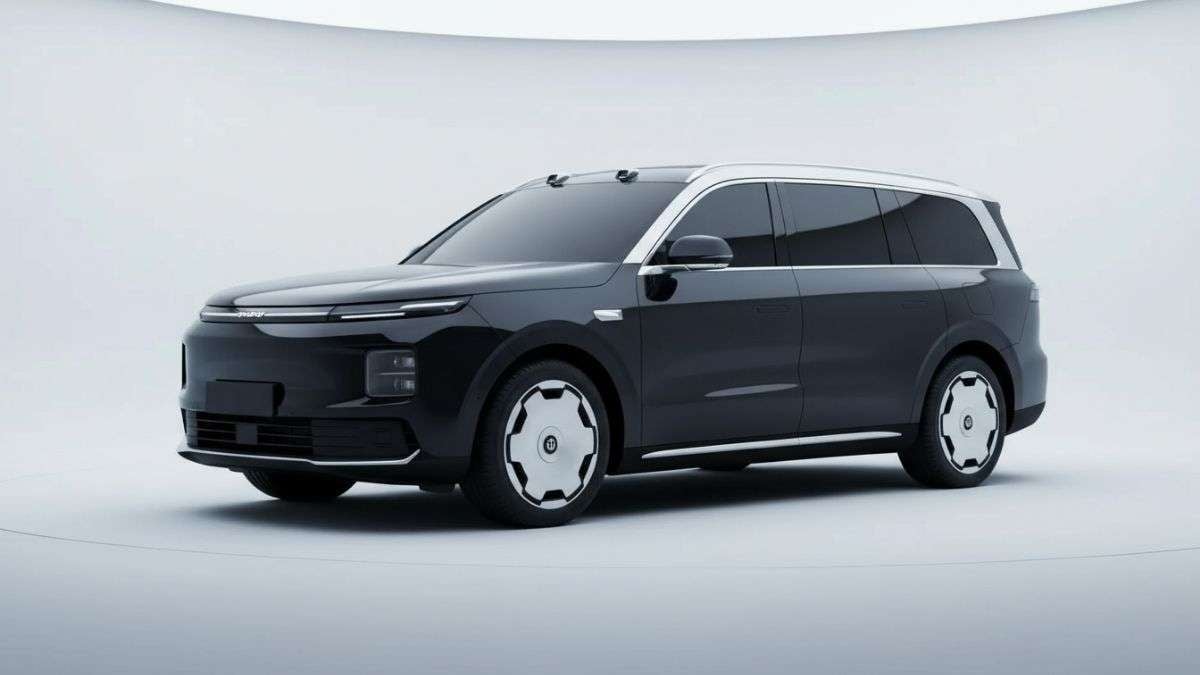

For the past year, the EV industry has been defined by a brutal, margin-crushing price war. So what’s the logical next step? For Chinese EV-maker Leapmotor, it’s to aim directly at the high-profit, high-stakes, three-row SUV market. The company's October 16 debut of its flagship SUV, the D19, is a bold and calculated gamble. This isn't just another EV startup chasing a trend; this is one of the first major strategic moves from a company that is now, for all intents and purposes, the global EV partner for auto giant Stellantis.
The D19 is more than a new vehicle; it’s a test case. It's a test of Leapmotor's advanced technology at scale, and it's a test of whether the Stellantis-Leapmotor alliance can build a truly competitive global contender. With production slated for 2026, the D19 is rolling out onto a battlefield full of established giants.
Leapmotor’s Newfound Strength
Just twelve months ago, Leapmotor was, like many Chinese EV startups, in a precarious position. It had innovative technology but was bleeding cash in a hyper-competitive domestic market. Then, in a move that shocked the industry, Stellantis invested over $1.6 billion for a 20% stake, forming a new joint venture to build and sell Leapmotor cars outside of China.
This deal transformed Leapmotor overnight from a domestic hopeful into a global strategic asset. Its economic health is now intrinsically linked to Stellantis, giving it the capital, global distribution network, and manufacturing footprint it desperately needed. The D19 is the first vehicle to be developed with this global ambition in mind from day one.
A High-Tech Contender for the Whole Family
The D19 is a direct broadside against the reigning champions of the three-row electric segment: the Kia EV9 and the Rivian R1S. So how does it compete? Leapmotor isn't trying to out-muscle Rivian or out-design Kia. It’s planning to win on technology and value.
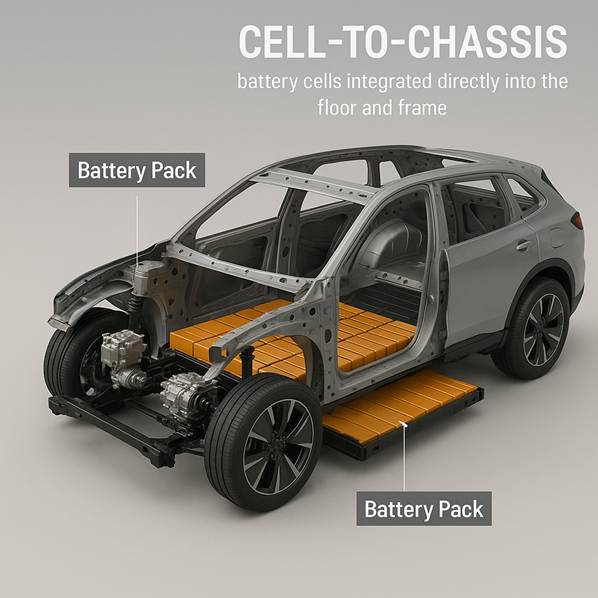
The D19 is built on Leapmotor’s cutting-edge "Cell-to-Chassis" (CTC) architecture. This design integrates the battery cells directly into the vehicle's frame, which Leapmotor claims increases chassis rigidity, improves space, and reduces weight. For a large SUV, this is a massive advantage. It means more interior room for the second and third rows and a lower center of gravity, which should improve the "boat-like" handling that plagues many large EVs.
This EV is aimed squarely at the tech-savvy, upper-middle-class family. This is the buyer who has researched the Kia EV9, loves the idea of a three-row electric, but is highly cost-conscious. The D19 will likely offer comparable (or better) range, a more advanced infotainment system, and a suite of autonomous driving features, all at a price designed to aggressively undercut the Korean and American competition.
The Great EV Paradox: The Thirst for Big SUVs
This launch raises a critical question: does a massive, three-row electric SUV even make sense? The entire premise of the EV movement is built on efficiency. A large, heavy, aerodynamically-challenged brick like a three-row SUV is the opposite of efficient. It requires an enormous, resource-intensive battery pack just to achieve a respectable range.
While this is an uncomfortable truth for environmental purists, it's a simple reality for the business. The answer is a resounding yes, a large EV SUV makes sense because it's what people buy. Profit margins in the auto industry live and die by SUVs and trucks. Forcing consumers to choose between a small, efficient EV and the seven-seat gas-guzzler their family needs is a losing battle. The D19 isn't competing against a Tesla Model 3; it's competing against a gasoline-powered Toyota Grand Highlander or a Ford Explorer. In that context, a 2.5-ton electric SUV is a massive environmental win.
A Brutal Market for a Newcomer
The D19 is entering the market at perhaps the most difficult time in EV history. We are in the midst of a brutal global EV price war. High interest rates have made $70,000+ vehicles a tough sell, and consumers are becoming more skeptical of new, unproven brands.
The D19's 2026 production timeline is both a risk and an opportunity. By then, the EV market will be even more saturated, and the D19 will have to fight for every single sale. However, battery prices will have continued to fall, potentially allowing Leapmotor to launch with a highly disruptive price tag. Its success in China is probable, but its international success via Stellantis will depend on navigating complex tariff structures and, most importantly, building a brand from scratch.
Wrapping Up
The Leapmotor D19 is far more than just another three-row electric SUV. It's a high-stakes gamble on the most profitable segment in the auto industry. It’s also the first major test of the Stellantis-Leapmotor alliance. By leveraging Leapmotor’s advanced "Cell-to-Chassis" technology, the D19 aims to be a value and tech leader, luring families away from established names like Kia and Rivian. Its success will depend on aggressive pricing, flawless execution, and whether this new global partnership can effectively navigate the most brutal EV market in history.
Disclosure: Images rendered by ChatGPT 5.0
Rob Enderle is a technology analyst at Torque News who covers automotive technology and battery developments. You can learn more about Rob on Wikipedia and follow his articles on Forbes, X, and LinkedIn.
Set Torque News as Preferred Source on Google
Follow us today...