
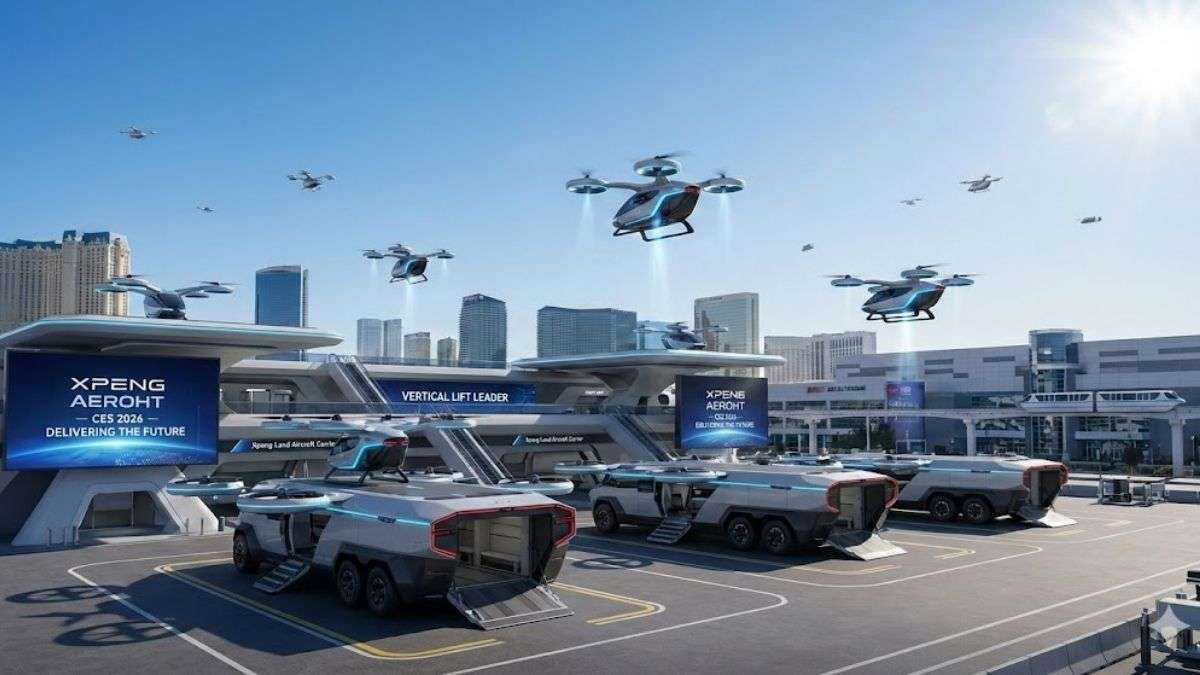

CES 2026 has been a whirlwind of high-definition displays and AI-integrated everything, but in the North Hall, the air was different. Amidst the usual flurry of autonomous shuttles and solid-state battery prototypes, Xpeng AeroHT didn't just participate; they dominated. By confirming that its modular "Land Aircraft Carrier" will begin customer deliveries in late 2026, Xpeng has moved the conversation from "if" we will fly to "where" we will fly first.
As a technology analyst who has tracked the slow, often painful progress of the flying car industry, I can say with confidence: Xpeng’s 2026 delivery roadmap is a wake-up call for every Western automaker and aerospace firm. This isn't just another concept; it is a manufacturing reality backed by a dedicated factory designed to pump out 10,000 units a year.
The Game Changer: Solving the Flying Car’s Greatest Flaw
The primary reason personal flying vehicles have failed to launch in the past is the "everything-is-a-compromise" design. If you build a car that flies, it’s usually a terrible car and a mediocre airplane. By splitting the vehicle into two distinct parts—a 6x6 ground "mothership" and a detachable two-seater eVTOL (electric Vertical Take-Off and Landing) drone—Xpeng has solved the two biggest hurdles: range anxiety and storage.
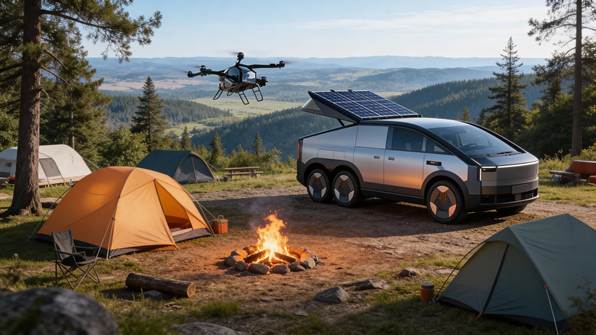
The Land Aircraft Carrier functions as a mobile hangar and high-speed charging station. The 6x6 ground module, which looks like a cyber-mech cruiser, handles the long-range transit with its hybrid-electric powertrain. Once you reach your destination—be it a mountain pass or a coastal overlook—the rear hatch opens, and the two-seater air module slides out on rails, ready for vertical liftoff.
This modularity means the aircraft doesn't have to carry the weight of wheels, suspension, or heavy road batteries into the sky. Conversely, the ground vehicle doesn't have to worry about aerodynamic lift while cruising at highway speeds. It is the first pragmatic approach to personal flight that doesn't feel like a science experiment.
The Low-Altitude Economy: Why China is Winning
While the US and Europe grapple with cautious regulatory frameworks, China has moved with breathtaking speed to claim the "low-altitude economy." The Chinese government’s 15th Five-Year Plan (2026-2030) has officially designated this sector as a strategic emerging industrial cluster. We are seeing a massive push for infrastructure, with cities like Shenzhen already building over 1,200 takeoff and landing points to support this new era of transport.
China’s aggression isn't just in policy; it’s in the sheer volume of flight testing. While Western firms like Joby or Archer focus on the air-taxi market—which requires complex infrastructure and high-density urban approvals—Xpeng is targeting the individual consumer and the recreational market. By selling a product you can actually own and park in a standard garage, they are creating a consumer movement that will be much harder for regulators to ignore.
Redefining the Future of Personal Travel
The future of vehicles like the Land Aircraft Carrier isn't about flying from your suburban driveway to the office—at least, not yet. The initial future is "Adventure 2.0." Imagine driving your 6x6 to a remote area of the Grand Canyon or the Scottish Highlands, then spending the afternoon exploring the peaks from the air in a whisper-quiet, dual-ducted rotor aircraft.
As battery density improves—a topic I frequently cover in my Torque News battery development columns—these modules will eventually offer longer flight times and more payload capacity. But the current two-part system is the necessary bridge. It provides a safety net; if the air module runs low on juice, the mothership is right there to recover and recharge it. This redundancy is what will ultimately build the consumer trust required for mass adoption.
Why Xpeng Stole the Show at CES 2026
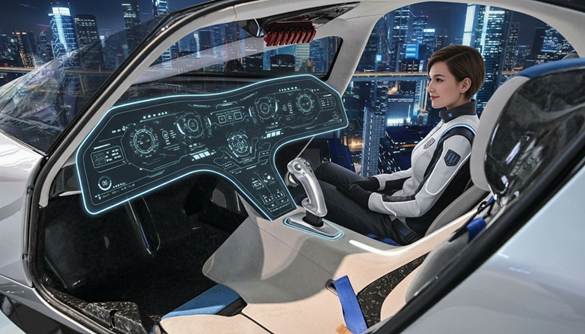
It is incredibly difficult to rise above the noise at CES. Every year, we see "flying cars" that are little more than stationary fiberglass shells. Xpeng stood out because they brought the data. With thousands of pre-orders already on the books and a price point of roughly $280,000, they are offering something that is actually attainable for the high-end enthusiast.
In a show dominated by software-defined vehicles, Xpeng reminded everyone that hardware still matters. Seeing a 6x6 truck that can literally launch a helicopter from its trunk is the kind of "wow" factor that goes viral because it feels like the future we were promised in the 1960s. While others showed us how we might sit in traffic with better AI, Xpeng showed us how to leave the traffic behind entirely.
Wrapping Up
Xpeng AeroHT’s "Land Aircraft Carrier" is the most significant strategic announcement of CES 2026. By solving the range and storage issues through a brilliant modular design, and by leveraging China’s aggressive low-altitude infrastructure push, Xpeng has effectively moved the "flying car" from science fiction to a 2026 delivery schedule. While the West continues to debate the legalities of the "Jetsons Act," China is building the factories to put the Jetsons in the sky. If the US doesn't accelerate its own Advanced Air Mobility roadmap, we may find ourselves looking up at a future we could have led.
Disclosure: Images rendered by Nano Banana Pro
Rob Enderle is a technology analyst at Torque News who covers automotive technology and battery developments. You can learn more about Rob on Wikipedia and follow his articles on Forbes, X, and LinkedIn.
Set Torque News as Preferred Source on Google
Follow us today...





Comments
Too complicated a concept: a…
Permalink
Too complicated a concept: a big container-like vehicle out of which a small two-seat eVTOL pops up. 'Easier' is to have an airframe that features airfoils like many other eVTOLs, and make the cabin detachable. Put it on wheels, with just a small battery, and it could drive around town autonomously. Airbus already came halfway such a modular flying car.