
The flying car future just got a definitive arrival time. While American startups and legacy automakers have teased electric vertical takeoff and landing (eVTOL) concepts for years, China’s XPeng AeroHT has moved beyond renders to reality. The company has officially confirmed that mass production for its modular “Land Aircraft Carrier” is locked in for 2026, with a purpose-built factory already churning out trial units in Guangzhou.
For the US automotive and aviation sectors, this isn't just another press release; it is a tangible signal that China is rapidly cornering the market on the "low-altitude economy."
The "Transformer" in the Driveway: A Radical Design
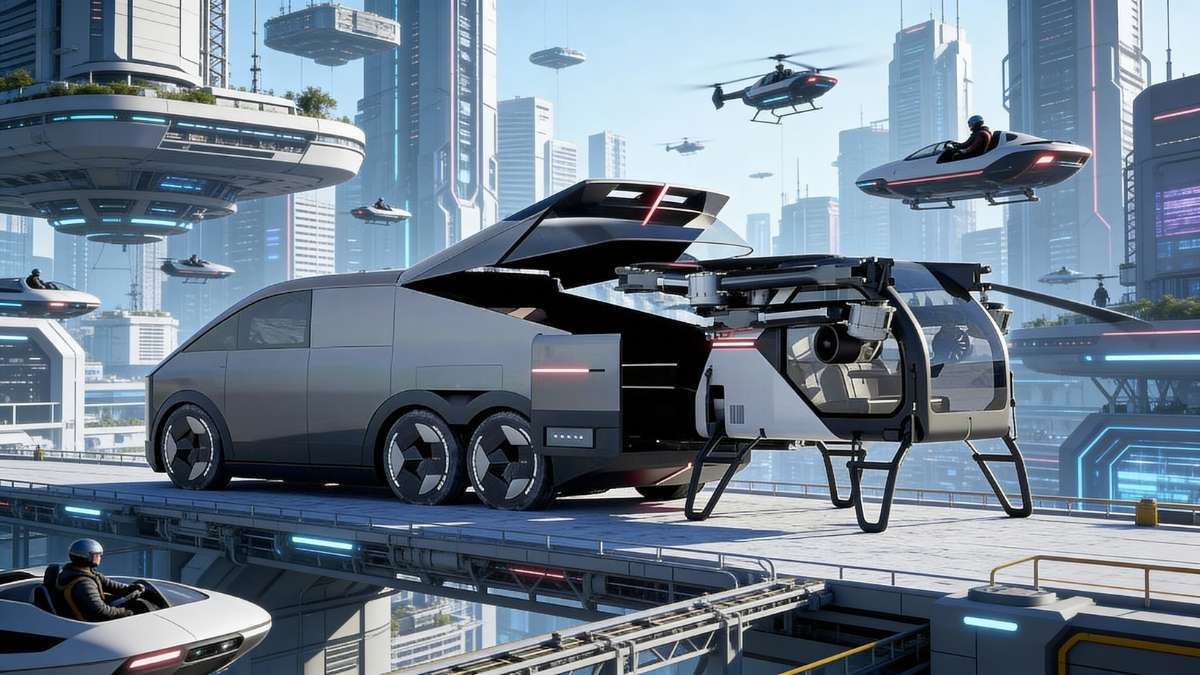
XPeng has sidestepped the biggest engineering hurdle of flying cars—trying to make one vehicle do two things poorly—by creating two specialized vehicles that work in harmony. The "Land Aircraft Carrier" is a modular two-part system.
The ground module is a massive, three-axle, six-wheeled "mothership" roughly the size of a heavy-duty pickup. It utilizes an 800V extended-range electric (EREV) powertrain, meaning it has an onboard combustion generator solely to charge the massive battery pack, giving it a combined range of over 1,000 km (620 miles). Inside the rear of this mothership sits the air module—a fully electric, two-seater piloting drone. With the touch of a button, the carrier’s rear opens, and the aircraft automatically deploys. Crucially, the ground vehicle acts as a mobile supercharger, capable of recharging the aircraft from 30% to 80% in just 18 minutes while driving to the next location.
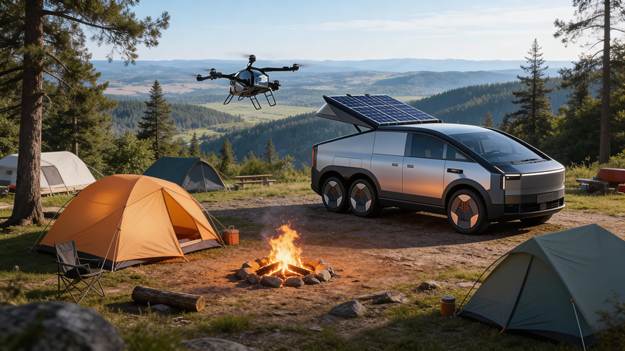
The Ultimate Recreational Combo?
This modular approach mirrors a recreational philosophy familiar to many Americans: the "toy hauler." For decades, enthusiasts have bought heavy-duty pickups specifically to tow jet skis, ATVs, or track cars. XPeng has simply integrated this concept into a single, seamless factory package.
Instead of a Ford F-250 towing a trailer with a Polaris RZR, you get a cyber-styled 6x6 that contains your aircraft. This integration solves the logistical nightmare of personal flight: storage and transport. You don't need a hangar; you just park it in a standard (albeit large) parking spot. This "blended" vehicle type taps into the same adventurous spirit that drives the overlanding and recreational vehicle markets, but elevates it vertically.
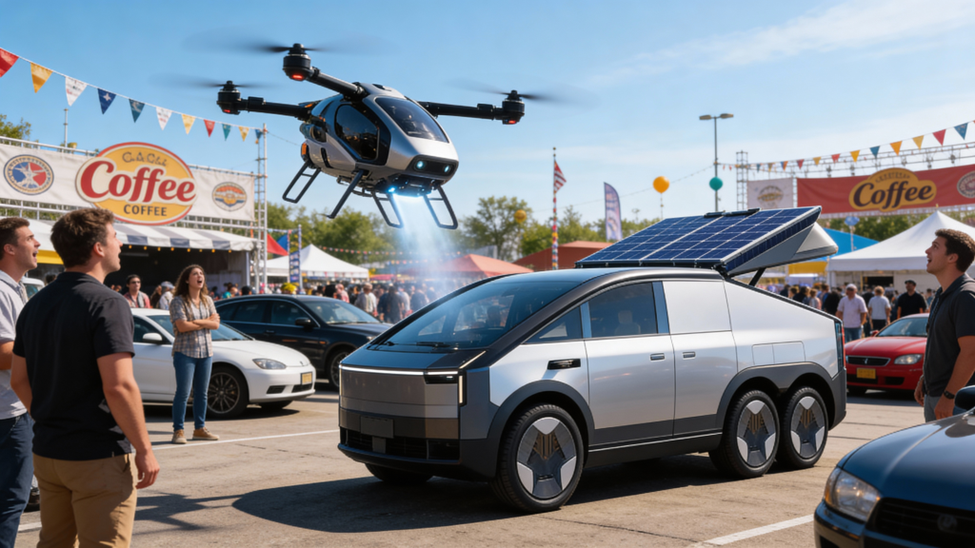
The Cars and Coffee Showstopper
Imagine the scene at a local Cars and Coffee event in 2027. Rows of Ferraris, classic muscle cars, and Cybertrucks are lined up. Then, the Land Aircraft Carrier rolls in. It’s 5.5 meters long, imposing, and silent.
But the real crowd-gathering moment happens when the driver initiates deployment. The rear bay opens, the robotic arms release the aircraft, and the rotors unfold. While it likely wouldn't be legal to take off in a crowded parking lot, the mere mechanical theatre of the deployment would instantly eclipse every hypercar in the vicinity. It bridges the gap between automotive culture and aviation geekery in a way no vehicle has done before.
Pricing and Availability: A Premium Toy with a Purpose
XPeng has signaled a price point of approximately 2 million RMB, or roughly $280,000 USD. While this places it firmly in the "supercar" price bracket, it is arguably a bargain compared to the cost of buying a high-end luxury SUV and a light aircraft separately—not to mention the hangar fees it eliminates.
The company has reportedly already secured over 2,000 orders following its first public flight, with some reports citing up to 7,000 pre-orders from diverse customers. Initial deliveries are strictly targeted for China, where the government is aggressively deregulating low-altitude airspace to foster this new industry.
Global Implications: Pressure on the West
The "pressure" on US competitors is less about direct sales overlap—XPeng isn't selling these in California yet—and more about technological leadership.
- Manufacturing Scale: XPeng isn't building these by hand. They have completed a dedicated factory designed to produce 10,000 units annually. This industrialization of flight hardware is something Western eVTOL companies (like Joby or Archer) are still striving toward.
- Regulatory Speed: China’s willingness to create "fly zones" and pilot licenses for these vehicles gives XPeng a sandbox to iterate its technology much faster than competitors dealing with the FAA's cautious approach.
If the "Land Aircraft Carrier" proves reliable, it establishes a dominant design paradigm that US companies may be forced to copy or concede.
Wrapping Up
XPeng’s timeline is aggressive, but the physical factory and flying prototypes suggest they are serious. By 2026, the world will likely see the first mass-produced, road-legal vehicle capable of deploying a human-carrying aircraft. For the wealthy adventurer, it’s the ultimate accessory. For the global auto industry, it’s a warning shot: the race for the skies is moving from "if" to "when," and right now, the East is in the pilot's seat.
Disclosure: Images rendered by Artlist.io
Rob Enderle is a technology analyst at Torque News who covers automotive technology and battery developments. You can learn more about Rob on Wikipedia and follow his articles on Forbes, X, and LinkedIn.
Set Torque News as Preferred Source on Google
Follow us today...