
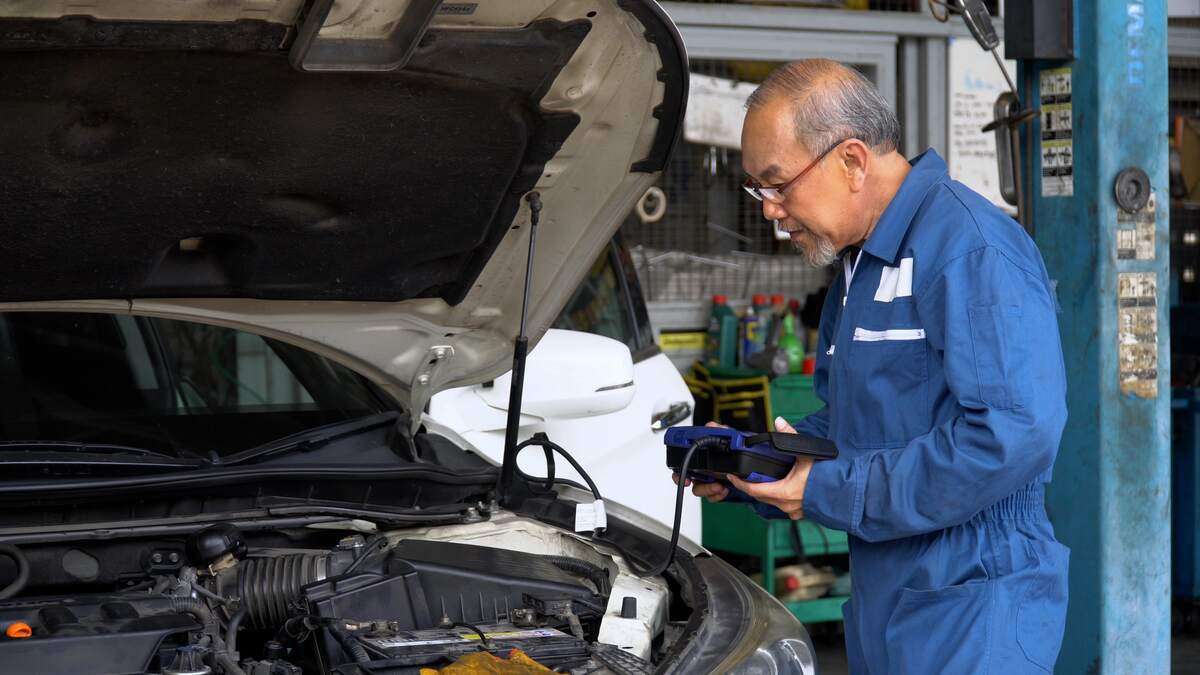

Are you having trouble getting repair work done on your vehicle? You are not alone.
Car owners are reporting on social media that, too often, certain repair needs are unmet by garages because the repairs are profit killers for the garage and/or they lack technicians and mechanics to do the work, according to a recent Wrenching with Kenny YouTube channel video titled "Flat Rate Has Killed The Automotive Industry."
FLAT RATE IS A FLAT LINE FOR THE ECONOMIC AND PHYSICAL HEALTH OF MECHANICS
"I belong to several different mechanics pages and several different dealership type pages, and it is amazing how many people every day on videos saying, 'I've had it. I'm done. I'm never coming back to this anymore. I'm done with mechanic life.'"
Finding a good qualified, good quality technician can be difficult, especially nowadays…Mechanics need to be paid more." ―Wrenching with Kenny
In a flat-rate system, mechanics are paid a predetermined amount based on the assigned number of hours for each job. For example, if a repair "books" for 2.5 hours, the mechanic earns pay for 2.5 hours of work—regardless of whether the job takes one hour or four.
On the surface, it might sound like a merit-based model that rewards productivity. But in practice, flat rate pay often leaves technicians overworked, underpaid, and constantly stressed. It turns a skilled profession into a gamble, where your paycheck depends not just on your ability, but on factors you can't control: vehicle condition, part availability, customer approval delays, and how many cars come through the door on any given day.
Related article: "Why I Left Toyota" ―Former Toyota Mechanic Shares What It Is Like Drinking the Dealership Kool-Aid
"Wrenching with Kenny Host" Shares His Experience
Here’s the video posted by the host about his experiences with flat-rate pay. However, the key points are summarized below the video for your convenience in case you do not have the time to watch the entire video.
Flat Rate Has Killed The Automotive Industry
"Wrenching with Kenny" Video Summary
"Now, almost every dealership I know of is flat-rate, and there's benefits and there's downsides to flat-rate. As far as I'm concerned, flat-rate breeds crappy technicians. Why do I say that? I was flat-rate. I was flat-rate for over 21 years.
The reason being is because if a job pays five hours and I can get it done in three, I'm still getting paid five. Okay? You follow?
So, as a mechanic, as a technician, we're crafty people. We have a tendency to look at something and say, I can shortcut this in a certain way to get the job done. The "Book" tells you that you got to do this, this, this, and this to do the job.
Well, you know what? I don't have to do this, this, this, and this. I can kind of go this way a little bit, and I can get the end result accomplished.
Some people, and I've seen this many times, some people will take shortcuts that are so drastic and so extreme, it hurts something else in the process." ―Wrenching with Kenny
The host tells us that while flat-rate technicians have it bad, believe it or not, flat-rate mechanics with the highest level of training are actually paid less!
Here's how that works: Flat-rate technicians, as we mentioned earlier, are paid based on the assigned number of hours for each job.
However, the higher-level mechanics are assigned to more complex jobs appropriate to their skill level.
The problem with this is that complex repairs often exceed the allotted book time for the repair. For example, diagnostics (which are not usually included in the mechanic's pay), a complicated disassembly and reassembly where any number of things can slow down the repair, and numerous little details involved in a repair such as test driving the vehicle, putting it on a lift, draining the fluid, getting parts, etc. take up a lot of time that the trained mechanic winds up not being compensated for.
By the end of the day, the flat-rate beginning tech can put in a 10-12 hour day and be paid the full price they earned. The flat-rate experienced mechanic, however, has put in more hours than the book rate pays for and winds up making less by the end of the day.
Warranty Work is the Worst for a Mechanic
Additionally, the complex work assigned to experienced mechanics often involves warranty work, resulting in significantly lower pay for the mechanic.
Essentially, experienced mechanics work longer hours for less pay because the system is rigged to save money.
I have two son-in-laws. One was with Chrysler and one was with Ford. Same exact thing happened to them. Once they reach the pinnacle, the highest point they could be, all they got was warranty work. And warranty work doesn't pay squat.
So it hurts the industry when you're paying a flat rate. The flat rate is the absolute worst thing that has ever happened to the automotive industry. And basically, if you think about it, all it does is boil down to greed on the part of the owner of the company. You know, whoever is setting up these pay scales." ―Wrenching with Kenny
Lack of Respect for Mechanics
Another factor is the lack of respect for mechanics by both their managers and their customers.
If anything goes wrong during the repair, the experienced mechanic is held responsible, regardless of the cause or circumstances. In short, experienced mechanics are often undervalued by their managers, who are more focused on the clock and the progress of every repair.
Do a thousand things right. Nobody says a word. Crickets. There's crickets. But do that one thing wrong and you are the worst person on earth." ―Wrenching with Kenny
Respect from customers is also a problem: When a customer sees an itemized work order or bill and notices that labor is $150 per hour, the automatic assumption is that that is what the mechanic earns.
The truth is that the mechanic only receives a small portion of that labor charge, with the rest going toward the business's overhead: salaries, insurance, rent, etc.
You know, rent for a six-bay shop, you're talking upwards of $8,000 to $10,000 a month. So, you know, it's like people, for some reason, hear $150 an hour and they think you're just taking that money and just shoving it in your pocket. You're not. You're not doing that. Mechanics are not doing that." ―Wrenching with Kenny
Where Are The Mechanics Going?
The host tells us that experienced mechanics are going where the grass is slightly greener for them:
- Fleet jobs
- Diesel mechanic jobs
- Mobile mechanic services/side jobs
- Independent garages
- Profession switching as Electricians and Plumbers
And the shortage of qualified, experienced mechanics will only grow worse, unless things change in the dealerships,
What Can Be Done to Keep Mechanics in the Garage
The automotive repair industry is facing a quiet crisis. Across the country, skilled mechanics are walking away from their profession—not because they've lost passion for the trade, but because the system they work under is breaking them down primarily due to an outdated, unfair, and unsustainable flat-rate pay system.
As a result, many experienced mechanics are leaving the industry, and fewer young people are entering the trade. The industry's talent pipeline is drying up, not due to a lack of interest in cars, but due to the instability of the work environment.
Can this problem be fixed?
It could, and some states are beginning to create laws against some of the worst aspects of the flat-rate system. But more needs to be done.
For example:
- Shifting toward hourly or hybrid pay structures, combining a base hourly wage with bonuses for efficiency or performance.
- Dealerships investing in their mechanics by offering paid training, health benefits, tool stipends, and better work-life balance.
- Industry-wide reforms through union efforts, legislation, or a cultural shift in how dealership service department managers view and value their technicians and mechanics.
One Important Point Not Mentioned: The Human Cost
Mechanics aren't just quitting over money—they're quitting because of what flat-rate work does to their bodies.
To "make hours," technicians and mechanics often work through lunch, skip breaks, and hustle to squeeze in as many jobs as possible. This results in repetitive stress injuries, exhaustion, and mental burnout.
Many mechanics are expected to provide their own tools—sometimes investing over $50,000 out-of-pocket—while receiving no benefits, no sick leave, and no guarantee of a livable income if the shop slows down.
A comment from a follow-up video from the Wrenching with Kenny YouTube channel titled "Multiple Reasons Made Me Leave Dealer Life" summed up the human cost by one mechanic with this profound statement:
I am a recently retired master mechanic of 40 years and one thing that nobody mentions is how much of a toll it takes on our bodies. My body is done. My brain is 17 but my body is 80. And I'm only 64 ―@johnrpizzaguy
For example, my brother worked as a fleet mechanic for many years and had to have shoulder surgery from all of those years wrenching AFTER he was able to retire―just one of several common ailments shared by working mechanics.
And finally…
Flat-rate pay may have once been a solution for driving productivity in the shop, but it's become a liability in today's world of complex vehicles and rising expectations. Mechanics aren't quitting because they don't love the work—they're quitting because the system doesn't love them back.
If the industry wants to survive and thrive, it's time to move past flat-rate and toward a model that values the mechanic as much as the machine.
If You Have Worked Flat Rate Let Us Know How You Felt About It: Share your story and thoughts with us in the comments section below.
For additional "It's a Mechanic's Life" type of articles, here are two for your consideration:
- Car Repair Horrors Mechanics Face Every Day
- Six Things You Should Never Say or Do to Your Car Mechanic
COMING UP NEXT: I Intentionally Ran Out of Gas in My 2025 RAV4 PHEV
Timothy Boyer is an automotive reporter based in Cincinnati who currently researches and works on restoring older vehicles with engine modifications for improved performance. He also reports on modern cars (including EVs) with a focus on DIY mechanics, buying and using tools, and other related topical automotive repair news. Follow Tim on Twitter at @TimBoyerWrites as well as on Facebook and his automotive blog "Zen and the Art of DIY Car Repair" for useful daily news and topics related to new and used cars and trucks.
Image Source: Deposit Photos
Set Torque News as Preferred Source on Google
Follow us today...







Comments
I am 62 and I have worked at…
Permalink
I am 62 and I have worked at many shops and been a mechanic since 16 as a profession… people need to stop complaining. The work is what it is stop crying about what is doesn’t have and expect people to feel sorry for you .. if you don’t like it find a new line of work nobody is forcing anyone to do this type of work.
The tool box has wheels for…
Permalink
In reply to I am 62 and I have worked at… by Tom (not verified)
The tool box has wheels for a reason smart mechanics will move and not put up with poor conditions .Don't be afraid to ask for better compensation or you will be taken advantage of.
I worked in a Lincoln…
Permalink
I worked in a Lincoln Mercury dealership in the late 70’s. We had a lot of fan motor failures. I discovered a shortcut that took less time than what warranty paid. We had a factory representative that came over and watched me. Shortly after the flat rate for that repair was reduced. This was a flat rate shop. I had a similar problem with installing air conditioners in Capris as they were all dealer installed. The more I did, the faster I got and the pay went down. I am a retired Master Mechanic.
Reminds me of a Chinese…
Permalink
In reply to I worked in a Lincoln… by Andy Rodda (not verified)
Reminds me of a Chinese story about the farmer feeding his horse straw, which he decreased little by little every day because the horse could take it...until it starved to death.
Thank you for the share.
I worked at a Pontiac dealer…
Permalink
In reply to I worked in a Lincoln… by Andy Rodda (not verified)
I worked at a Pontiac dealer in the early 80's. The 2.5L engines used a fiber cam gear that would wear and made the engine sound like a diesel. Book time to replace the gear was, IIRC, 12 hours because the cam gear was pressed on the cam and it required a specific clearance between the gear and the thrust plate. We would tap the hole in the cam and get about 2 threads with a regular tap. We then used a bottoming tap to get another 2 threads. We used a bolt, nut, and washer to press the new gear on in about 2 hours. Some brilliant mechanic wrote in the monthly tech tip of the Pontiac publication and received $25 for his tip. GM then later used that tip and reduced the time to I believe 2.2 hours!
I am a retired automotive…
Permalink
I am a retired automotive technician of 40 years. G M dealerships and independent shops. Had my own shop for few years. I can't agree more that we are under paid, and underappreciated. Warranty times tucked, and the more classes I went to and Higher levels, I got dumped on by warranty work. My body is also worn out. Good luck finding anyone to repair your vehicle in the future. With e v, hybrid, etc. And multiple modules( minimum of 20 to upwards of 40 or more), no body wants to deal with it.
And how does the industry…
Permalink
In reply to I am a retired automotive… by Steven Stratford (not verified)
And how does the industry think this is an attractive career choice for the next generation of mechanics?! I'm baffled by it as well.
Thanks for the share.
You missed alot of other…
Permalink
You missed alot of other factors.
I probably did. Why not let…
Permalink
In reply to You missed alot of other… by Ted (not verified)
I probably did. Why not let everyone know by elaborating on your remark?!
I was a dealership mechanic…
Permalink
I was a dealership mechanic for 40 years since I retired I have had 2 back surgeries and a hip surgery, I agree with everything said in this article mechanics working on flat rate get the short end of pay and toll it takes on their bodies.
I was a dealership mechanic…
Permalink
I was a dealership mechanic for 40 years since I retired I have had 2 back surgeries and a hip surgery, I agree with everything said in this article mechanics working on flat rate get the short end of pay and toll it takes on their bodies.
I was a dealership mechanic…
Permalink
I was a dealership mechanic for 40 years since I retired I have had 2 back surgeries and a hip surgery, I agree with everything said in this article mechanics working on flat rate get the short end of pay and toll it takes on their bodies.
Sorry to hear about your…
Permalink
In reply to I was a dealership mechanic… by Edward Kintigh (not verified)
Sorry to hear about your health. Many need to walk in your shoes for awhile to appreciate the cost of hard manual labor.
Thanks for sharing.
I am a 76 year old retired…
Permalink
I am a 76 year old retired truck and heavy equipment mechanic. I had my own mobile fleet repair service for 40 years. I found it very rewarding I had a lot of personal satisfaction. I had great respect of my costumers and my parts suppyers that is what I miss the most not the hard work it has wore my body out. There must be a much easier way to make a living.
There are easier ways,…
Permalink
In reply to I am a 76 year old retired… by Daniel Huttinger (not verified)
There are easier ways, unfortunately, in our day and age, it has been reported that becoming an "influencer" is a dream job for many of today's youth. I blame it on becoming an entertainment-driven society. No one wants to work like our parents generation did.
Thanks for the input.
As a master mechanic myself…
Permalink
As a master mechanic myself I can tell you that toolboxes have wheels for a reason. I have been a mechanic for years now and can't disagree with some of the things here more. The crisis is that everyone thinks being a good mechanic is an OTJ training job, but it couldn't be more wrong. This generation thinks trades are easy, not necessary for school or college and most automotive training programs are a minimum of a year long. If you perfect your trade and really apply yourself to your education this can be a six figure job easily. Ask anyone that is still happily employed at a dealer and not a washed up YouTube tech.
That is correct: mechanic…
Permalink
In reply to As a master mechanic myself… by Jason Krueger (not verified)
That is correct: mechanic work should not be treated as OJT. Unfortunately, greed is a strong motivator at service centers that believe "close enough for government work" is good enough.
I wonder how many high schools still have tech classes today?
Many people find success in their trade today, thanks to a solid foundation laid in the past. However, the automotive career appears to be headed for a bleak future.
Thanks for the input.
Kenny hit the issue…
Permalink
Kenny hit the issue perfectly!!!
I like Kenny. He's the…
Permalink
In reply to Kenny hit the issue… by Jeff Rheaume (not verified)
I like Kenny. He's the neighbor you want.
Not discussed is simply…
Permalink
Not discussed is simply simplifying cars. Cars are incredibly overly complex, making them increasingly unaffordable and complex to repair. Even with an available mechanic, the parts alone may require a family get a second mortgage.
The odd part is that the…
Permalink
In reply to Not discussed is simply… by Torque man (not verified)
The odd part is that the automotive industry puts some of the blame on the public when marketing tells them what they think the public wants.
However, if the auto makers have to increase features or emissions controls without limit by law, then, yeah, they are going to become more complex.
Thanks for the input.
Flate rate for 30 plus yrs…
Permalink
Flate rate for 30 plus yrs,made it to 60, couldn't physically do it anymore,shoulders,knees,,hands.flat rate system is a tough way to make a living!skould have planned for a career change in my 40s
I witnessed the same…
Permalink
In reply to Flate rate for 30 plus yrs… by Brett canfield (not verified)
I witnessed the same phenomenon while working as a paramedic many years ago. It's a young man's job and the older ones who lasted as long as they could, actually lost a lot of potential earnings they could have had doing something else.
Take care.
First of all I have been…
Permalink
First of all I have been employed with the service and parts business since 1969 and worked in gas stations before I started in the dealerships. There are NO MECHANICS today. A mechanic is a motor machinist who can fit babbet bearings. Since I have known no one since the late Lou Futrell that has the ability or the knowledge. Lou trained me.
On the topic of a worn out body yes that is very true. Today I have 3 protheses from pounding the concrete a knee, a shoulder and a hip all the result of my employment.
I poured babbet bearings…
Permalink
In reply to First of all I have been… by Albert Aleandri (not verified)
I poured babbet bearings once---never again! Almost lost an eye to the molten metal popping from sweat dripping into the pot.
But I get your point. Old school ways were more about understanding than about parts replacement.
Times have changed, and not always for the better.
Thanks for the share.
First of all, hasn't flat…
Permalink
First of all, hasn't flat rate been around forever? I mean, at least the 50 years I've been an adult... Now it's a problem. As a customer, I've never liked the idea of being charged for 5 hours labor, then being handed the car after four hours... What other industry works that way? In addition, it's funny how, say Ford, is okay with the customer paying alot for repairs, yet balk at paying those very same rates themselves... Complaining about long hours??? Join the party, I'm worn out, as well.
First of all, hasn't flat…
Permalink
First of all, hasn't flat rate been around forever? I mean, at least the 50 years I've been an adult... Now it's a problem. As a customer, I've never liked the idea of being charged for 5 hours labor, then being handed the car after four hours... What other industry works that way? In addition, it's funny how, say Ford, is okay with the customer paying alot for repairs, yet balk at paying those very same rates themselves... Complaining about long hours??? Join the party, I'm worn out, as well.
My understanding is that yes…
Permalink
In reply to First of all, hasn't flat… by Les (not verified)
My understanding is that yes, flat rate has been around a long time. However, it has changed in ways that are detrimental to the mechanic and is not aligned with how cars and their repairs have changed over time. For example, dash removal to get to the HVAC system in cars today is a much greater undertaking than it was years ago.
Thanks for the question.
I worked as a tech in dealer…
Permalink
I worked as a tech in dealer service departments in the 80's and 90's. The union shops I worked in paid an hourly wage. The non union shops were flat rate with no guarantee. I was not the fastest at flat rate but tried to do the job right the quickest I could. I would not leave for home until the jobs I started that day were finished. This meant many late nights getting home. Often times I would be there as the sales people left for the evening and would lock the doors when I left because I was the last one there. As the only wage earner in my family of four I had to do my best to get in enough hours for the week. I realize now that I missed a lot of quality time with my family but I did have to pay the bills. As I approached 40 years of age I realized I could not sustain working so many hours per week and began to seek jobs outside of auto mechanics. I landed in the telecommunications field partly due to electronics training I received from General Motors.
Smart move. No one should…
Permalink
In reply to I worked as a tech in dealer… by Dave G (not verified)
Smart move. No one should have to work those kinds of hours for so little pay just to make ends meet.
Thanks for the share.