
This week, following a tragic incident in Massachusetts, Torque News had the opportunity to sit down with a state trooper with three decades of experience. This trooper has lost family, friends, and coworkers to drunk drivers. Based on his on-the-job experience as a highway patrol officer, and as evidenced by a recent incident in Massachusetts, his advice to those who have no choice but to be on the roads shortly after bar closing time is simple but potentially lifesaving: stay right at night.
This is not a catchphrase. It is advice born from real loss and real tragedy. It comes from professionals who have witnessed the terrible consequences caused by wrong-way drivers. We offer this story as advice to help keep you safe on the roads. It is not intended to be the end of the discussion.
The Trooper's Perspective on Staying Right
The highway patrol office we spoke to explained to Torque News that he has firsthand experience with situations where an impaired driver is on the wrong side of a divided roadway. The impaired driver, staying to the right, passes traffic moving in the correct direction in the right lane. The trooper explains that drunk drivers are not usually blindly operating the vehicle, and they may even have years of experience driving impaired. They have learned to stay out of the left lane and keep their speeds near the speed limit to avoid being noticed by police. When they are on the wrong side of a highway and are in their right lane, and the traffic flowing in the correct direction is in its right lane, it is possible for the impaired driver to pass them by without a crash. However, when a driver going the correct direction is in the left lane, it can result in a head-on collision with tragic results.
What Happened in Massachusetts
This scenario played out in Massachusetts this month and was captured on video. Just after 2 am, police say a driver in a Jeep Wrangler drove the wrong way on a divided highway and passed by a garbage truck driver who yanks on his air horn. The two vehicles passed by one another because each stayed to the right, thus avoiding a catastrophic collision. Sadly, the situation did not end there.
Numerous motorists reported the wrong-way driver. 30-year-old State Trooper Kevin Trainor was one of the many police officers who responded immediately to the call. Shortly after the driver going the wrong way passed the garbage truck driver in the video, tragedy struck. Trooper Trainor lost his life in his self-sacrificing efforts to protect the public.
AAA Statistics On Fatal Wrong-Way Crashes
According to AAA, there were 3,885 deaths resulting from wrong-way crashes on divided highways between 2010 and 2018. Just less than half of the recorded deaths were people other than the wrong-way driver. AAA says that factors such as impairment and advanced age increase the odds of being a wrong-way driver. It is not known at this time if the 50-year-old driver of the vehicle who collided with Trooper Trainor's vehicle was operating impaired.
According to the National Highway Traffic Safety Administration, the numbers on operating under the influence (OUI) paint a sobering picture. Impairment-related driving fatalities account for approximately one in three traffic deaths in the United States. Each year, more than 10,000 Americans die in alcohol-impaired driving crashes, with roughly half that number being deaths of innocent motorists. One person every 44 minutes. The data shows that drivers with a blood alcohol concentration of 0.08 or higher are approximately four times more likely to crash than sober drivers, and at a BAC of 0.15, that risk increases to at least 12 times more likely to crash.
A Quick Rundown On Reducing Your Risk Of Being Hit By a Drunk Driver
Sadly, Americans operate vehicles under the influence at all times of day and night, and on all roadways. However, the data do show notable clusters. The span from 1 am to 3 am, after last call at establishments that serve alcohol, is a dangerous time to be on the road. If possible, don’t be on the road during these hours. Friday and Saturday nights, along with holiday evenings, are particularly risky. Staying right is sound advice born of experience, but being off the roadway when the most inebriated drivers head out onto the roads is just logical.
Buckle up. You’ve heard it many times, and in 2026, most drivers in America do so. All the fancy airbags, pyrotechnic force limiters in the restraints, collapsible steering columns, and padded parts of your dash are designed to work with your seatbelt, not on their own.
The advice offered in this article is not intended to eliminate all risks, but it may save lives: stay to the right at night. When impaired drivers navigate the darkness, they instinctively or by practice do the same. This one action, born from the lived experience and wisdom of a professional who has seen it work firsthand, could be the difference between a close call and a very bad ending.
John Goreham is a 14-year veteran of Torque News. An accomplished writer and a long-time expert in vehicle testing, Goreham also serves as the Vice President of the New England Motor Press Association and has a growing social media presence. He’s also a 10-year staff writer and community moderator for Car Talk. Goreham holds a B.S. in Mechanical Engineering and an undergraduate Certificate in Marketing. In addition to vehicle and tire content, he offers deep dives into market trends and opinion pieces. You can follow John Goreham on X and TikTok, and connect with him on LinkedIn.
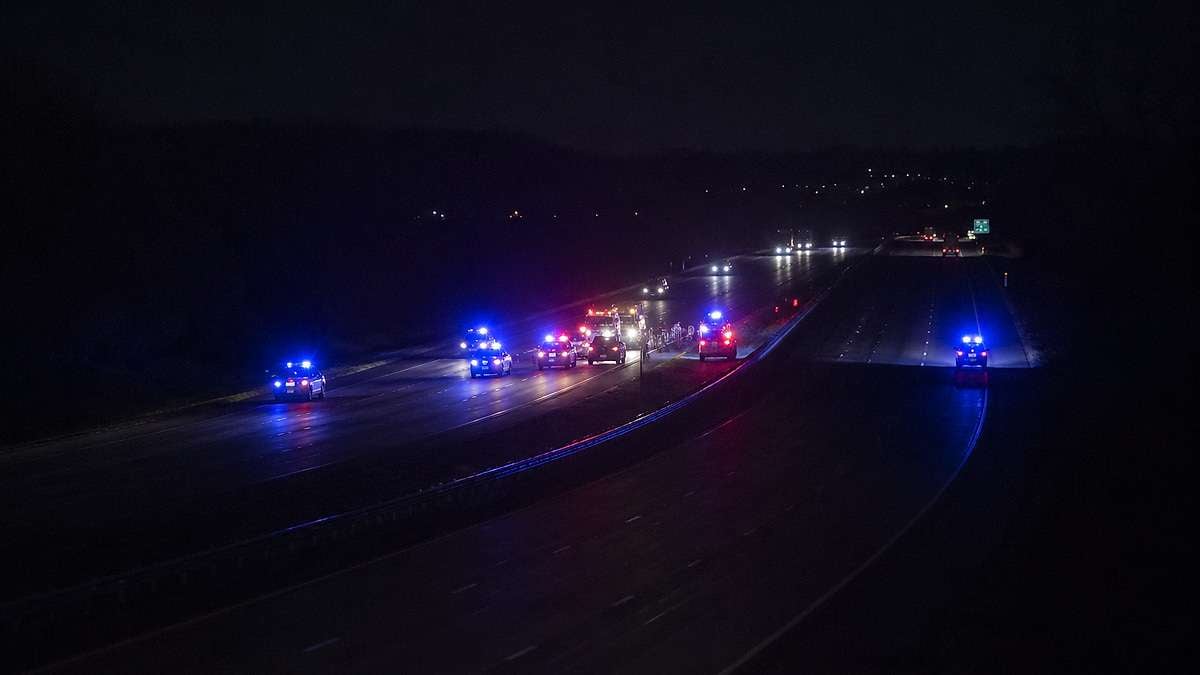
Note: This story does not allege that the driver who struck Trooper Trainor's vehicle was operating impaired. At the time of publication, the crash is still under investigation. We chose a generated generic image rather than show an actual image of the crash out of respect for the families of those involved.
Set Torque News as Preferred Source on Google
Follow us today...