
Owning an EV is about more than just owning a fast car that’s very cheap to operate. It’s also about being environmentally conscience and not supporting global bad actors. Many new EV owners feel a deep sense of satisfaction in knowing that they are doing their part to the extent that we find many social media threads full of this insight and emotion. On the r/electricvehicles subreddit entitled “Stop Supporting Wars for Oil - Go Electric,” Blahkbustuh posted:
“I got my Rivian R1T in the fall of 2023 and I had this realization shortly after. I was pleasantly surprised at how liberating it felt to no longer be dependent on gas and the oil industry, and to be supporting them. I did my tiny part to separate from the oil industry and the Middle East. As more of us do this, their power and influence will diminish.
I do know that in many places, electricity is generated from fossil fuels. I live in an area with a lot of nuclear and wind power so my EV is relatively cleaner.”
Philly_Phinance responded:
“Honestly, I’ll never understand how the clean energy industry missed using patriotism and self-reliance as marketing tools. What’s more independent than producing your own power?”
rosier9, another Rivian R1T owner, commented about independence from solar power:
“I had a very similar realization shortly after installing solar on our previous house.
It’s funny how the "energy independence" crowd is allergic to wind and solar, and is now coveting foreign oil (which doesn't seem like it will turn out well for domestic producers).”
Ohmygodbees, a Kona Electric, owner added the importance of electrifying the rest of the home:
“Agreed. Not long after I got my EV, I started replacing appliances too. The stove is now induction, the water heater is now a heat pump version, and next will be the gas furnace.”
ThatBloodyPinko added a comment about oil supporting bad actors:
"Stop giving money to the country that sent 19 of the 21 9.11 hijackers (Kingdom of Saudi Arabia)."
EVs Deliver Individual Freedom while Reducing Environmental Guilt
Electrification reduces oil dependence by directly displacing gasoline/diesel demand with electricity, mainly from domestic sources like renewables, natural gas, or nuclear, boosting energy security and stabilizing prices. For cars, this means switching from liquid fuels to grid power.
Transportation is the largest source of greenhouse gas emissions in the United States, accounting for more than a quarter of the total. That reality makes electrifying how people and goods move one of the most important steps toward cutting emissions at scale.
Electric vehicles deliver on their environmental promise because the grid that charges them is getting cleaner over time. Even as electricity use has grown significantly over the past few decades, emissions from power generation have dropped, largely due to the expansion of renewable energy. As more solar, wind, and carbon free sources come online, every mile driven on electricity becomes cleaner than the last. This trend makes vehicle electrification a core strategy for meeting long term carbon neutrality goals.
While carbon dioxide reductions get most of the attention, EVs also bring other environmental and health benefits, especially in commercial and heavy-duty applications. Replacing diesel vehicles eliminates diesel particulate pollution that disproportionately affects children, older adults, and workers. Electric fire trucks and refuse vehicles improve air quality in stations and neighborhoods. Noise reduction is another overlooked benefit, with quieter electric vehicles making early morning operations far less disruptive.
Electrifying fleets offers an outsized opportunity to reduce emissions quickly. Corporate fleets represent roughly one fifth of all registered vehicles, and there are over 900,000 buses operating across the U.S. When businesses, school districts, and transit agencies switch to electric vehicles, they cut tailpipe emissions while also benefiting from lower fuel, maintenance, and noise levels.
Renewables Reach a Global Tipping Point
Renewable energy has crossed an important milestone. In 2025, electricity generated from solar, wind, and hydropower exceeded global coal generation. Growth in renewables also covered the entire increase in worldwide electricity demand. Fossil fuel use is still rising, and renewables remain a minority share of total energy use, yet these thresholds show that clean energy momentum is real and accelerating.
The Grid Can Handle Widespread Electrification
Electric vehicles will add significant load to the grid over time, potentially doubling electricity demand in the coming decades. The challenge is less about feasibility and more about timing. Consumer adoption is moving faster than traditional grid planning and construction cycles. Utilities are responding by working with regulators to speed approvals.
Building out electric vehicle charging is essential, yet how charging happens matters just as much as how many chargers exist. Smart chargers can communicate with the grid and adjust charging times to when electricity is cheaper and cleaner. This approach reduces strain on the grid, lowers costs for drivers, and increases the environmental benefits of driving electric.
China Leads the Clean Energy Transformation
China’s shift away from coal began over two decades ago, driven by energy security concerns and severe air pollution. Investments in wind and solar scaled rapidly, turning clean technology into roughly ten percent of China’s GDP. The country now produces most the world’s solar panels and wind turbines, and exports them widely, benefiting from massive domestic scale and lower costs.
Bottom Line
Electric vehicles already reduce environmental impact, and their benefits grow as the grid continues to decarbonize. Health improvements, quieter streets, and reduced local pollution matter just as much as carbon reduction, especially for fleets and dense communities.
The Rivian R1T
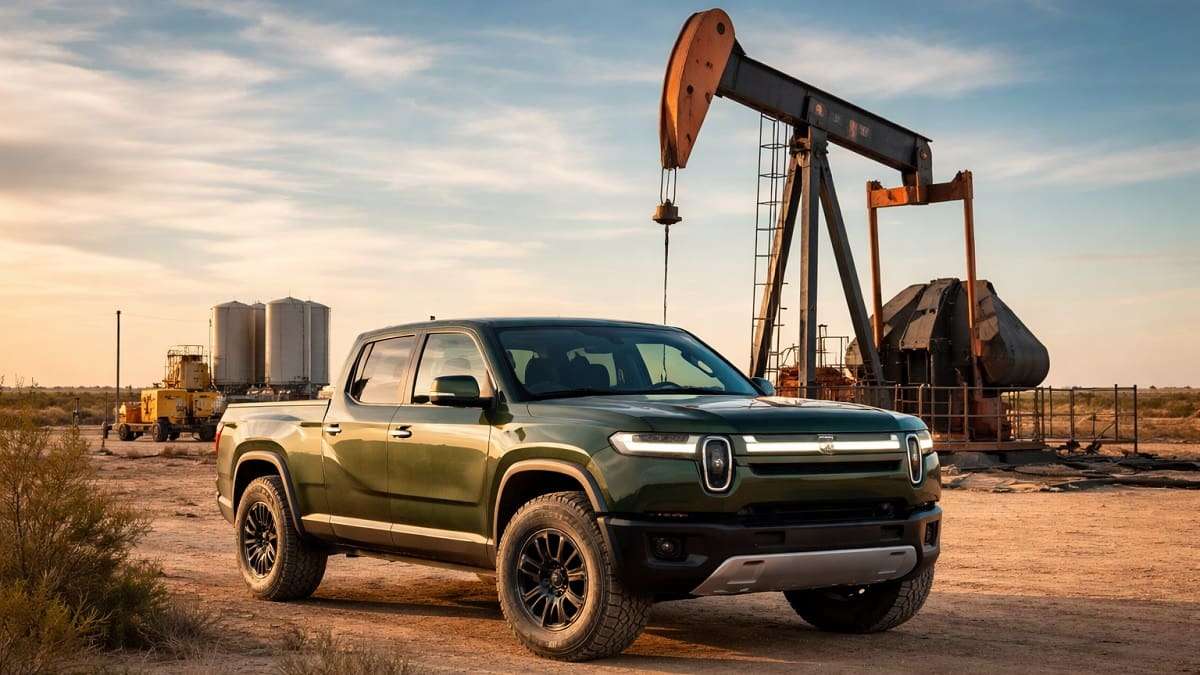
The Rivian R1T is an all-electric adventure pickup truck that has quickly become one of the most talked about EVs on the market. It was first delivered to customers in 2021, marking Rivian’s entry into the electric truck segment. What sets the R1T apart is a blend of serious off-road capability, innovative utility features, and a lifestyle-oriented design, including a gear-friendly storage “gear tunnel,” standard air suspension, and strong towing and hauling specs. It competes with other electric pickups by bringing robust range, quick acceleration, and thoughtful outdoor-ready touches that appeal to both commuters and outdoor enthusiasts. The R1T is sold as a crew-cab pickup, and pricing tends to start in the ballpark of $70,000-plus USD before options and destination charges. Exact prices vary based on trim, battery pack, and optional features.
What Do You Think?
If you are someone who switched to an EV, did your relationship with gas and oil change emotionally, or was it purely a financial decision?
Did buying an EV lead you to electrify other parts of your life, like appliances, solar, or home heating?
Chris Johnston is the author of SAE’s comprehensive book on electric vehicles, "The Arrival of The Electric Car." His coverage on Torque News focuses on electric vehicles. Chris has decades of product management experience in telematics, mobile computing, and wireless communications. Chris has a B.S. in electrical engineering from Purdue University and an MBA. He lives in Seattle. When not working, Chris enjoys restoring classic wooden boats, open water swimming, cycling and flying (as a private pilot). You can connect with Chris on LinkedIn and follow his work on X at ChrisJohnstonEV.
Photo credit: Provided by author
Set Torque News as Preferred Source on Google
Follow us today...