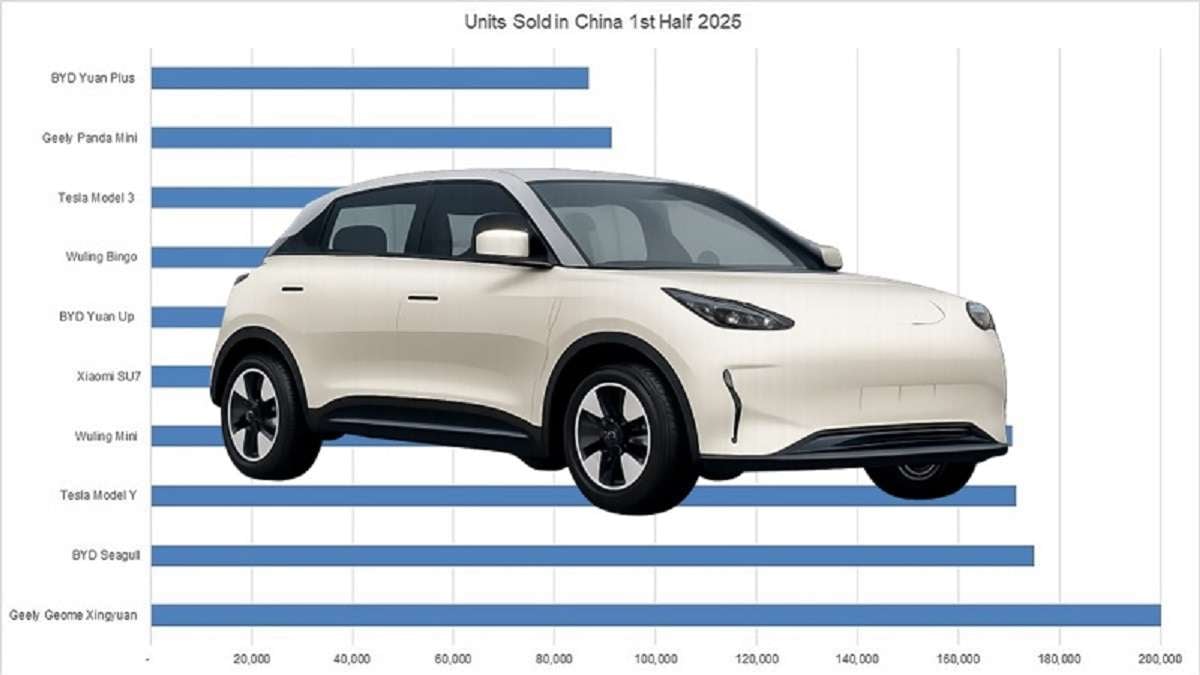

While American car buyers fret about the average cost of a car exceeding $50,000, and argue about whether legacy automakers like Ford and GM will continue to offer EVs, China continues to make amazing new EV models sold at incredibly low prices. Chinese manufacturers have moved beyond simply copying American auto companies, and have forged ahead with some of their own innovation. They have an EV that can fully charge in about 11 minutes, and their autonomous driving tech continues to impress.
The massive EV price difference between the U.S. and China hasn’t been lost on social media. Here’s a recent, long thread on the r/electricvehicles subreddit where M_Equilibrium posted:
“In short, for $42k, the Xiaomi SU7 is as quick as a Tesla Model 3 Performance while being far superior in build quality, materials, suspension, and equipped with solid software.”
Volvo EX30 owner fjortisar added:
“A car can cost $42,000 in China, but outside of China the exported cars have generally been 50-100% more. They also lose money on cars sold in China currently.”
Baumbauer1 commented with some insight about Chinese pricing:
“Reminds me of when I was a Xiaomi fanboy back in 2017. I had a sub $200 phone that was just as good as a $400 Samsung. Now a modern unsubsidized Xiaomi is $900 and can barely compete with a Samsung S25 Galaxy.
They want nothing more than to run to Toyota and VW out of the market then double their prices.”
SnooRobots3331 added:
“Building something in China cost a fraction of Northern America manufacturing due to higher costs to operate in Northern America. If one of these Chinese companies built a factory in the U.S. and made the same car it would cost more to produce.”
Top Ten Best Selling EVs in China
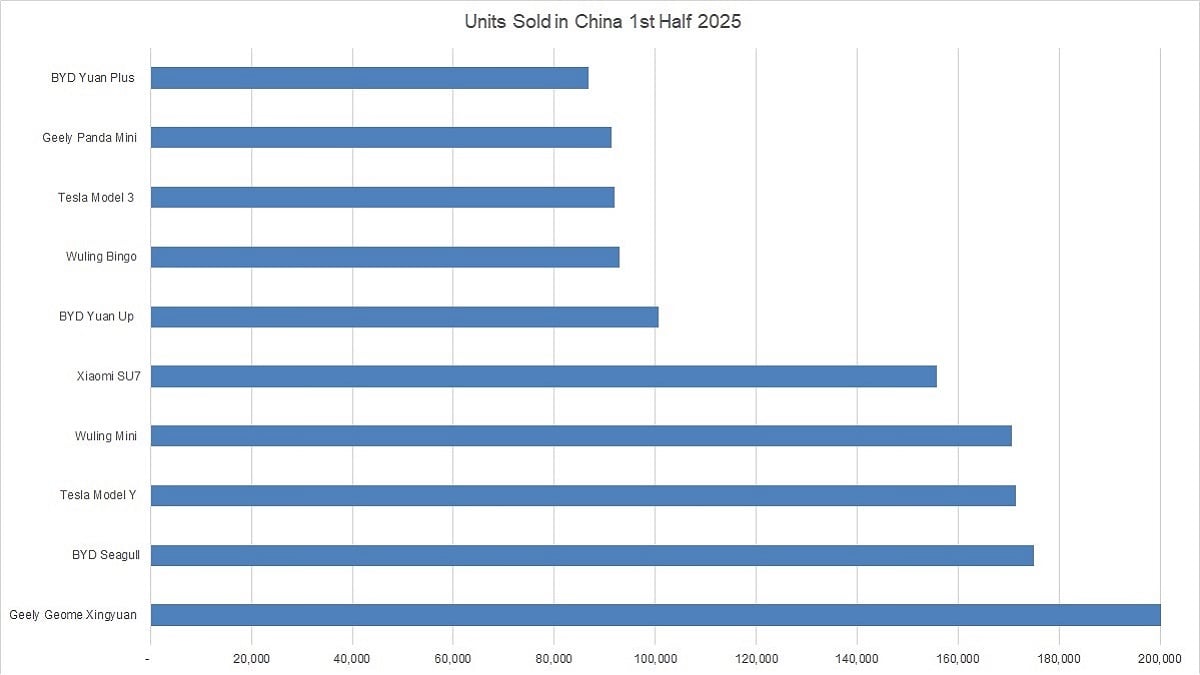
We looked at the top ten best-selling electric vehicles in China during the first half of 2025. It’s interesting to note that Tesla still has two of the slots with its Model 3 and Model Y. Other than the two Teslas, the top eight best selling EVs in China are the:
BYD Seagull
BYD Yuan Plus
BYD Yuan Up
Geely Geome Xingyuan
Geely Panda Mini
Tesla Model 3
Tesla Model Y
Wuling Bingo
Wuling Mini
Xiaomi SU7
The Chinese Alternate Reality
Taken together, these eight Chinese EVs feel like a glimpse of an alternate EV reality, one where new cars start at prices that would barely cover a down payment in the U.S. Part of the gap comes from scale, China sells EVs in enormous volumes, factories run hot, suppliers are clustered nearby, and fixed costs get spread across millions of vehicles. Cost also drops when a company owns more of the stack, especially batteries, motors, and electronics, which is common among China’s biggest players. Competition is another factor, there are many brands fighting for the same buyer, so pricing pressure is relentless. Labor, logistics, and regulatory costs tend to be lower, and margins are often thinner by design. By contrast, the U.S. market has higher distribution costs due to inefficient dealer networks, higher compliance costs, and greater feature expectations. Tariffs and trade barriers keep most of these models out, which prevents the price drops from reaching American showrooms.
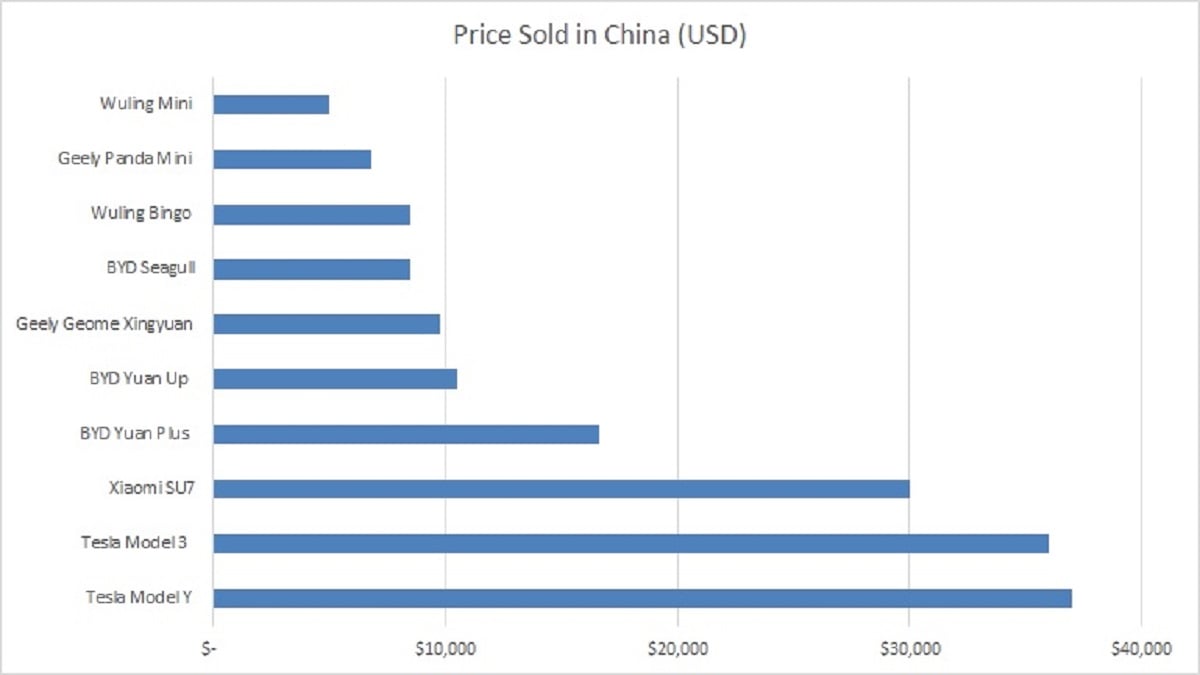
Here’s a breakdown of the best selling Chinese EVs that aren’t available in the U.S.
BYD Seagull
BYD, founded in 1995 as a rechargeable battery company before moving into automobiles, introduced the Seagull in China in April 2023. The base model sells for about $8,500. Power comes in at roughly 74 horsepower, which is well matched to city driving, and the use of BYD’s LFP (lithium iron phosphate) Blade battery helps keep costs down while improving durability. What makes the Seagull stand out is that it feels like a real, usable five door hatchback rather than a stripped-down novelty car. Interior space, safety features, and design punch far above its price. Range is rated at up to about 252 miles, which explains why it quickly became one of China’s best-selling EVs.
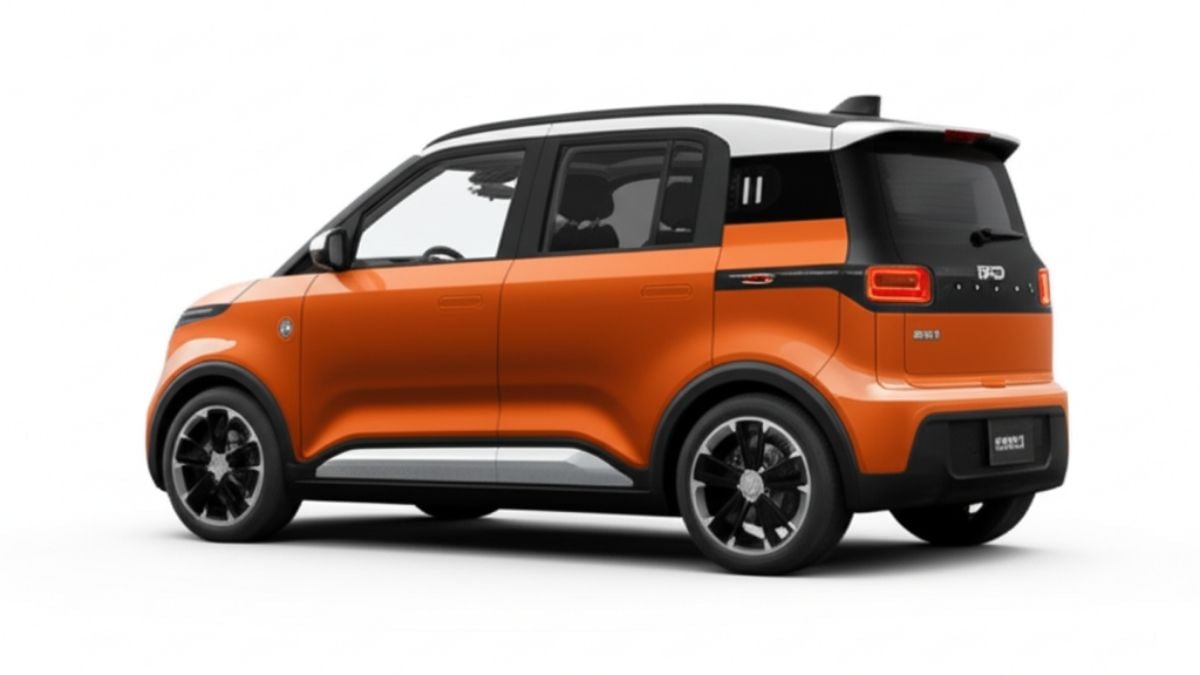
BYD Yuan Plus
The BYD Yuan Plus was introduced in China in early 2022 as a compact electric SUV aimed at mainstream buyers. BYD’s history as a battery manufacturer gives it a major cost and supply advantage, which shows up in pricing. The base model has been priced around $16,600. It produces about 201 horsepower, giving it confident acceleration compared with many entry level EVs. What sets the Yuan Plus apart is how normal and polished it feels, with solid build quality, a comfortable interior, and competitive tech, all at a price that undercuts many gas-powered SUVs. Rated range reaches about 317 miles, making it practical for daily use and longer trips.
BYD Yuan Up
The Yuan Up arrived in China in 2024 as a smaller and more affordable SUV positioned below the Yuan Plus. BYD’s long path from battery maker to global automaker plays a big role here, allowing aggressive pricing without sacrificing core hardware. The entry model starts around $10,500. Power is about 94 horsepower, clearly focused on efficiency rather than performance. What makes the Yuan Up unique is its value proposition, offering modern crossover styling, BYD battery technology, and everyday usability at a price many buyers associate with basic subcompacts. Depending on configuration, rated range reaches roughly 249 miles, which is impressive for a vehicle in this segment.
Geely Geome Xingyuan
Geely, founded in 1986 and now one of China’s largest private automakers, introduced the Geome Xingyuan in 2024. The company is known for steadily moving upmarket while still pushing affordable mobility. The Xingyuan starts at about $9,780 for the base version. Entry power is around 78 horsepower, with higher trims offering more, but the real story is efficiency and simplicity. What sets the Xingyuan apart is its clean, modern design and rear wheel drive layout, something rarely seen in low cost EVs. Depending on battery size, rated range falls between about 193 and 255 miles, making it well suited to urban and suburban driving.
Geely Panda Mini
The Geely Panda Mini launched in early 2023 as a playful, city focused electric car. Geely’s growth from a small refrigerator parts company into a global automaker gives it the scale needed to build ultra-low cost EVs like this. The Panda Mini starts around $6,800. Power is modest at roughly 40 horsepower, which matches its mission as a short trip urban vehicle. What makes it unique is its tiny footprint and cheerful styling, combined with enough features to feel more than a toy. The refreshed versions offer a rated range of about 131 miles, which covers most daily city needs.
Wuling Bingo
The Wuling Bingo debuted in China in 2023 under SAIC GM Wuling, a joint venture formed in 2002. Wuling built its reputation on affordable, practical vehicles, and the Bingo continues that tradition. The base model sells for around $8,500. Output is roughly 68 horsepower, providing adequate performance for everyday commuting. What sets the Bingo apart is how much space and comfort it offers for the price, with a roomy cabin and a friendly design that appeals to younger buyers. Higher range versions are rated at up to about 207 miles, which is remarkable at this price point.
Wuling Mini
The Wuling Hongguang Mini EV first went on sale in 2020 and quickly became a cultural phenomenon in China. Built by SAIC GM Wuling, it was designed from the start to be as affordable as possible. Pricing can be as low as $5,000 for basic versions. Power is minimal at about 27 horsepower, but that is enough for its intended role as a city commuter. What makes the Mini unique is its radical simplicity and ultra-low cost, paired with surprising popularity. Depending on battery size, rated range typically falls between about 75 and 106 miles.
Xiaomi SU7
Xiaomi, founded in 2010 and best known for smartphones and consumer electronics, entered the auto industry with the SU7 in 2024. The company applied its tech driven mindset to vehicle design and pricing. The base SU7 starts at about $30,000. Power is a strong 295 horsepower, putting it firmly in sports sedan territory. What sets the SU7 apart is the blend of performance, sleek design, and deep software integration inspired by Xiaomi’s electronics background. Rated range reaches up to about 435 miles, making it one of the most talked about new EV launches in China.
What Do You Think?
After seeing the Xiaomi SU7 and these prices, do you think U.S. EVs are genuinely overpriced or just built for a different market?
If the Xiaomi SU7 were sold in the U.S. for around $30,000, would you choose it over a Tesla Model 3?
Chris Johnston is the author of SAE’s comprehensive book on electric vehicles, "The Arrival of The Electric Car." His coverage on Torque News focuses on electric vehicles. Chris has decades of product management experience in telematics, mobile computing, and wireless communications. Chris has a B.S. in electrical engineering from Purdue University and an MBA. He lives in Seattle. When not working, Chris enjoys restoring classic wooden boats, open water swimming, cycling and flying (as a private pilot). You can connect with Chris on LinkedIn and follow his work on X at ChrisJohnstonEV.
Photo credit: Provided by author
Set Torque News as Preferred Source on Google
Follow us today...