
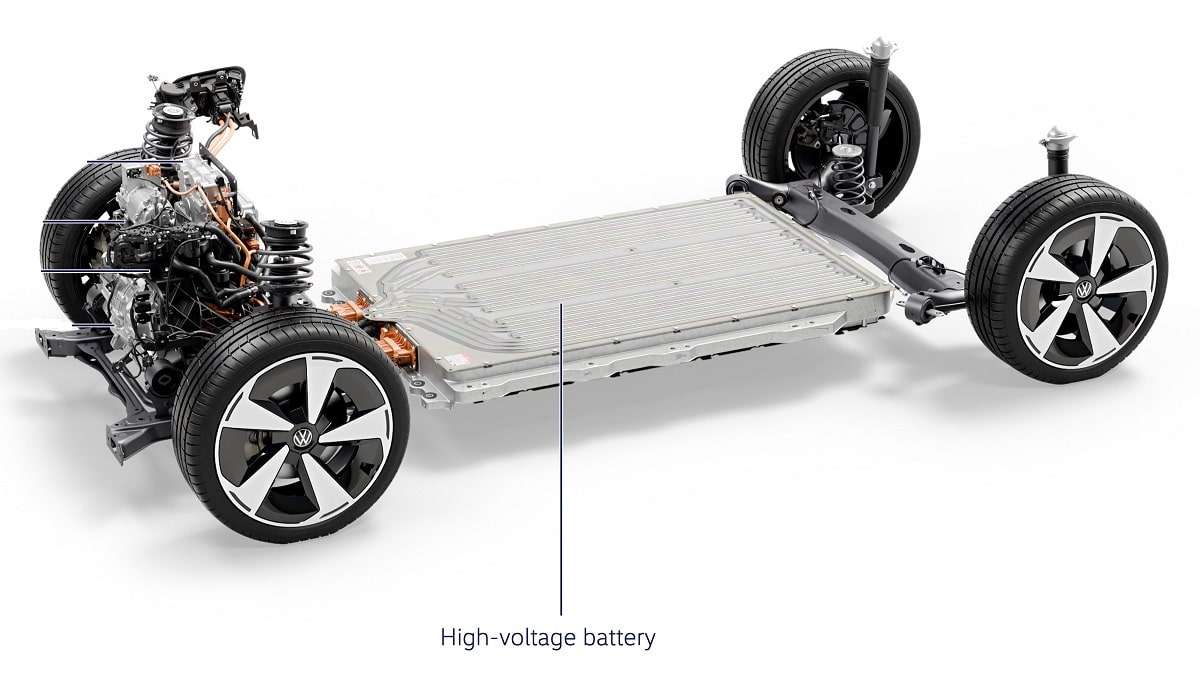

It’s not worth buying an EV because the expensive battery will need to be replaced in a few years. Probably pushed by the fossil fuel industry, this is one of the most popular comments about why not to buy an EV. Unfortunately, it gets repeated even though it’s easily proven to be a false statement. The best refrain is to mention that U.S. federal law requires all new electric vehicle manufacturers to provide a minimum 8-year or 100,000-mile warranty on the propulsion battery. In other words, there is no need for prospective new EV buyers to worry about having to incur the cost a battery replacement. Unfortunately, this doesn’t tamp down the conversation on social media. Here’s a good, long post on the r/electricvehicles subreddit that captures one of many such threads. tech57 posted:
“The high-voltage battery pack of an electric vehicle is often the main weapon of choice for people who have never driven an EV but like to discredit the technology. ‘It won’t last more than a couple of years’ is a sentence that I’ve heard time and time again when talking to gas car enthusiasts about EVs.
Despite the overwhelming amount of data that proves otherwise, there are still people out there who think a modern EV will conk out if you even look at it the wrong way.”
OptimisticNihilism added the fact that EV batteries can go on to a second life:
“After the 20 years, the battery should be between 60-70% capacity which is considered end of life for a vehicle. Hopefully it will move to utility storage and get another decade or so of use.”
Aidi e-Tron owner WeldAE made the comparison to an older gas-powered car”
“A gas engine with 150k miles on it is not getting the same MPG it got new. What I found suggests a 5% to 15% declice. A 10-year-old EV gets about 10%-15% less range. They are about the same.”
zeeper25 reminds us about ICE vehicle maintenance complexity and EV battery recycling:
“You will experience all sorts of expensive issues with most ICE vehicles after you hit 100,000 miles or more. EV's have far fewer parts (no emissions/exhaust/oil seals).
Also, for what it’s worth, EV batteries are pretty much fully recyclable at the end of their life. There is a financial incentive to recover the expensive minerals, and while a battery may degrade in performance, the minerals are recoverable from it.”
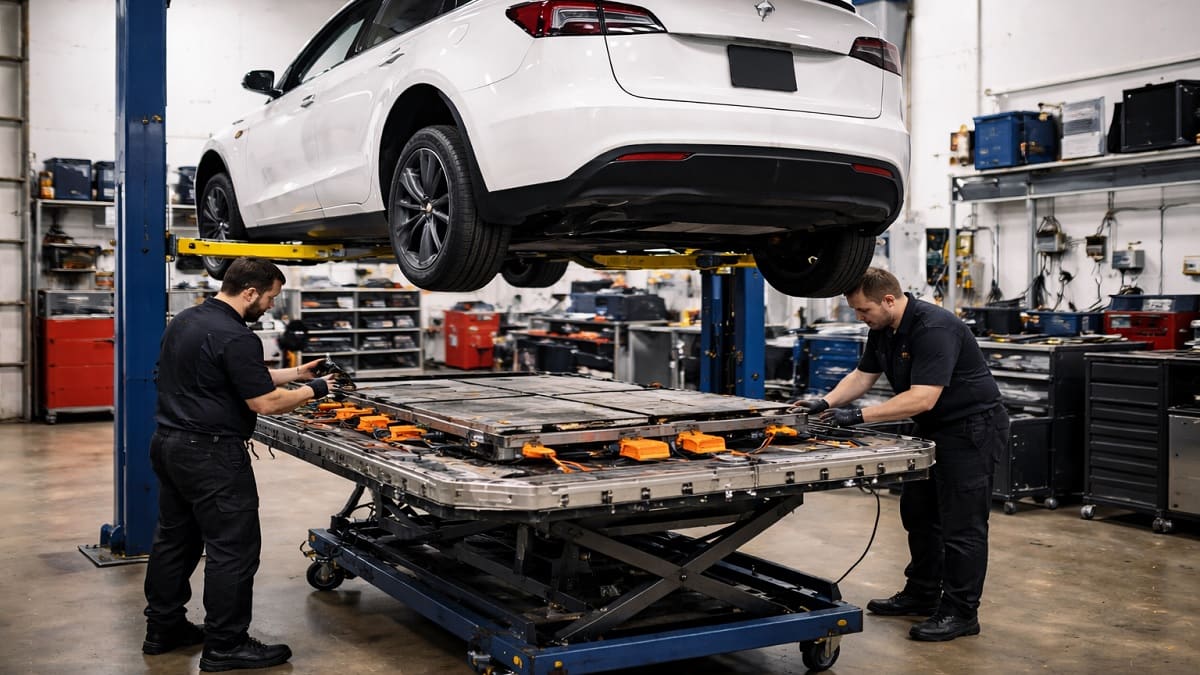
How Long Do EV Batteries Actually Last
Although early data projected impressive battery lives, the argument about EV battery lifespan was still scary as little as five years ago. Fast forward to today, and we have more than enough data to prove that EV batteries have impressive longevity. Since 2020, over 40 million new electric vehicles have been sold worldwide, with sales growing exponentially from around 2.3 million in 2020 to nearly 14 million in 2023, and hitting over 17 million in 2024, bringing the total global EV fleet to around 60 million by early 2025.
We know that EV batteries have strong government mandated warranties, but how long can we expect our EV batteries to last? Despite the warnings from critics that EV batteries will need replacement after just a few years, real world data now shows that claim is simply wrong. Batteries in modern EVs last far longer than many skeptics expected, even longer than most enthusiastic EV supporters once assumed. The idea of frequent battery replacement has not matched what owners are actually experiencing.
Modern EV Batteries Outperform Gas Vehicles
Again, going back to the pre 2020 era, today’s EV batteries are dramatically better than early designs, and improvements continue every year. Data shows that modern electric vehicles often last longer overall than comparable internal combustion engine cars. Even older EVs with less advanced battery management systems are holding up better than many gasoline vehicles, despite early limitations that no longer exist.
Why Lab Testing Underestimates Battery Life
Laboratory battery testing is intentionally harsh. Batteries are charged to full and discharged to zero repeatedly, far more aggressively than real drivers would ever treat them. Labs also accelerate testing because they cannot wait ten years to see how a battery ages. This approach produces conservative estimates that do not reflect normal driving behavior.
Real World Driving Extends Battery Life
Researchers from Stanford University found that EV batteries actually last longer in real world use than in laboratory conditions. Normal driving involves varied speeds, frequent stops, and partial charging, all of which are gentler on batteries. Realistic usage patterns slow degradation rather than accelerate it.
Charging Behavior Matters Less than Expected
Fast charging does increase wear, especially in hot climates, but the effect is smaller than many feared. Studies show that even drivers who fast charge frequently see only modest additional degradation. Charging between 20% and 80% and avoiding extreme temperatures helps maximize battery life, yet occasional full charges have limited impact.
Regenerative Braking and Battery Health
Regenerative braking not only reduces brake wear, it also supports battery longevity. Short bursts of acceleration combined with regen braking are associated with slower degradation rates. Many high mileage EVs still use original brake pads after hundreds of thousands of miles, saving owners significant maintenance costs.
Newer Batteries Degrade More Slowly
Recent studies using real world vehicle data show battery degradation rates are slowing over time. Newer EVs lose roughly 1.8% of battery health per year, down from higher rates just a few years ago. Many owners report early degradation that later levels off, becoming barely noticeable over the long term.
Commercial and High Mileage Evidence
High use vehicles such as taxis provide some of the clearest proof of battery durability. In markets like China, EV taxis routinely exceed hundreds of thousands of miles without battery replacement. Large studies show most EVs still retain over 80% battery capacity after more than 120,000 miles of use.
Bottom Line
Advances in battery chemistry and management systems have transformed electric vehicles into long lasting machines. Real world evidence shows EVs can outlast internal combustion cars while costing less to operate and maintain. For buyers choosing an EV today, battery lifespan is no longer a weakness, it is one of the strongest advantages.
What Do You Think?
Have you personally avoided buying an EV because of battery replacement fears, or did something change your mind?
Do you think battery fears come from outdated information or real concerns?
Chris Johnston is the author of SAE’s comprehensive book on electric vehicles, "The Arrival of The Electric Car." His coverage on Torque News focuses on electric vehicles. Chris has decades of product management experience in telematics, mobile computing, and wireless communications. Chris has a B.S. in electrical engineering from Purdue University and an MBA. He lives in Seattle. When not working, Chris enjoys restoring classic wooden boats, open water swimming, cycling and flying (as a private pilot). You can connect with Chris on LinkedIn and follow his work on X at ChrisJohnstonEV.
Photo credit: Volkswagen media kit
Set Torque News as Preferred Source on Google
Follow us today...







Comments
Its not the battery lasting…
Permalink
Its not the battery lasting that scares me its the electronic screen that runs almost everything. Their prone to go out between 6 to 12 years and very expensive to replace. Without the screen you can't turn a/c or heat on. No changing where the air is directed and no media.
Thanks for your comment M…
Permalink
In reply to Its not the battery lasting… by M (not verified)
Thanks for your comment M. Yes, screens are a concern, but they aren’t just an EV concern, as most new cars have screens that are about eleven inches or larger. Most automotive touch screens are specified to last for ten years and, so far, data is showing that most will meet that mark.
5 years now on my 21 my GT…
Permalink
5 years now on my 21 my GT Performance and no range loss, 12v battery still good, replaced tires, cabin air filter and rear wiper blade. Cost is $.05 per mile or $5 in 100 miles or $15 in 300 miles. Misinformation is rampant from the right, why I will never understand. Not to believe in our weather getting worse in climate change is another why don't they believe? We have 2ev and our classic 20 year old 06 Jeep Commander 65th edition model only 900 sold. 53000 ,miles and still like new ín under out. Maintenance was always to this day for all my vehicles a priority.