


I compared China's EV scale with U.S. used EV pricing, and the uncomfortable part is how early the pressure starts. Torque News checked IEA market data, CarNewsChina's April 2026 China EV dashboard, ChinaEVPro's model-price listings, KBB/Cox used EV pricing, and iSeeCars' used EV trend data. The result is simple: U.S. automakers can keep Chinese EVs mostly outside the border with tariffs, but they cannot keep American shoppers from seeing what Chinese scale makes possible.
Before a BYD, Xiaomi, or Li Auto SUV ever parks at a U.S. dealer, that’s what we should be worrying about.
Will Chinese EVs come here? Will tariffs stop them? Will Mexico become the workaround? That angle matters, but it misses the more immediate pressure. Chinese EVs are already visible to U.S. buyers on YouTube, TikTok, export sites, Chinese car databases, overseas reviews, and spec sheets. Once a shopper sees how much range, screen tech, cabin design, and plug-in hybrid flexibility Chinese brands offer for the money, every used EV on an American lot gets judged against a global price anchor.
What Torque News Checked
- Market scale: IEA Global EV Outlook 2025 data on 2024 electric car sales in China and the U.S., plus CarNewsChina's April 2026 China EV dashboard.
- Price pressure: ChinaEVPro model listings for Chinese plug-in vehicles and KBB/Cox plus iSeeCars data on U.S. used EV listing prices and post-credit price movement.
- Policy and access risk: USTR tariff records and U.S. Commerce/ITA China auto-data guidance to separate online price pressure from actual U.S. import availability.
The Scale Gap Is the First Problem
IEA says global electric car sales topped 17 million in 2024. China accounted for more than 11 million of those sales. The U.S. sold 1.6 million.
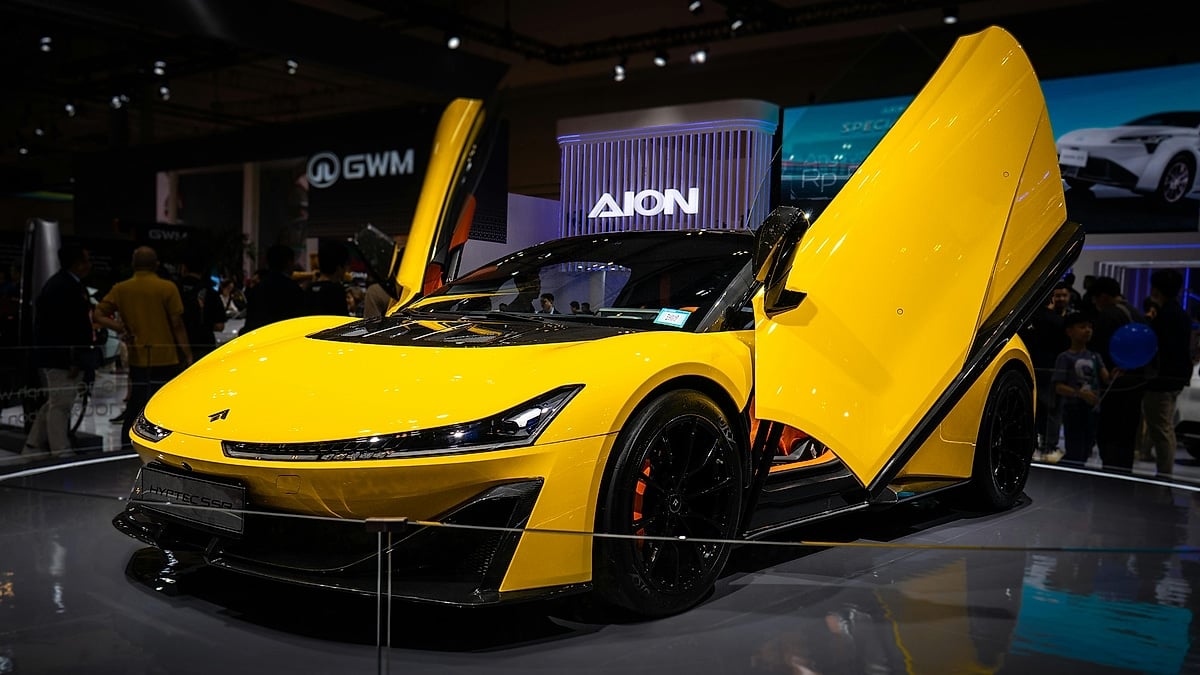
That puts China's 2024 electric-car volume at roughly 6.9 times the U.S. number.
This is where I think U.S. automakers should be nervous. Scale not only lowers cost. It speeds up product learning. A brand competing in China gets more real-world feedback, more trim experimentation, more battery-pack variety, more plug-in hybrid data, more infotainment iteration, and more consumer punishment when a model feels stale.
The 2026 data makes the gap feel even louder. CarNewsChina's April 2026 dashboard shows 1.344 million China EV sales for that month, with 61% EV penetration. That single month equals 84% of the IEA's full-year 2024 U.S. EV sales number.
That is not a clean apples-to-apples forecast, and I would not present it as one. Different source, different year, different monthly versus annual frame. But as a scale marker, it is useful. China's EV market can absorb a volume in one month that looks uncomfortably close to America's full-year EV total from two years earlier.
If you are Detroit, that is not trivia. That is product-development weather.
The Price Anchor Is Already in the Room
ChinaEVPro's public model listings are the part that would stick in a normal shopper's brain. The site lists the BYD Song L DM-i PHEV SUV at a $19,690 starting price with 855 miles of WLTC range. It lists the Geely Emgrand L HiP PHEV sedan at $12,650 and the BYD Xia PHEV minivan at $29,130.
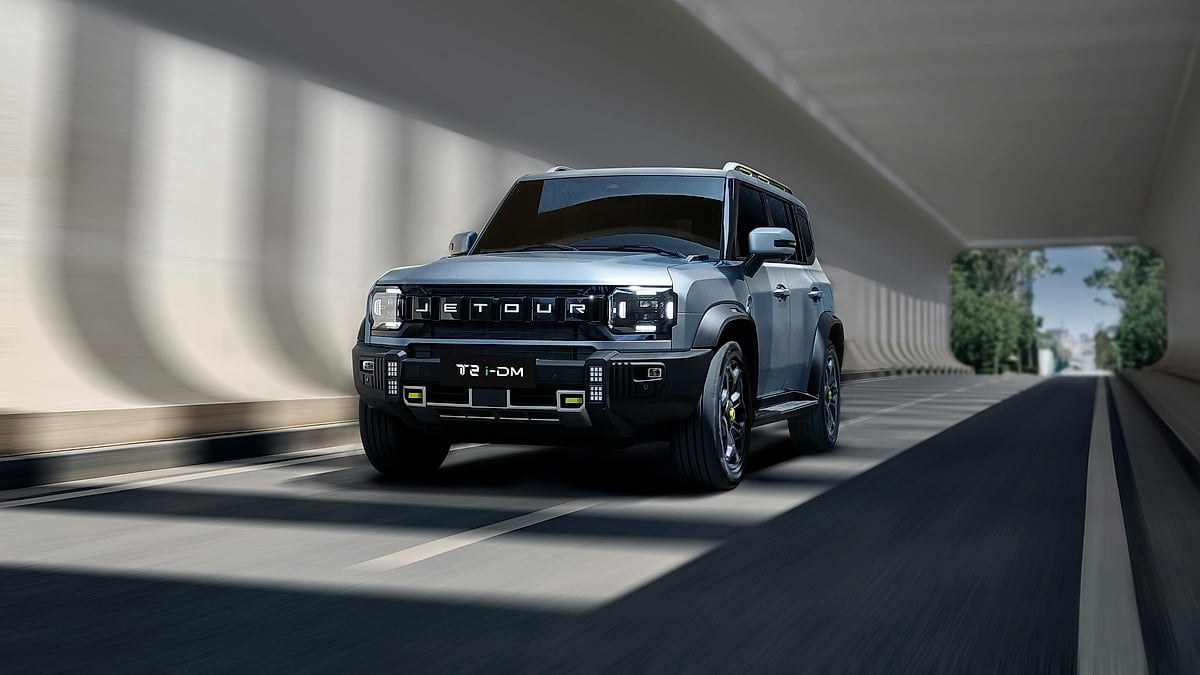
Those are not U.S. transaction prices. They do not include U.S. certification, tariffs, dealer economics, warranty networks, shipping, crash-compliance realities, parts support, insurance, or the messiness of living with a gray-market import. I would not tell a U.S. reader to treat them like dealer stickers in Atlanta.
But shoppers do not need perfect comparability for a price anchor to work.
Kelley Blue Book, using Cox Automotive's February 2026 EV Market Monitor, reported an average used EV listing price of $34,821. That was down 8.5% from 2025. It also said the used EV and non-EV price gap had narrowed to $1,334, with 18 of 26 brands showing average used EV prices below gas-powered equivalents.
Now compare that to the ChinaEVPro BYD Song L DM-i listing. A $19,690 listed Chinese plug-in SUV sits $15,131 below KBB's average U.S. used EV listing price. That is about 43% lower. Even against iSeeCars' January 2026 non-Tesla used EV average of $23,738, the Song L DM-i listing is $4,048 lower, about 17%.
Again, this is not a shopping recommendation. It is a psychological problem.
An American buyer looking at a used Volkswagen ID.4, Ford Mustang Mach-E, Hyundai Kona Electric, Tesla Model 3, Chevy Bolt EUV, or Nissan Leaf may never import a Chinese EV. But once they see global prices, they start asking a brutal question: why does this used EV still cost this much?
That question can move markets.
Used EVs Are Where the Pressure Shows First
New-car tariffs protect U.S. automakers from direct low-price competition. Used-car listings do not get that emotional protection.
If a new EV feels expensive, shoppers can blame tax rules, tariffs, dealers, brand strategy, battery costs, or inflation. If a used EV still feels expensive, the buyer gets less patient. They see depreciation risk. They see older charging hardware. They see battery-health uncertainty. They see insurance and repair questions. They see software support questions. Then they see Chinese plug-in SUVs and sedans online with huge spec sheets and low-looking prices.
That is how competition travels without a shipping container.
iSeeCars data shows how fragile the U.S. used EV story already is. After the federal EV credit ended on September 30, 2025, iSeeCars found used Tesla prices rose 4.3% through January 2026, while nearly every other used EV fell by an average of 3.6%. Non-Tesla used EVs averaged $23,738 in January 2026. The same report found used EV market share fell 20% from September 2025 to January 2026.
Karl Brauer at iSeeCars put it plainly, saying mainstream models had to cut prices to offset the lost credit. That is the key pressure point. Incentives go away, used prices soften, and global price visibility keeps buyers from accepting the old premium.
I do not think Chinese EVs need to arrive in the U.S. tomorrow to make that worse. They only need to keep showing buyers a sharper version of the value equation.
BYD Is the Brand. Xiaomi Is the Warning.
BYD is the obvious name because it has scale, batteries, exports, and global recognition. Li Auto matters because China has made extended-range EVs look normal and desirable in a way the U.S. market still has not fully processed. Xiaomi has a different purpose: speed.
CarNewsChina's April 2026 public dashboard listed the Xiaomi SU7 as China's No. 2 domestic model by retail sales, with 26,826 units for the month. That is the kind of thing U.S. automakers cannot laugh off. A consumer-electronics giant entered the car business and quickly became a model-level sales force in the world's most competitive EV market.
That does not mean Xiaomi can repeat the trick in America. U.S. safety rules, tariffs, dealer politics, charging habits, service infrastructure, and brand trust all matter. The point is that China is producing more brands that treat the car like a rolling consumer-tech platform. U.S. buyers may not get the exact car, but they will see the feature pace.
Screens, driver-assistance, cabin AI, sound systems, battery chemistry, range-extender packaging, charging claims, and smartphone integration all become part of the comparison set.
That is hard on Detroit because the old argument, "You cannot buy that here," feels less satisfying every year. Consumers live online. They compare everything globally. Cars are no longer exempt.
Tariffs Stop Cars, Not Expectations
The USTR moved to raise Section 301 tariffs on Chinese EVs to 100% in 2024. That is a massive wall for direct imports. The U.S. International Trade Administration also warned U.S. firms about China's automotive data rules, including draft guidelines covering product R&D, vehicle manufacturing, ADAS/autonomous driving, software updates, and Internet of Vehicles data.
Those policy layers matter. They mean Chinese EV pricing is not simply one unlocked door away from the U.S. market.
But the reader consequence is still real. If the global benchmark moves faster than the domestic offer, U.S. automakers face pressure even without direct Chinese competition. They may need to discount used EVs, improve leases, simplify charging, extend battery-health transparency, add standard equipment, cut trim complexity, improve software, or make hybrids and plug-in hybrids feel less like compromise products.
This is where I think the U.S. industry underestimates the internet.
When a shopper sees a Chinese plug-in hybrid SUV with a sub-$20,000 listed price, a U.S. automaker cannot respond with a lecture about tariffs. The shopper is asking a different question: why does my option feel older, riskier, or less complete?
What US Automakers Should Worry About
The China EV threat is usually framed as a future import event. That framing lets U.S. automakers breathe too easily. The pressure has already started through comparison, depreciation, and expectations. If used, non-Tesla EVs need lower prices to maintain demand after tax-credit changes, Chinese EV visibility makes that discount feel less like a deal and more like the bare minimum.
For shoppers, that creates leverage.
For automakers, it creates a warning. If a vehicle needs a $7,500 credit, a lease loophole, a dealer discount, and a loyal buyer to make the numbers work, China's scale is already in the room.
What To Do If You’re EV Shopping
If you are shopping for a used EV in the U.S., use China's EV market as a pressure gauge, not a shopping catalog. Do not assume a $19,690 Chinese plug-in SUV is something you can safely buy, insure, service, or register here. Use it to negotiate harder on U.S.-market EVs with older charging ports, unclear battery health, weak software support, or soft resale values.
If you are watching Ford, GM, Stellantis, Tesla, Hyundai, Toyota, or Volkswagen, monitor used EV prices as closely as new-model launches. The first sign of Chinese pressure will not be a BYD storefront in Ohio. It will be a buyer refusing to overpay for yesterday's EV because they have seen tomorrow's price online.
When you shop used EVs, do Chinese EV prices and specs change what you think a fair U.S. used EV price should be, or do tariffs, service, and warranty risk make those comparisons irrelevant?
Comment your thoughts below.
About The Author
Noah Washington is an automotive journalist based in Atlanta, Georgia, covering sports cars, luxury vehicles, and performance culture. His reporting focuses on explaining the engineering, design philosophy, and real-world ownership experience behind modern vehicles.
Noah has been immersed in the automotive world since his early teens, attending industry events and following the enthusiast communities that shape how cars are built and driven today. His work blends industry insight with enthusiastic storytelling, helping readers understand not just what a car is, but why it matters.
Noah is also a member of the Southeast Automotive Media Association (SAMA), a professional organization for automotive journalists and industry media in the Southeast.
His coverage regularly explores sports cars, luxury vehicles, and performance-driven segments of the automotive industry, including the evolving culture surrounding Formula Drift and enthusiast builds.
Read more of Noah's work on his author profile page.
You can also follow Noah here:
Set Torque News as Preferred Source on Google
Follow us today...






