
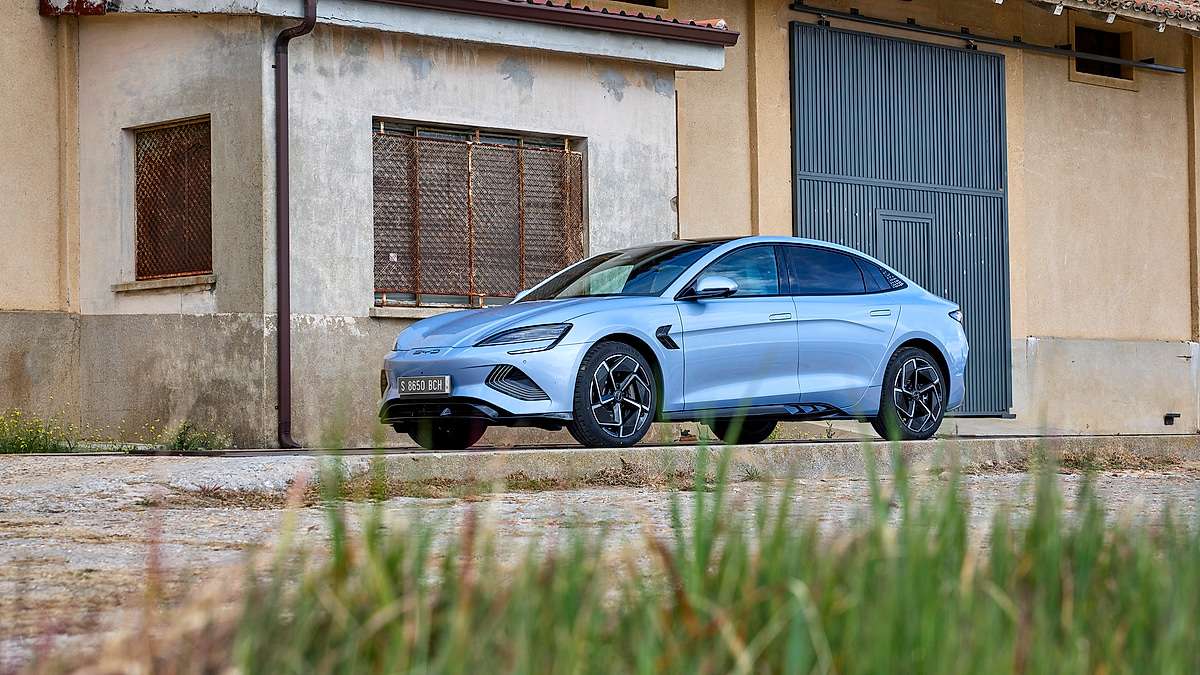

Canada has opened the door to Chinese electric vehicles, but only by a crack. The world’s largest EV manufacturer and Chinese company, BYD, plans as many as 20 dealerships. This is an ambitious footprint in a market that caps imports at 49,000 total units a year, rising to 70,000 by 2031. The bet is forward looking. Retail scale makes sense only if quotas expand. Early movers tend to secure the best corners.
Retail Strategy and Market Positioning
BYD’s rollout is planned to begin in the Greater Toronto Area, then extends to Vancouver, Montreal, and Calgary. A competitive comparison is instructive. Tesla has spent more than a decade building 38 Canadian locations. Newer entrants such as Rivian, Lucid Motors, and VinFast operate only a handful. BYD is attempting in a few years what incumbents took a decade to assemble, suggesting confidence that policy will bend in its favor.
Policy Shift and Quotas
The policy backdrop has changed quickly. Canadian Prime Minister, Mark Carney reduced tariffs on Chinese EVs to 6.1% after a period of 100% duties aligned with Washington DC. In return, China eased tariffs on Canadian agricultural exports. The new regime allows 49,000 vehicles a year at the lower rate, with a portion reserved for cars priced below about $25,900. Policymakers aim to lower prices for consumers while nudging foreign firms toward local investment.
A Short Trip Allowed, A Permanent Stay Denied for Chinese EVs
Under current U.S. policy, a Canadian registered Chinese EV such as a BYD can be driven into the country for short term personal travel, though only on a temporary basis. Permanent import is effectively blocked. Vehicles must comply with Federal Motor Vehicle Safety Standards, which most Chinese market EVs do not meet, making registration and insurance in the U.S. impractical. U.S. residents face stricter scrutiny, as U.S. Customs and Border Protection may treat a Canadian purchased vehicle as a permanent import, which is not allowed. Attempting to import a non-conforming vehicle requires costly and time consuming certification, including potential crash testing. High tariffs, often as much as 100%, add another barrier, reinforcing a system designed to limit Chinese EV entry into the U.S. market.
Price Advantage and Incentive Gap
Chinese EVs compete on cost. BYD’s models undercut many North American offerings and rival imports from brands linked to Geely. Yet they miss out on Canada’s purchase incentives. The result is a mixed signal. Lower sticker prices draw interest, absent subsidies blunt demand. The market will test which force dominates.
Scale, Skepticism, and Dealer Economics
Imports remain small, under 3% of Canada’s roughly 1.8 million annual vehicle sales. For dealers, quotas constrain throughput and profitability. Some operators question whether the volume can sustain a broad network. Chinese firms prefer standalone stores, a model that demands higher fixed investment. The arithmetic works better if quotas rise, or if domestic assembly follows.
Manufacturing Ambitions
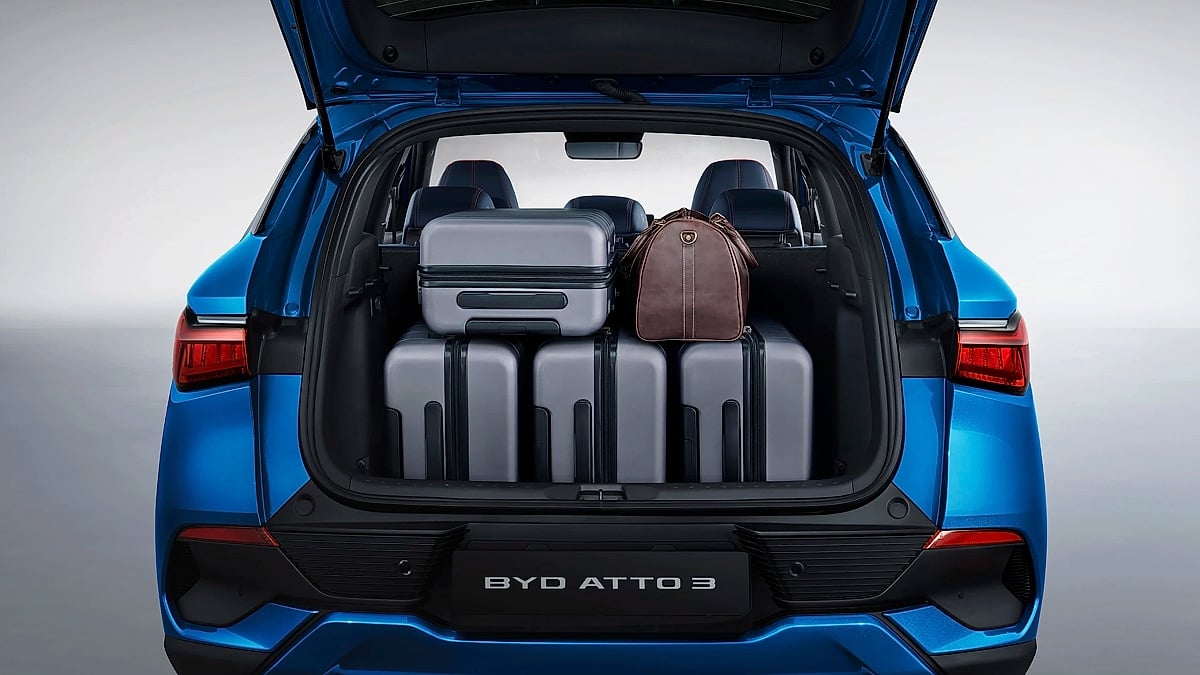
Retail is only one front. BYD is exploring production in Canada, either greenfield or through acquisition of a legacy asset. The preference is for control rather than joint ventures. Canada offers a low carbon electricity mix and a growing battery supply chain. The government sees a pairing of domestic suppliers with Chinese manufacturing know how as a route to export growth.
North American Tensions and Border Limits
Cross border politics complicate the picture. The United States has signaled that Chinese made EVs entering Canada will not be allowed into its market. Officials cite data security and connected vehicle risks. Tariffs as high as 100% and restrictions on certain technologies form a second line of defense. Vehicles built in Canada often contain substantial U.S. content, a reminder of how integrated the supply chain remains, and how disruptive policy divergence can be.
A Strategic Pivot by Canada
Canada’s shift reflects a broader recalibration. Trade frictions and U.S. tariffs on Canadian autos have exposed vulnerabilities in a system built on deep integration. Ottawa is seeking diversification. Chinese partners offer capital, scale, speed, and independence for a recently antagonistic United States. Domestic suppliers such as Magna International and Linamar provide global reach. The strategy is to combine them into export-oriented EV production.
The U.S. Remains a Difficult Market to Crack
For Chinese automakers, Canada may be a classroom rather than a destination. Executives describe the U.S. as a complicated environment. Regulatory approval requires compliance with federal safety standards, a costly and lengthy process. Cybersecurity rules further narrow the path. Workarounds exist in theory, local production with limited Chinese inputs, but they require time, capital, and political patience. Meanwhile, consumer behavior imposes its own barrier. Buyers favor brands with dense service networks. Awareness does not equal adoption.
Visibility without Access
Americans may still encounter Chinese EVs at the margin. Border regions and tourism will provide exposure, ride shares and rental fleets will offer brief trials. Visibility can shape perception. It does not confer market access. The moat is both legal and psychological.
Bottom Line
Canada’s opening to Chinese EVs is modest in volume yet significant in direction. It shows the shrewd hand of Prime Minster Carney by warning the United States without fully committing to Chinese imports. BYD’s dealership push signals confidence that quotas will expand and that policy will continue to thaw. The economics hinge on scale, either through higher import caps or local manufacturing. The United States remains largely closed, limiting North American integration for these vehicles. Canada is positioning itself as a bridge, a testing ground for pricing, distribution, and consumer acceptance. Whether that bridge leads south will depend less on showrooms in Toronto and more on politics in Washington.
What Do You Think?
If Chinese EVs were available in Canada at a lower price, would you seriously consider buying one over a Tesla or GM?
If a BYD costs thousands less than a comparable EV, should it still be blocked from U.S. buyers?
Chris Johnston is the author of SAE’s comprehensive book on electric vehicles, "The Arrival of The Electric Car." His coverage on Torque News focuses on electric vehicles. Chris has decades of product management experience in telematics, mobile computing, and wireless communications. Chris has a B.S. in electrical engineering from Purdue University and an MBA. He lives in Seattle. When not working, Chris enjoys restoring classic wooden boats, open water swimming, cycling and flying (as a private pilot). You can connect with Chris on LinkedIn and follow his work on X at ChrisJohnstonEV.
Photo credit: BYD media gallery
Set Torque News as Preferred Source on Google
Follow us today...



Comments
I would like to see Chinese…
Permalink
I would like to see Chinese vehicles being sold in the US. If for no other reason, their pricing gives buyers in the US the chance to buy new instead of pre-owned. Given the current climate of overpriced everything, including new cars, their has to be relief for consumers. And if that is in the form of a Chinese vehicle, I am all for it. Thus far, the American pResident hasn't kept his promise - his word - to lower prices on... ANYTHING. The least he could do is give buyers the opportunity to help themselves even if he isn't going to help them.
Thanks for your comment Ty…
Permalink
In reply to I would like to see Chinese… by Ty Thornburg (not verified)
Thanks for your comment Ty. I agree that it seems like many things have become overwhelmingly overpriced. I wrote a previous article about the best selling EVs in China and their amazingly low prices. Granted, the prices would probably be higher in North America, but still lower that what is currently on the market. The article is entitled:
“I Think U.S. Car Prices Are Way Too High, China’s Top Selling Cars Like The Xiaomi SU7 Aren’t Available in The U.S., but They Are as Quick as a Tesla Model 3 and Much Cheaper, Here Are the Top 10”
Regards, Chris
It’s astonishing to see how…
Permalink
It’s astonishing to see how BYD (and others in China) have managed to improve the quality of their batteries over the past number of years. When they started selling cells, their safety record was deplorable! And now they not only make world class cells but world class vehicles.
Keep in mind that hybrids…
Permalink
Keep in mind that hybrids are also included - that might make a big difference. Many have very large batteries, allowing pure EV use for most of the time, without any range concerns. They can also easily be driven purely on gas if desired.
I currently own a 2022 Kia…
Permalink
I currently own a 2022 Kia EV6. I purchased it new...was made in South Korea. I love it. I would purchase an automobile made in China. I would not pay a large import duty. I would pay what I think is an honest price. I am definitely pro Canada...maybe things will change back to the way things were.
Thanks. Bob Zerfoss