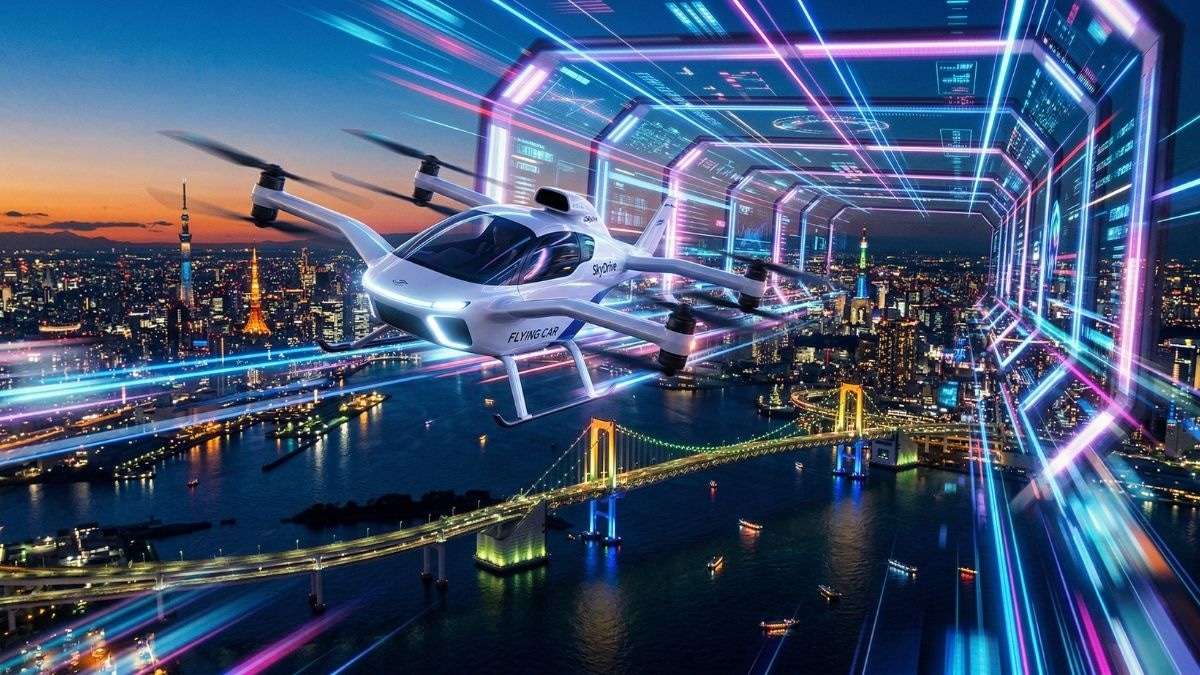

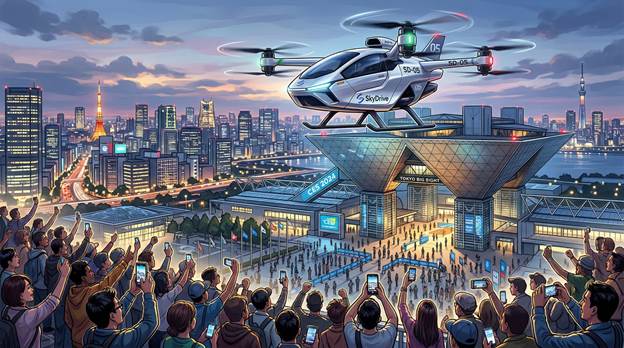
If you were at Tokyo Big Sight on March 5, 2026, you might have thought you’d accidentally stepped into a live-action remake of Akira, minus the dystopian biker gangs and telekinetic explosions. Instead, the crowds witnessed something arguably more miraculous: a vehicle that didn’t just sit in Tokyo’s legendary traffic but rose gracefully above it.
Japanese developer SkyDrive successfully completed a series of public demo flights of its SD-05 model, marking the first time the craft performed integrated ground-and-flight operations in a major urban center. This wasn’t just a "hop" in a rural field; this was a sophisticated dance of avionics in the heart of one of the world’s most densely populated cities. According to reports from Asian Aviation, the SD-05 handled the transition from ground taxiing to vertical takeoff with the kind of poise usually reserved for Olympic gymnasts or people who actually understand how to use a bidet on the first try.
SkyDrive vs. The World: A Tale of the Tape SkyDrive isn’t the only player in the "Advanced Air Mobility" (AAM) space, which is the fancy industry term for "flying cars" used by people who want to sound like they have MBAs. So, how does the SD-05 stack up against the heavy hitters?
While competitors like Joby Aviation and Archer Aviation are focusing on larger, five-seat "air taxis" designed to shuttle commuters from JFK to Manhattan, SkyDrive has taken a more "compact" approach. The SD-05 is essentially the kei-car of the skies. It’s small, nimble, and designed for short-range urban hops.
If Joby is a Cadillac, SkyDrive is a Vespa with rotors. This is a brilliant strategic move for the Japanese market, where space is at a premium and the "last mile" of travel is often the most frustrating. However, in the global arms race, SkyDrive faces stiff competition from China’s EHang, which is already pushing hard on autonomous (pilotless) operations, and Germany’s Volocopter, which has been flirting with European regulators for years. SkyDrive’s edge? The "Made in Japan" seal of reliability and a partnership with Suzuki that suggests they actually know how to mass-produce things, a skill many EV startups seem to treat as an optional DLC.
The Global Leaderboard: Who’s Winning the Space Race (Part II)?
Globally, the race to own the third dimension is a three-way heat between Asia, the Middle East, and North America.
- China: Currently leading in the "just do it" category. EHang has already received Type Certification from Chinese regulators, putting them technically ahead in the race to commercialization.
- The UAE: Dubai is essentially a giant playground for future tech. They want flying taxis by 2026, mostly because sitting in a Lamborghini in traffic is still, well, sitting in traffic.
- The United States: We are the kings of regulation and litigation. While the FAA has released a roadmap for AAM, we are moving with the cautious speed of a tortoise wearing a hi-vis vest.
Within the U.S., the leaders aren’t necessarily the states you’d expect. Florida is a frontrunner, thanks to its flat terrain and "anything goes" attitude toward transportation. California is the R&D hub (Archer and Joby are based there), and Ohio, the birthplace of aviation, is making a massive play to be the manufacturing center for these sky-bound EVs.
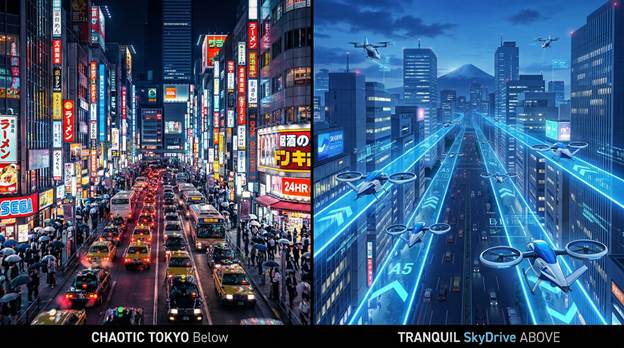
The Reality Check: Why You Can’t Buy One at a Dealership Yet Before you trade in your Honda Civic for a set of rotors, we need to talk about the "Boring Stuff" (which is also the "Important Stuff"). To make flying cars viable, we need three things:
- Battery Density: Current batteries are heavy. To fly for more than 20 minutes without falling out of the sky like a caffeinated brick, we need breakthroughs in solid-state energy storage.
- The "Karen" Factor (Noise): No one wants a giant drone buzzing over their backyard while they’re trying to grill a steak. SkyDrive’s electric motors are quiet, but "quiet" is relative when you have twelve of them spinning at high RPMs.
- Air Traffic Control (ATC): Integrating thousands of flying cars with existing 747s and news helicopters is a logistical nightmare. We need an automated, AI-driven Unmanned Aircraft System Traffic Management (UTM) that doesn't rely on a guy in a tower with binoculars.
The Jetsons vs. Reality: Will We Ever Reach Critical Mass? George Jetson lived in 2062, had a robotic maid, and a car that folded into a briefcase. Are we on track?
In terms of the technology, we are actually ahead of schedule. The SD-05 is a marvel of engineering that George would find enviable. However, in terms of societal integration, we are lagging. The "critical mass" for flying cars in the U.S. likely won't happen until the 2040s.
Why? Because for a long time, these will be "rich person toys" or premium airport shuttles. To reach critical mass, the cost per mile needs to rival an UberX. Predicting the future is a fool’s errand, but here is a bold one: By 2035, you will be able to book a flight across Los Angeles or Miami on an app for $100. By 2050, the "commuter flight" might be as common as the subway. But the folding briefcase car? Forget it. Physics is a buzzkill.
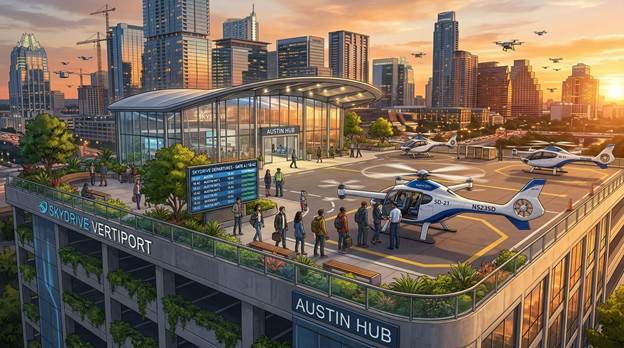
Wrapping Up The SkyDrive demo at Tokyo Big Sight is a massive psychological win for the industry. It proved that these machines can operate safely in the "real world," not just over empty deserts. While we aren't quite in the Jetsons era where we can ignore stoplights entirely, the SD-05 shows that the transition from ground to air is no longer science fiction.
The path forward requires more than just cool hardware; it requires a global overhaul of how we think about urban space, noise, and safety. Japan is currently leading the charge in urban integration, but the U.S. and China are hot on their heels. For now, keep your eyes on the skies, and maybe keep your car insurance for the terrestrial commute just a little bit longer.
Disclosure: Images rendered by Artlist.io
About The Author
Rob Enderle is a highly recognized technology analyst and automotive journalist with decades of experience providing deep-dive insights into the intersection of personal technology, artificial intelligence, and the future of transportation. Based in Bend, Oregon, Rob has spent his career dissecting complex industry trends for both enterprise and consumer audiences. He is a frequent presence at major global events like CES, where he evaluates the latest breakthroughs from industry giants such as Lenovo, Intel, HP, and AMD. You can learn more about Rob on Wikipedia and follow his articles on TechNewsWord, as well as Rob Enderle on X.
Set Torque News as Preferred Source on Google
Follow us today...