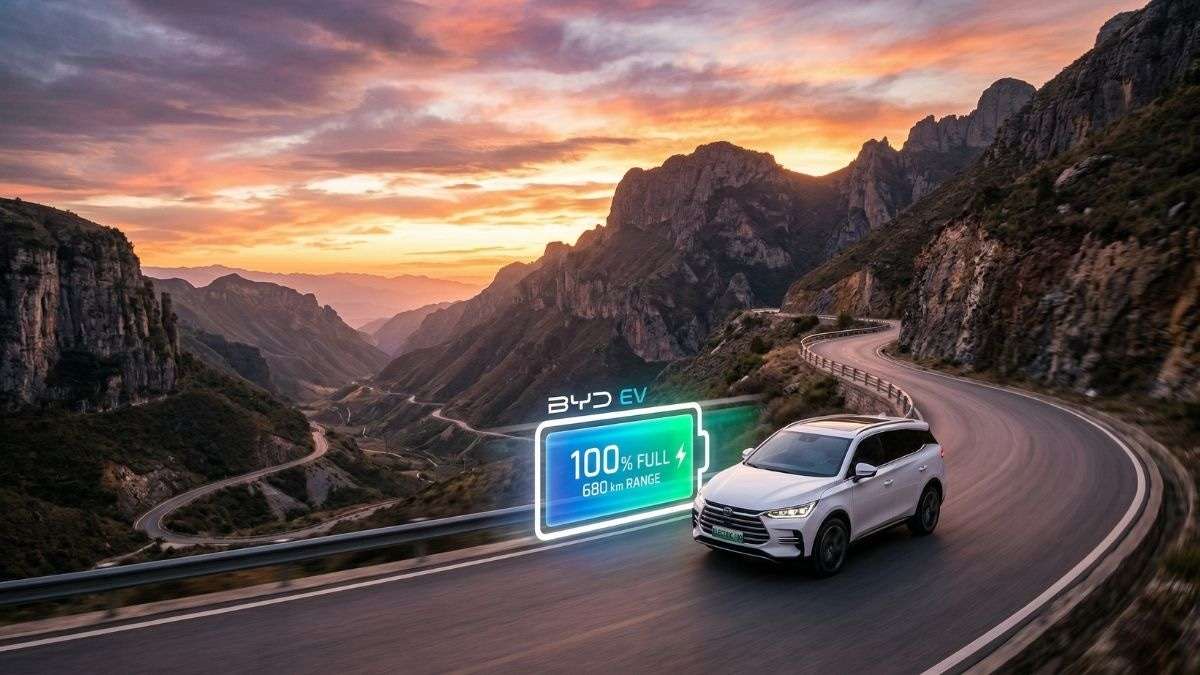

BYD has officially launched the 'Great Tang' SUV featuring a 10C-rated battery capable of a full charge in just six minutes. This 1000V architecture effectively ends 'charging anxiety' but leaves Western automakers and aging power grids scrambling to keep up. As reported by CnEVPost, this launch, which also includes updates to the Denza and Yangwang lines, is not just another incremental update; it is a fundamental challenge to the current limitations of lithium-ion physics and charging infrastructure.
Decoding the 10C Battery: What the Numbers Actually Mean
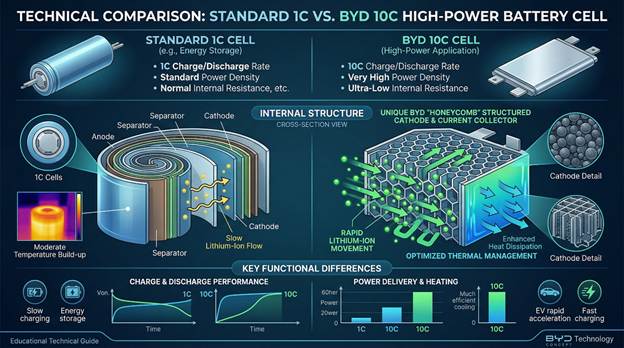
To understand why the Datang is a "black swan" event for the industry, we must first understand the "C-rating." In battery parlance, the C-rate measures the speed at which a battery is charged or discharged relative to its maximum capacity.
- A 1C rating means the battery can be fully charged or discharged in one hour.
- A 4C rating (currently the high-water mark for high-end EVs like the Porsche Taycan or Zeekr 001) allows for a full charge in roughly 15 minutes.
- The 10C rating found in the BYD Datang implies the battery can theoretically handle a full charge in just six minutes.
A 10C battery is engineered with a focus on "mass transport" within the cell. This involves using highly conductive carbon nanotubes, specialized electrolytes with lower viscosity, and advanced anode materials (often silicon-carbon composites) that allow lithium ions to move at blistering speeds without causing "plating" - a phenomenon where lithium metal builds up on the anode, leading to short circuits and fires. Compared to standard LFP (Lithium Iron Phosphate) or NCM (Nickel Cobalt Manganese) batteries found in most U.S. EVs, which typically operate between 1C and 2C, the 10C battery is essentially a "super-capacitor" with the energy density of a traditional battery.
The Infrastructure Gap: A Staggering Disconnect
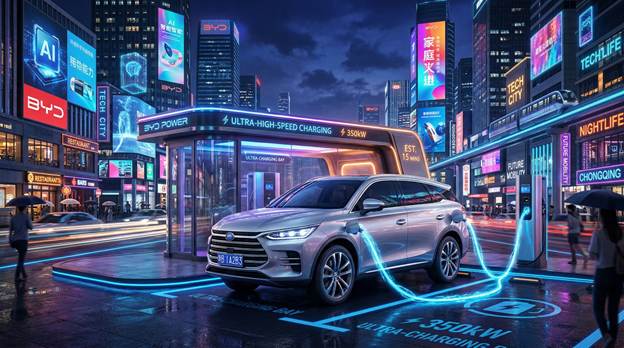
The primary hurdle for the Datang’s 10C technology isn't the car, it’s the grid. To charge a 100kWh battery at a 10C rate, a charger would need to deliver a staggering 1 megawatt (1,000 kW) of power. Currently, the National Electric Vehicle Infrastructure (NEVI) Formula Program in the U.S. focuses on 150kW and 350kW chargers.
Even Tesla’s V4 Superchargers are currently capped far below what a 10C battery can ingest. This means that while the BYD Datang is "future-proof," it is launching into a world where the infrastructure is a decade behind. In China, BYD and partners are rolling out "overcharging" stations capable of 600kW+, but the 10C rating suggests that even those are just the beginning. The Datang represents a vehicle that can literally outpace the wires in the ground.
Comparing 10C to Recent Battery Advancements
The 10C breakthrough stands in stark contrast to other recent movements in the industry. For the last two years, the focus has been on Solid-State Batteries (SSBs). Companies like Toyota and QuantumScape have promised SSBs with 600-mile ranges, but commercial viability remains years away.
In contrast, BYD’s 10C technology is an evolution of Liquid-State chemistry. While CATL’s Shenxing battery brought 4C charging to the masses last year, BYD has skipped several steps to reach 10C. While SSBs focus on energy density (range), the 10C battery focuses on "rechargeability." If you can add 300 miles of range in the time it takes to buy a cup of coffee, the "range anxiety" that necessitates massive, heavy 200kWh batteries disappears.
The Trickle-Down Effect: Who Gets the 10C Next?
BYD is an integrated giant, meaning they control the battery supply chain through their subsidiary, FinDreams. Following the Datang SUV, we expect to see this 10C tech migrate rapidly across their premium ecosystem.
- Denza Z9GT: As noted in the CnEVPost report, the Z9GT is already positioned as a high-performance flagship. A 10C variant is likely by late 2026.
- Yangwang U8/U9: These ultra-luxury vehicles ($150,000+) are the logical next step for 10C, where the cost of the advanced thermal management systems can be easily absorbed.
- The Global Market: Rumors suggest BYD is negotiating with European manufacturers to license this tech. We may see high-performance European EVs sporting "Powered by FinDreams 10C" badges by 2027.
Revolutionizing Performance and Range
The 10C battery doesn't just change how we charge; it changes how we drive. High C-ratings also apply to discharge. A battery that can take in 1,000kW can also put out massive bursts of energy. This translates to:
- Sustained Peak Performance: Unlike current EVs that throttle power after a few minutes of spirited driving to prevent overheating, 10C batteries have such low internal resistance that they can maintain peak horsepower for longer durations.
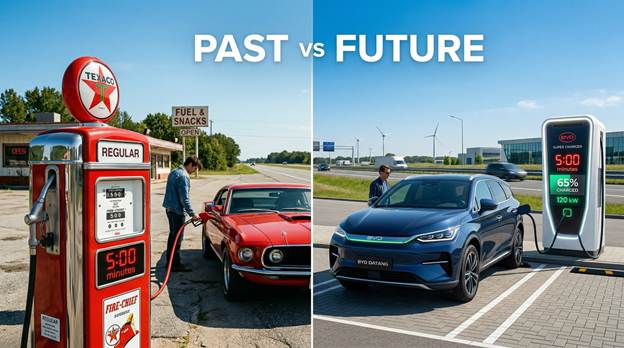
- Downsizing the Pack: If charging takes 6 minutes, do you really need a 1,000-lb battery? Manufacturers can now opt for smaller, 60kWh packs that make cars lighter, more agile, and more efficient, knowing the "refill" is as fast as a gas tank.
The Geopolitical Elephant in the Room
For Torque News readers in North America, the 10C Datang is a bittersweet announcement. Due to current tariff structures and the Inflation Reduction Act (IRA) requirements, BYD’s most advanced tech remains largely cordoned off from the U.S. market. However, the 10C battery sets a new "floor" for what consumers will expect. If the rest of the world is charging in six minutes, a 45-minute wait at a grocery store charger in Ohio will quickly become unacceptable. This launch puts immense pressure on companies like GM (Ultium) and Ford to accelerate their solid-state or high-silicon anode programs.
Wrapping Up
The launch of the BYD Datang SUV on March 5 is a landmark moment that effectively kills the "charging time" argument against EVs, provided the infrastructure can catch up. By deploying a 10C battery, BYD has demonstrated that the bottleneck for electric mobility is no longer the chemistry within the cell, but the grid's ability to deliver juice.
- The 10C Rating: Enables 0-100% charging in roughly six minutes.
- Infrastructure: U.S. chargers currently peak at 350kW, making them unable to utilize the Datang's full potential.
- The Future: Expect this technology to migrate to the Denza and Yangwang brands within 18 months, setting a new global benchmark for performance EVs.
As we look toward the remainder of 2026, the question isn't whether EVs are ready for the prime time. Instead, it's whether our cities and highways are ready for the sheer power that BYD is now prepared to unleash.
Disclosure: Images rendered by Artlist.io.
About The Author
Rob Enderle is a highly recognized technology analyst and automotive journalist with decades of experience providing deep-dive insights into the intersection of personal technology, artificial intelligence, and the future of transportation. Based in Bend, Oregon, Rob has spent his career dissecting complex industry trends for both enterprise and consumer audiences. He is a frequent presence at major global events like CES, where he evaluates the latest breakthroughs from industry giants such as Lenovo, Intel, HP, and AMD. You can learn more about Rob on Wikipedia and follow his articles on TechNewsWord, as well as Rob Enderle on X.
Set Torque News as Preferred Source on Google
Follow us today...