
The future of transportation has always been painted with a single, vivid brushstroke: the flying car. For decades, it was the ultimate promise of sci-fi—a world where traffic jams are a memory and the commute is a cloud-hopping joyride. But while the technology has been steadily catching up to the dream, the law has remained firmly on the ground. That is, until now.
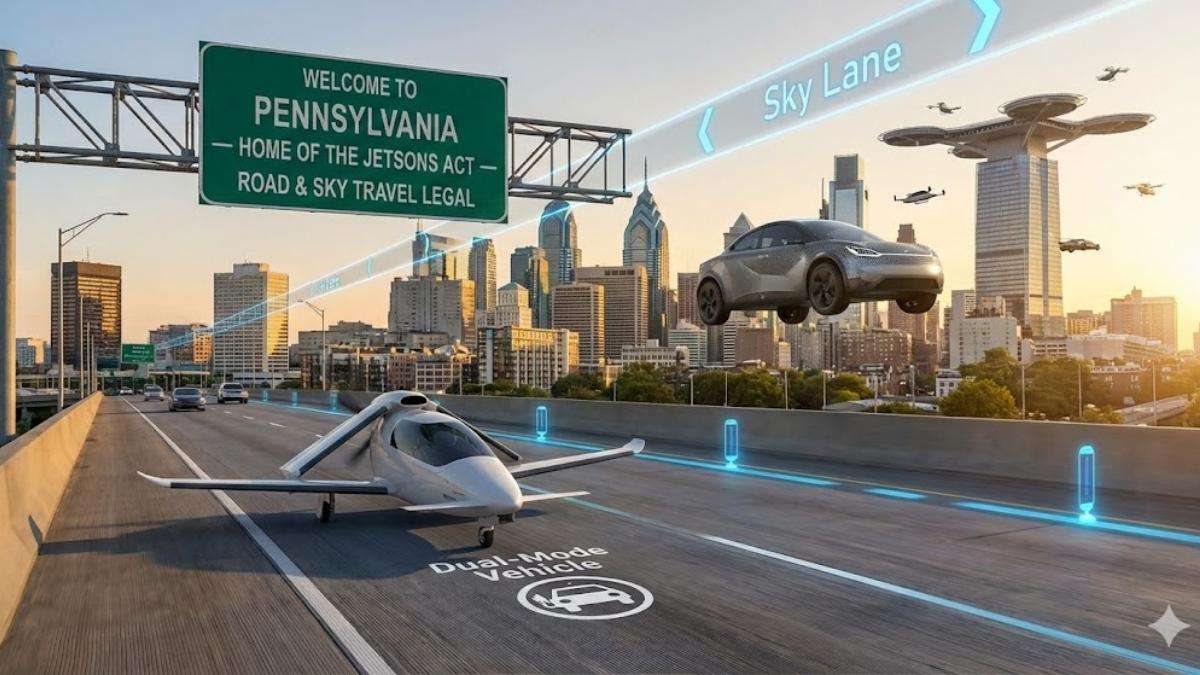
In a move that signals a massive shift for personal mobility, Pennsylvania State Senator Marty Flynn has reintroduced Senate Bill 1077, affectionately dubbed the “Jetsons Act.” This legislation aims to create a clear legal vehicle category for "roadable aircraft," allowing them to be registered for both road and air travel. This isn't just bureaucratic housekeeping; it is the critical regulatory infrastructure needed to turn prototype novelties into viable consumer products.
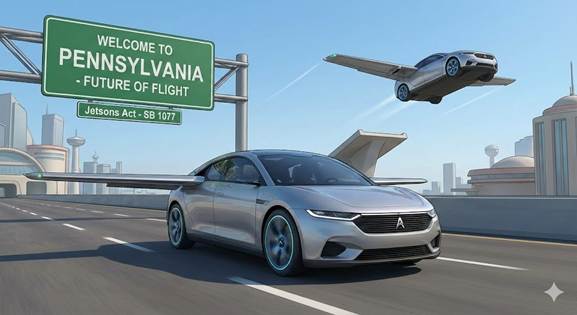
The "Jetsons Act": A Legal Runway
The core problem for flying car manufacturers has never been just gravity; it’s the DMV. Current laws force a vehicle to choose a lane: it’s either a car (subject to NHTSA safety standards) or a plane (subject to FAA airworthiness). There is no middle ground for a machine that does both.
The Jetsons Act bridges this gap. Under SB 1077, Pennsylvania would define a "roadable aircraft" as a dual-mode vehicle. On the ground, it registers as a motor vehicle, displaying a standard license plate and adhering to state inspection laws. In the air, it effectively vanishes from the DMV’s jurisdiction and operates strictly under federal aviation oversight.
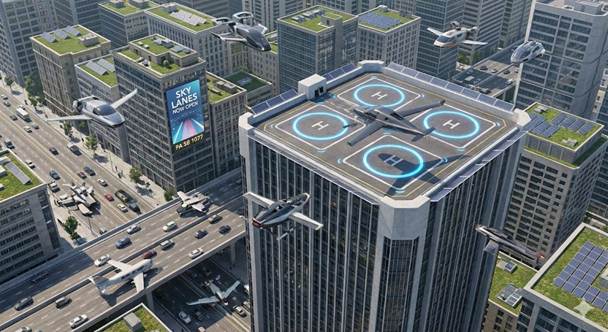
Crucially, the bill clarifies the transition point. It mandates that take-offs and landings must occur in approved areas, such as airports or designated vertiports, rather than allowing drivers to simply hit a button and lift off from I-95 during rush hour. This pragmatic approach balances innovation with public safety, signaling to manufacturers that Pennsylvania is open for business.
The Players: Who Is Actually Building These?
While legislators draft the rules, engineers are bending metal and molding carbon fiber. The race for the first mass-market flying car is heating up, with two distinct philosophies emerging: the "drive-fly" hybrid and the eVTOL (electric Vertical Take-Off and Landing).
At the forefront is Alef Aeronautics, a California-based company backed by early Tesla investor Tim Draper. Their Model A is a true eVTOL that looks like a car but features a mesh body housing eight propellers. In late 2025, Alef began manufacturing its first units for early "beta" customers. These initial vehicles are capable of vertical takeoff and are designed to hop over traffic obstacles, though they are currently classified as "low-speed vehicles" on the road (capped at roughly 25 mph).
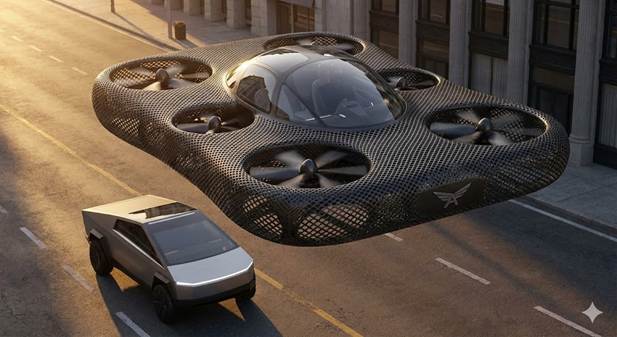
On the other side of the spectrum is Samson Sky, creators of the Switchblade. Unlike the Alef, the Switchblade is a "flying sports car" that drives to an airport, swings out its wings in under three minutes, and takes off like a traditional plane. Samson Sky has already conducted successful wind tunnel tests and is finalizing production engineering. Their approach avoids the massive energy requirements of vertical takeoff by utilizing existing runway infrastructure, making it a potentially more practical option for long-distance regional travel.
Timeline: When Will We See Critical Mass?
Don't expect your neighbor to replace their SUV with a Switchblade next year. While early adopters and wealthy enthusiasts will likely begin taking delivery of beta units in 2026, "critical mass"—defined as widespread adoption where these vehicles are a common sight—is still over a decade away.
Industry analysts, including those at Morgan Stanley, have predicted the market for urban air mobility could hit $1 trillion by 2040, but the early phase (2025–2030) will be dominated by commercial "air taxi" services rather than personal ownership. The shift to personal flying cars becoming as common as high-end sports cars is likely to occur in the 2035–2040 window, dependent largely on battery density improvements and the success of legislation like the Jetsons Act.
The Logistics: Traffic, Safety, and Infrastructure
The Jetsons Act is a necessary first step, but the infrastructure challenges are immense.
- Traffic: The dream of "decongesting" roads works only if the sky doesn't become the new gridlock. To manage this, we will likely see the implementation of "sky lanes"—virtual highways in the sky monitored by automated air traffic control systems.
- Infrastructure: For VTOLs like the Alef, the world is a landing pad, but for wing-based designs like the Switchblade, municipal airports become the new freeway on-ramps. We may see a resurgence in the relevance of small, local airstrips that have been underutilized for decades. A key part of this is the development of new urban landing zones, or "vertiports."
- Safety: This is the biggest hurdle. A fender bender in the air is fatal. Manufacturers are countering this with redundancy. Most designs feature ballistic parachutes that can lower the entire vehicle to the ground in the event of catastrophic failure.
Pilot or Driver? The Training Gap
Perhaps the most overlooked aspect of the flying car revolution is the operator. Who drives these things?
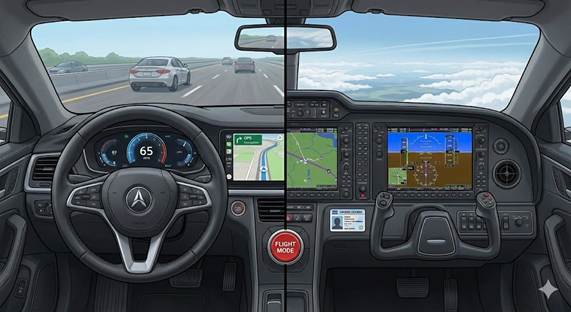
Under the current framework supported by the Jetsons Act, you will need both a driver's license and a pilot's license. This creates a high barrier to entry. However, companies like Pivotal are experimenting with ultralight eVTOLs that technically do not require a pilot's license under FAA Part 103 rules, though operating them without training is ill-advised.
In the long term, the industry is betting on automation. The goal is a vehicle where the "driver" is merely a passenger inputting a destination, with the AI handling the complex aerodynamics, weather adjustments, and air traffic integration. Until full autonomy is achieved, however, the "flying car" will remain the domain of the pilot-driver elite.
Wrapping Up
Pennsylvania’s reintroduction of the Jetsons Act is more than just a nod to a classic cartoon; it is a piece of legislative pioneering that acknowledges a new reality. The technology for personal flight is here—companies like Alef and Samson Sky have the hardware to prove it. Now, it’s up to the lawmakers, city planners, and insurers to build the framework that lets us use it. We aren't living in Orbit City just yet, but for the first time in history, the road to the sky is legally under construction.
Disclosure: Images rendered by Artlist.io
Rob Enderle is a technology analyst at Torque News who covers automotive technology and battery developments. You can learn more about Rob on Wikipedia and follow his articles on Forbes, X, and LinkedIn.
Set Torque News as Preferred Source on Google
Follow us today...