
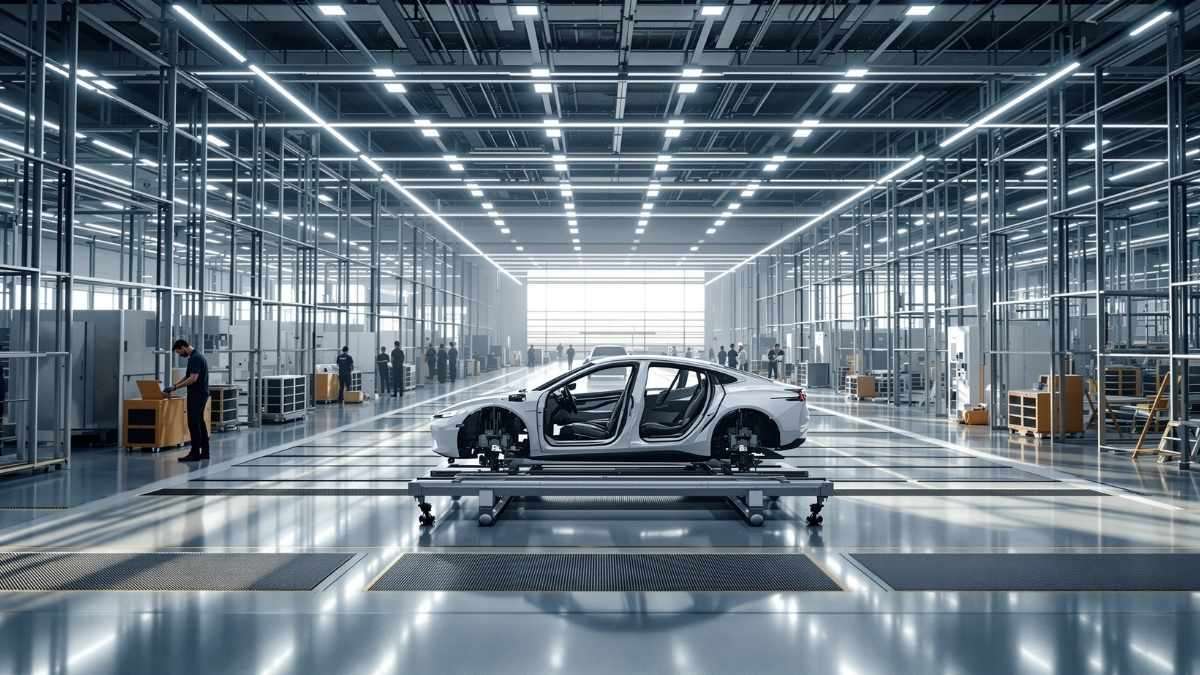

The road to mass electrification is paved with good intentions, but it is often blocked by harsh realities. For Lucid Motors, the path has just become significantly steeper. In a move that has sent ripples through the premium EV sector, the Newark-based automaker has cut its 2025 production forecast for the second time in three months. The culprit? A "perfect storm" of supply chain disruptions ranging from raw material shortages to unexpected industrial accidents.
While Lucid’s proprietary drivetrain technology remains the industry gold standard for efficiency and range, this latest stumble raises critical questions about the scalability of American EV startups in an increasingly volatile global market.
A Forecast Slashed: The Numbers and The News
On November 5, 2025, Lucid Motors announced it would trim its full-year production guidance to approximately 18,000 vehicles, down from a previous range that topped out at 20,000. As reported by Reuters, the company missed Wall Street’s revenue expectations for the third quarter, posting $336.6 million against analyst estimates of roughly $379 million.
The market reaction was swift. Shares dipped as investors digested the reality that production ramp-ups for the highly anticipated Lucid Gravity SUV would be slower than promised. Despite delivering a record 4,078 vehicles in Q3—largely driven by a rush of buyers looking to capitalize on expiring federal tax credits—the company is now forcing itself to tap the brakes just as it needs to accelerate.
The Root Causes: Fire, Chips, and Trade Tensions
The reasons behind this production cut read like a catalog of modern manufacturing nightmares. Lucid’s Interim CEO, Marc Winterhoff, cited a confluence of "significant supply chain disruptions" that have bottlenecked the assembly lines at their Casa Grande, Arizona facility.
Foremost among these was a devastating fire at a key aluminum supplier in September. For a company like Lucid, whose vehicles rely on lightweight aluminum architectures to achieve their industry-leading range, this was a critical blow. The disruption forced a slowdown in chassis production just as the factory was gearing up for peak Q4 output.
Simultaneously, the specter of the global chip shortage has returned to haunt the auto industry. New constraints on advanced semiconductors—essential for Lucid’s software-defined DreamDrive system—have limited the number of finished vehicles that can leave the factory. Compounding these physical shortages are rising trade tensions; new tariffs on imported EV components and rare-earth materials have squeezed margins and complicated logistics, forcing Lucid to scramble for alternative sources.
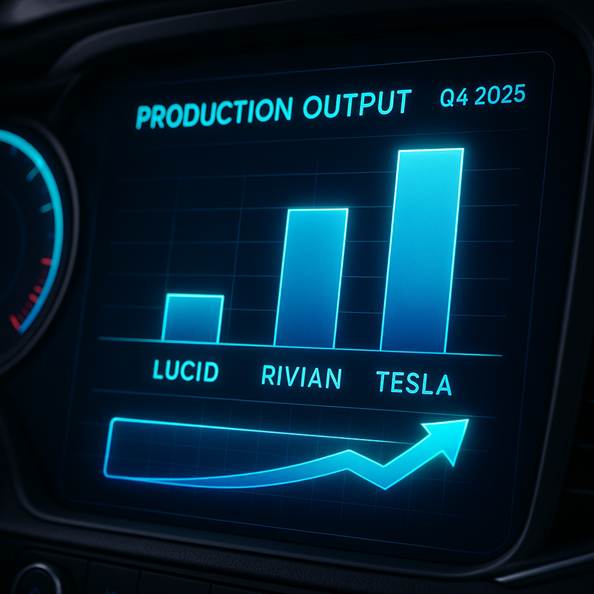
Sector-Wide Ripples: It’s Not Just Lucid
Lucid is not navigating these choppy waters alone. The headwinds buffering the luxury automaker are being felt across the entire US domestic EV landscape.
Rivian Automotive, Lucid’s primary startup rival, has also faced pressure, narrowing its own delivery guidance amid similar component constraints. Even industry titan Tesla has had to contend with the fallout of the expired $7,500 federal tax credit, which ended on September 30, 2025. This regulatory shift pulled demand forward into the third quarter, leaving a vacuum in Q4 that is punishing automakers who lack the scale to absorb price cuts.
The elimination of the "leasing loophole" has fundamentally altered the economics for American EV buyers. Demand has softened across the board, exposing which companies have the operational resilience to weather a downturn. While legacy automakers like Ford and GM can lean on their internal combustion profits to subsidize their EV divisions, pure-play EV makers like Lucid and Rivian have no such safety net.
The Long Road: Fixes and Future Prognosis
To resolve these issues, Lucid must aggressively diversify its supply chain. Reliance on single-source suppliers for critical components like aluminum body panels is a vulnerability that must be addressed immediately. The company is reportedly working to validate new vendors, but in the automotive world, validation takes time—time that Lucid, burning through cash, can scarcely afford.
However, Lucid has an ace up its sleeve that its competitors lack: the Public Investment Fund (PIF) of Saudi Arabia. Just as the production cut was announced, Lucid confirmed that the PIF had increased its credit facility to nearly $2 billion. This liquidity lifeline extends the company’s financial runway well into 2027, giving it the breathing room to fix its supply chain and ramp up production of the Gravity.
The long-term prognosis for Lucid hinges almost entirely on the success of the Gravity. The luxury sedan market (Lucid Air) is limited; the premium SUV market is where the volume—and profit—lives. If Lucid can stabilize Gravity production by mid-2026, the current supply woes may be remembered as mere growing pains.
Lucid vs. The Competition: A Tech Lead Under Siege
When the rubber meets the road, how does Lucid stack up against the heavyweights?
- Vs. Tesla: The Lucid Air Sapphire and Grand Touring models still outperform the Tesla Model S in range, efficiency, and interior luxury. However, Tesla wins on software integration, charging infrastructure (Supercharger network), and sheer manufacturing scale.
- Vs. Mercedes-Benz & BMW: The Mercedes EQS and BMW i7 are Lucid’s true luxury rivals. While the Germans offer superior brand cachet and established dealer networks, Lucid’s proprietary drivetrain technology remains smaller, lighter, and more powerful, offering better interior space for the vehicle's footprint.
- Vs. Rivian: Rivian is arguably in a stronger position with its R1S and R1T, having established a "lifestyle" brand identity that resonates deeply with American buyers. Lucid’s "post-luxury" aesthetic is elegant but perhaps less emotionally gripping for the mass market than Rivian's adventure-focused ethos.
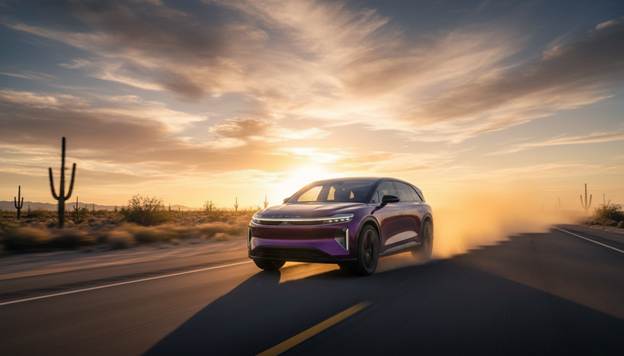
Wrapping Up
Lucid Motors finds itself at a precarious juncture in late 2025. The technology is undeniable, and the financial backing is secure, but the operational execution is faltering under external pressures. The production cut to 18,000 units is a disappointment, but not necessarily a death knell. If the company can navigate the current supply chain labyrinth and successfully scale the Gravity SUV, it remains one of the few American automakers with the potential to truly challenge the legacy hierarchy. But as 2026 approaches, the margin for error is thinner than ever.
Disclosure: Images rendered by Artlist.io and ChatGPT 5.1
Rob Enderle is a technology analyst at Torque News who covers automotive technology and battery developments. You can learn more about Rob on Wikipedia and follow his articles on Forbes, X, and LinkedIn.
Set Torque News as Preferred Source on Google
Follow us today...





Comments
Why are they pushing old…
Permalink
Why are they pushing old news again all of a sudden?
Is this manipulation for the shorts?