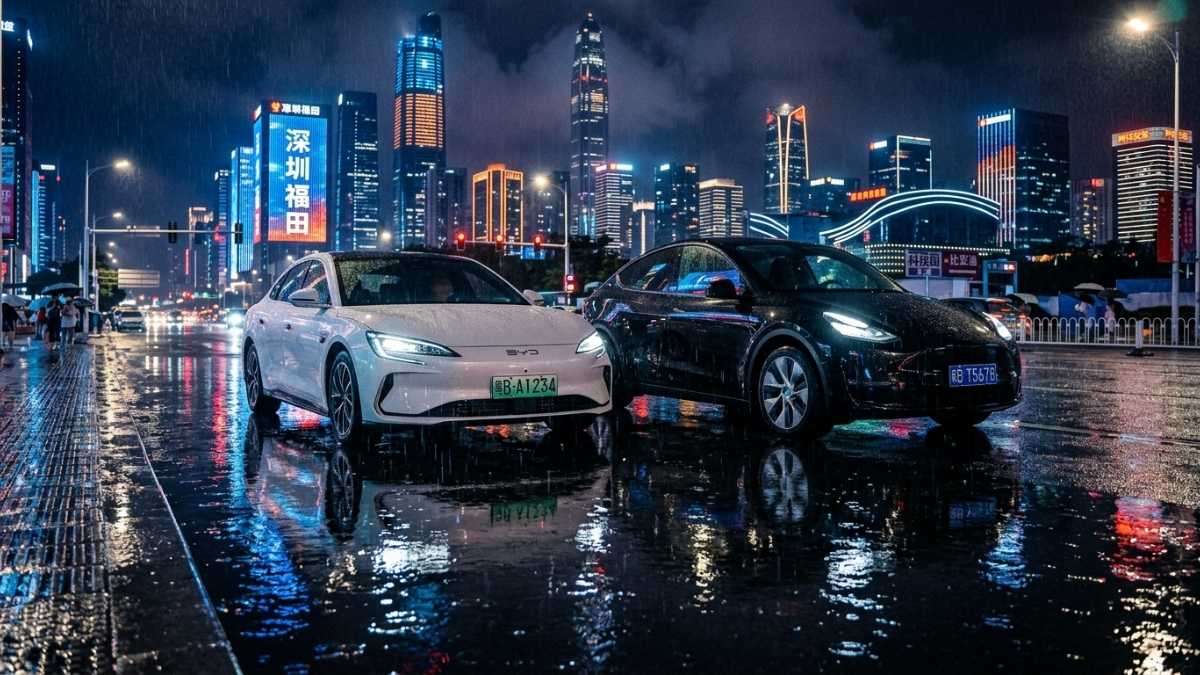

The honeymoon phase of the Chinese electric vehicle (EV) market has officially met its morning-after. After years of relentless growth and government-funded exuberance, the world’s largest automotive market woke up to a chilling statistic this January: a 20% year-over-year decline in New Energy Vehicle (NEV) sales. The catalyst wasn’t a lack of consumer interest or a sudden resurgence of the internal combustion engine. Instead, it was a deliberate, cold-blooded policy shift. On January 1, Beijing effectively ended the era of "free rides" by halving the purchase tax exemption for NEVs. Buyers who previously paid nothing now face a significant tax hit, a move that pulled forward massive demand into December and left January showrooms echoing with silence. Analysts are calling it a necessary correction, but the immediate impact is a stark "hangover" for a previously intoxicated market.

The Global Titan Re-Evaluating Its Throne
To understand the weight of a 20% drop in China, one must understand that China isn't just a participant in the EV race—it is the race. As of early 2026, China accounts for a staggering 61% of the total global EV fleet. Their internal deployment has been so successful that over half of all new cars sold in the country are now electric or plug-in hybrids.
While the U.S. and Europe grapple with charging anxiety and "compliance cars," China has built a wall-to-wall ecosystem. They have nearly one charger for every four EVs on the road and a battery supply chain that controls roughly 70% of the world’s output. However, this success created a "hunger games" environment domestically. Price wars between giants like BYD and newcomers like Xiaomi have shredded profit margins. The 20% sales drop is the first sign that the government is no longer interested in subsidizing a race to the bottom. For a deeper look at the mechanics of this decline, see this analysis on The Hangover: Why Chinese EV Sales Just Plummeted.
The Strategy Behind the Tax: Efficiency over Volume
Why would a government purposefully handicap its crown-jewel industry? The answer lies in a pivot from quantity to quality. Beijing’s new policy isn’t just about the tax; it’s about the world’s first mandatory EV energy-consumption standards. For the first time, if a vehicle is too heavy or its motor is too inefficient, it loses tax eligibility entirely.
The goal is three-fold:
- Cull the Weak: Force smaller, less efficient manufacturers to go bust or merge, leaving only "national champions" like BYD, Geely, and NIO.
- Technological Supremacy: Push R&D toward solid-state batteries and lightweight materials.
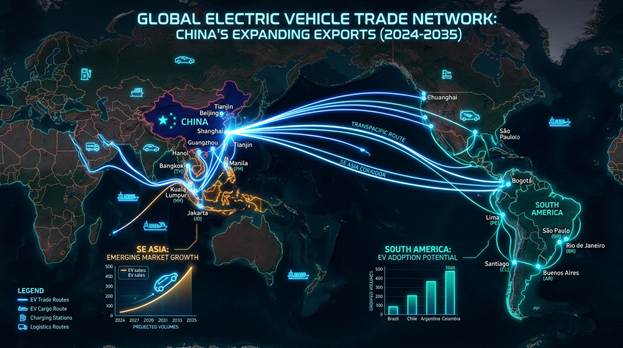
- Export Readiness: By making cars hyper-efficient at home, they become unbeatable on price and range in the global export market.
China vs. The World: A Tale of Two Policies
The contrast between China’s "tough love" approach and the rest of the world is jarring.
- In the United States: Under the current administration, the U.S. has moved toward a more volatile regulatory environment. While the Inflation Reduction Act (IRA) initially spurred growth, recent policy shifts and tariff increases have created uncertainty.
- In Europe: The EU is attempting to use tariffs to protect its legacy brands. However, China has already pivoted. By focusing on Plug-in Hybrids (PHEVs), which often face lower duties or different classifications, Chinese brands are still capturing record market share abroad.
China’s policy is long-term and disciplined; the West’s policy often feels reactive and tied to election cycles.
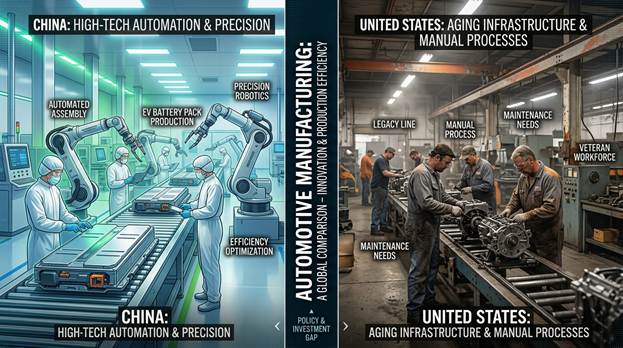
Opportunity or Obstacle for Non-Chinese EV Players?
Does this 20% domestic slump provide a "window" for Tesla or legacy players like Ford and GM? Hardly.
While Tesla’s January deliveries in China took a hit, their Shanghai plant remains an export powerhouse. For most non-Chinese companies, the new tax and efficiency standards are a massive hurdle. Most Western EVs are heavier and less aerodynamically efficient than their Chinese counterparts. Unless a company can meet these strict new 2026 technical requirements, their vehicles will suddenly become significantly more expensive than a compliant BYD or Geely.
However, there is a silver lining for non-science EV companies—those focusing on the software, infrastructure, and user experience side of the industry. As China shifts focus from selling the car to managing the grid, companies providing software for vehicle-to-grid (V2G) interactions may find a backdoor into the market.
What This Means for the Future of Government Policy
The world is watching China’s "experiment" with tax-driven cooling. If the market rebounds by the summer of 2026, it will prove that a mature EV market no longer needs pure subsidies to survive. This could lead to the end of the "green check" globally, shifting toward "taxing the manufacturer's inefficiency" rather than "buying the consumer's interest."
 Wrapping Up
The 20% sales drop in China is not a sign of a failing industry, but a forced evolution. By introducing a purchase tax and mandatory efficiency standards, Beijing is intentionally popping its own domestic bubble to ensure that only the most technologically advanced companies survive. For the global market, this is a warning. China isn't slowing down; it's getting leaner. While the U.S. and Europe debate the merits of electrification, China is already moving on to the next phase: a market where EVs aren't just "green," but are objectively better and more efficient than anything else on the road. The "January Hangover" will pass, but the new rules of the game are here to stay.
Disclosure: Images rendered by Artlist.io
Rob Enderle is a technology analyst at Torque News who covers automotive technology and battery developments. You can learn more about Rob on Wikipedia and follow his articles on TechNewsWord, TGDaily, and TechSpective.
Set Torque News as Preferred Source on Google
Follow us today...