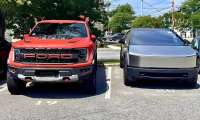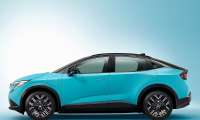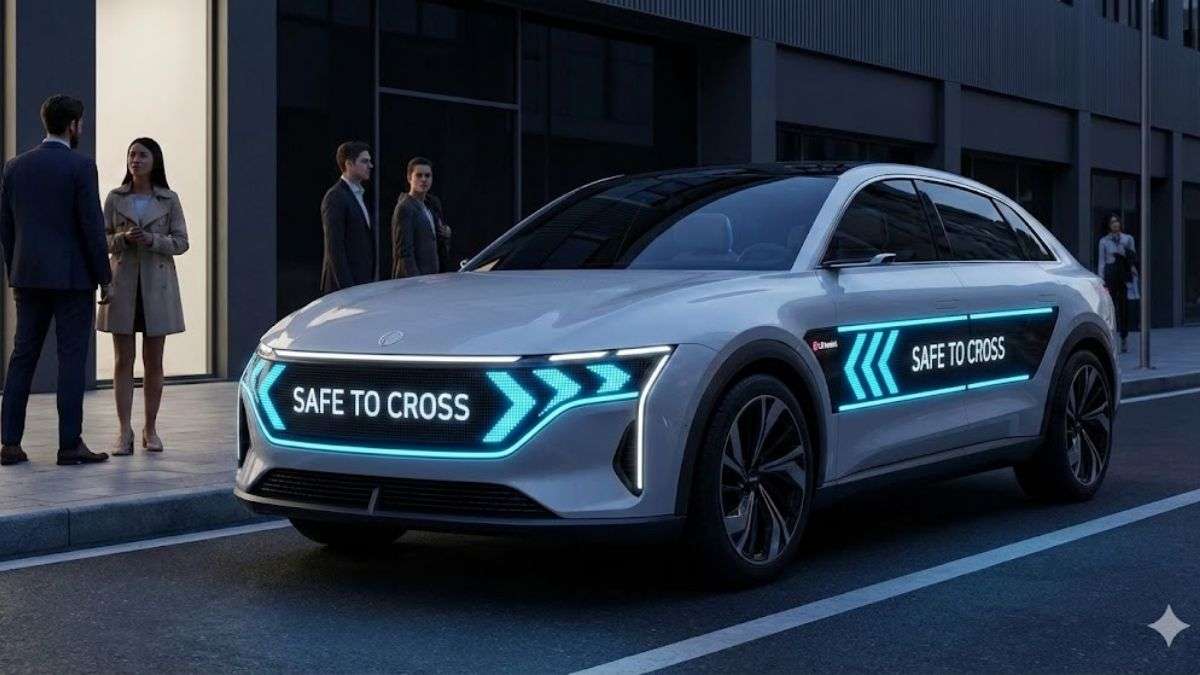

At the upcoming CES 2026, the automotive world will get a glimpse of a future where cars do more than just illuminate the road ahead; they communicate. LG Innotek, a global materials and components manufacturer, has made headlines by winning a CES 2026 Innovation Award for its groundbreaking "Ultra Thin Pixel Lighting Module." This isn't just a brighter bulb. It's an ultra-slim, flexible technology that transforms vehicle surfaces into dynamic displays capable of showing text and animations for Vehicle-to-Everything (V2X) communication. With mass production slated for the second half of 2027, this innovation promises to reshape not just how cars look, but how they interact with the world around them.
The Breadth of LG’s Automotive Presence
While this lighting award is grabbing the spotlight, it's just one facet of LG Innotek's extensive automotive portfolio. The company is a major, albeit often invisible, force in the mobility sector. Far beyond headlights and taillights, LG Innotek is a key supplier of mission-critical components for autonomous driving and electric vehicles.
Their lineup includes high-performance cameras and LiDAR sensors that act as the "eyes" of self-driving cars, as well as radar modules for advanced driver-assistance systems (ADAS). In the realm of connectivity, they are a leader in automotive 5G communication modules, ensuring vehicles are always connected to the network. For electric vehicles, they provide essential power components like battery management systems and DC-DC converters. This deep and broad expertise means that when LG Innotek introduces a new technology like pixel lighting, it's designed to integrate seamlessly into a holistic system of sensors, software, and power management, making it a more viable and powerful solution for automakers.
Changing Car Designs Forever
The most immediate impact of the Ultra Thin Pixel Lighting Module will be visual. For over a century, car design has been constrained by the need to house bulky headlamp and taillight assemblies. These required deep recesses in the bodywork, dictating the shape of fenders, hoods, and trunks.
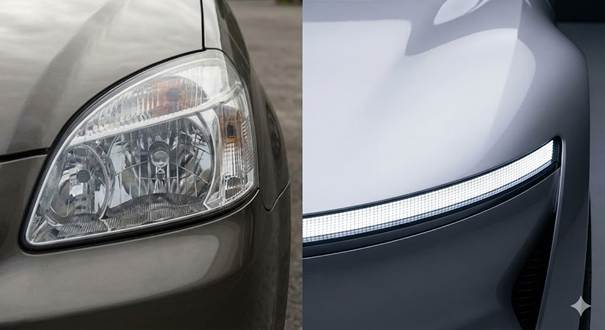
LG's new module is a game-changer. At just 0.12 inches thick and made of flexible silicone, it can be applied to curved surfaces like grilles, bumpers, and even the sides of a vehicle. This frees designers from traditional constraints, allowing lighting to become an integral, seamless part of the car's body rather than a separate "lamp." We can expect to see front ends where the entire grille area can light up with unique patterns or brand signatures, and taillights that wrap around the vehicle in fluid, unbroken lines. This technology will enable a level of personalization and brand-specific design language that was previously impossible.
Safety vs. Distraction: The V2X Dilemma
The ability to display text and animations on a car's exterior raises a critical question: will this improve safety or become a dangerous distraction? The potential for enhanced safety is significant, particularly in the context of autonomous vehicles (AVs). Today, drivers use hand waves, eye contact, and nods to communicate intent to pedestrians and other drivers—a "language" that AVs cannot easily replicate.
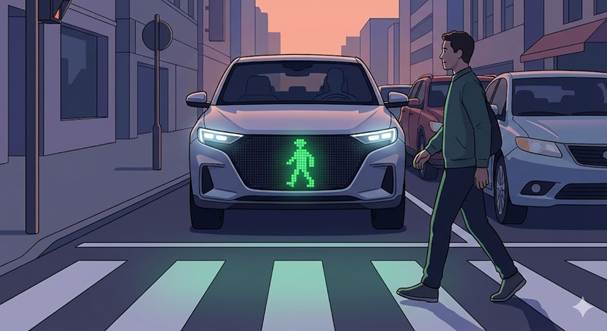
LG's pixel lighting could solve this by displaying clear, unambiguous messages. Imagine a self-driving car approaching a crosswalk and displaying a glowing green "WALK" symbol or text to a pedestrian, or a car at a four-way stop indicating "YIELDING" to another driver. This clear communication of intent could significantly reduce confusion and accidents.
However, the risk of distraction is real. If every car becomes a rolling billboard displaying scrolling text, advertisements, or complex animations, it could create visual chaos and divert drivers' attention from the road. To prevent this, strict regulations and standardization are paramount. Regulatory bodies like the NHTSA in the US and UNECE globally will need to establish clear guidelines on what can be displayed, when, and in what colors. A standardized set of symbols and short, predefined text messages for safety-critical communications (e.g., "STOPPING," "CROSSING," "AUTONOMOUS MODE") should be developed to ensure instant recognition by all road users, preventing a free-for-all of distracting visual noise.
Where Will We See It First?
Given the technology's likely premium cost and futuristic appeal, it's almost certain to debut on high-end luxury vehicles and cutting-edge electric cars. Brands that have made technology a core part of their identity, such as Mercedes-Benz, Audi, or Lucid, are prime candidates. We will likely see it first on flagship electric sedans or SUVs in the 2028-2029 model years. These manufacturers are already experimenting with advanced lighting signatures, and LG's technology provides the perfect tool to take that to the next level, offering a unique selling proposition to tech-savvy buyers. It may also appear early on autonomous robotaxi concepts intended for public deployment, where the V2X communication feature is a functional necessity rather than just a luxury add-on.
Wrapping Up
LG Innotek's CES 2026 award-winning pixel lighting module is more than just a cool gadget; it's a harbinger of a significant shift in automotive design and function. By untethering designers from the physical constraints of traditional lights and opening a new channel for vehicle-to-human communication, it promises a future where cars are sleeker, more personalized, and potentially safer. However, realizing this potential requires a careful balance. The industry and regulators must work together to ensure this powerful new communication tool is used to clarity intent and enhance safety, rather than adding to the visual clutter of our roads. The future of automotive lighting is bright, thin, and communicative—it's up to us to make sure it's also safe.
Disclosure: Images rendered by Artlist.io
Rob Enderle is a technology analyst at Torque News who covers automotive technology and battery developments. You can learn more about Rob on Wikipedia and follow his articles on Forbes, X, and LinkedIn.
Set Torque News as Preferred Source on Google
Follow us today...