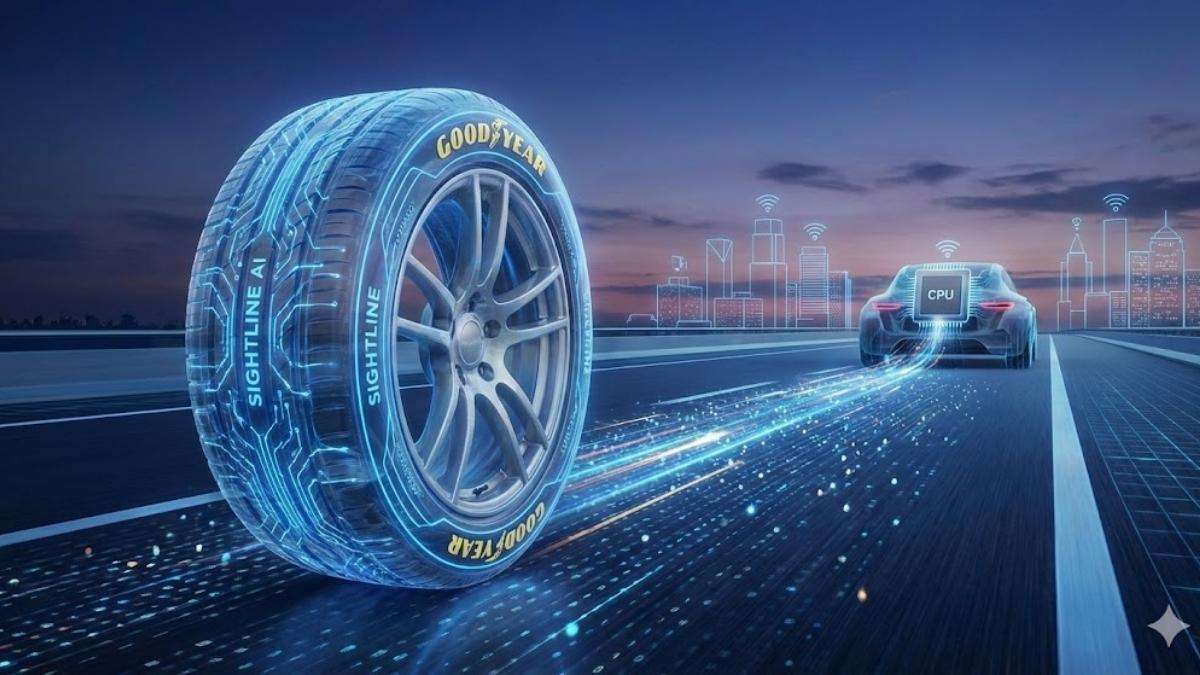

For over a century, the relationship between a car and the road has been a silent one. The driver—human or computer—has had to guess the condition of the asphalt based on visual cues or, worse, wait until traction is lost to react. We have given our future autonomous vehicles incredible "eyesight" through LIDAR, radar, and cameras. We have given them massive computing "brains" courtesy of companies like NVIDIA. But until now, we have neglected the sense of touch.
A car’s tires are the only point of contact with the road—a few crucial square inches determining whether a vehicle stops in time or slides into disaster. By leaving tires "dumb," we have left a gaping hole in the safety net of modern mobility.
Enter Goodyear’s "SightLine" suite of tire intelligence technologies. By turning the tire into a sophisticated sensor and integrating that data directly into the vehicle's operating system, Goodyear isn't just making a better tire; they are potentially solving one of the biggest hurdles facing the mass adoption of Autonomous Vehicles (AVs): total environmental awareness.
The "Sense of Touch" for Autonomous Driving
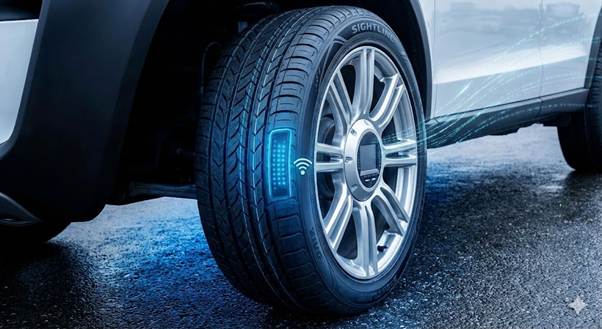
The core concept of SightLine is giving the vehicle a nervous system right where the rubber meets the road. Using sensors within the tire, SightLine measures wear, load, inflation, and, critically, road friction.
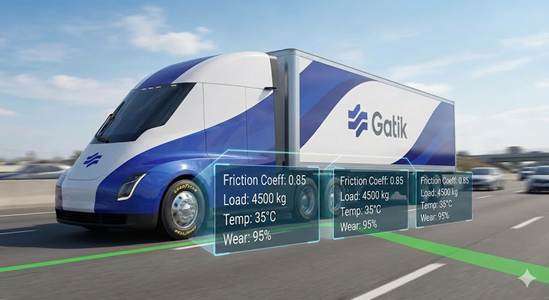
In a recent breakthrough demonstration, Goodyear showed how this technology integrates with the NVIDIA DRIVE Hyperion autonomous vehicle platform. SightLine doesn't just tell the car "the road is wet." It provides real-time, granular data on how slippery the surface is.
Consider the current paradigm: An AV sees rain ahead via cameras. It might preemptively slow down based on a general algorithm. It only truly knows the grip level when it applies the brakes and the ABS (Anti-lock Braking System) engages because the wheels begin to lock up. That is a reactive system.
With SightLine, the data is predictive. The tire informs the AV’s path-planning software (like NVIDIA’s Alpamayo) of the exact friction coefficient of the road surface before a braking event is necessary. This is revolutionary for safety; Goodyear’s tests have shown this tire-to-AV communication can reduce stopping distances drastically, potentially the difference between a close call and a collision.
Why EVs Need This More Than ICE Vehicles
While this tech is vital for AVs, it is immediately crucial for the booming Electric Vehicle (EV) market. EVs present unique challenges to tires that make intelligence indispensable.
First, EVs are significantly heavier than their internal combustion counterparts due to massive battery packs. Second, electric motors deliver instantaneous, high torque. This combination means EVs destroy conventional tires faster and require longer braking distances once traction is lost.
SightLine addresses this by helping the EV’s traction control system manage that instant torque more effectively based on available grip, reducing tire shredding. Furthermore, by actively monitoring tire health and load, it can help optimize range—a critical factor for EV owners. An underinflated tire on a heavy EV is a massive range vampire; SightLine ensures the car knows about it immediately.
The Competitive Landscape: Are Others Doing This?
Goodyear is not alone in the "smart tire" race, but their approach appears more aggressive in its integration with the vehicle's "brain."
Michelin has long worked on its Pilot Sport Cup 2 Connect system and is heavily invested in RFID tire tracking. Continental has its ContiSense and ContiAdapt concepts, which monitor tire health and adjust pressure on the fly. Bridgestone is also developing similar sensor-based technology through its i-Track platform.
However, many competitors have initially focused on feeding data to fleet managers or the human driver via an app. Goodyear’s distinct advantage lies in its deep integration partnerships with autonomous compute leaders like NVIDIA and autonomous trucking companies like Gatik. By feeding friction data directly into the AV stack—making the tire a hardware component of the autonomous OS rather than just a maintenance accessory—Goodyear is positioning SightLine as mission-critical safety equipment.
Beyond Air: SightLine and Future Tire Tech
This intelligence layer becomes even more vital as we move toward the next great revolution in wheel technology: non-pneumatic (airless) tires (NPTs).
Companies are racing to develop viable airless tires to eliminate flat tires—a prerequisite for the future robotaxi economy. A robotaxi without a driver cannot fix a flat. But airless tires behave differently than pneumatic ones. Their structural integrity and heat management are different.
You cannot check the pressure of an airless tire. Therefore, sensor integration becomes the only way to monitor the health of an NPT. SightLine is effectively the operating system for future tire hardware. Whether the tire is air-filled or a composite structure, the AV needs to know its capabilities in real-time. Goodyear’s current work with SightLine is laying the digital foundation for their coming airless NPT iterations.
Goodyear’s Strategic Leapfrog
For decades, tires have been viewed by consumers and automakers as a grudge purchase—a commodity item where price often dictates choice.
By successfully commercializing SightLine, Goodyear is attempting a massive strategic pivot. They are moving from a supplier of consumable rubber hardware to a provider of essential software and sensor data. In the automotive hierarchy of the future, data providers hold the power.
If Goodyear can establish SightLine as the industry standard for friction data—the "API for road grip"—they leapfrog from a legacy manufacturer to a cornerstone technology partner for Tesla, Waymo, GM, and every other player in the AV space. It ensures that as cars get smarter, Goodyear tires become indispensable.
Wrapping Up
The transition to electric and autonomous mobility is not just about changing engines or adding cameras; it requires reimagining every component of the vehicle for a new era of intelligence. A self-driving car that cannot "feel" the road is inherently limited. Goodyear SightLine bridges this gap, transforming the humble tire into a critical safety sensor. By integrating real-time friction data directly into the vehicle's brain, Goodyear isn't just keeping up with the future of transportation; they are helping to write its operating manual.
Disclosure: Images rendered by Nano Banana Pro
Rob Enderle is a technology analyst at Torque News who covers automotive technology and battery developments. You can learn more about Rob on Wikipedia and follow his articles on Forbes, X, and LinkedIn.
Set Torque News as Preferred Source on Google
Follow us today...