
If you walked the floor at CES 2026, you likely saw the usual suspects: massive transparent screens, flying taxi prototypes that still feel a decade away, and every conceivable gadget now sporting a "Neural" prefix. But the most significant shift in the tectonic plates of the automotive industry didn't come from a drivetrain or a new sensor suite. It came from Lenovo in the form of Qira.
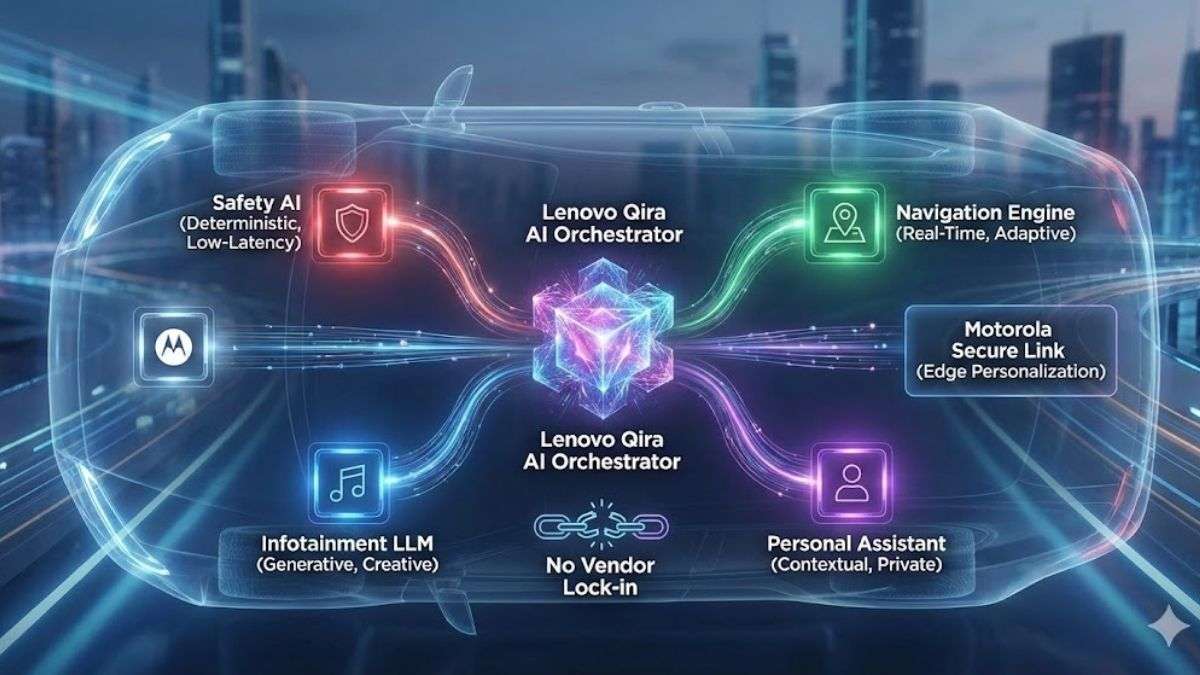
While the industry has been hyper-focused on which Large Language Model (LLM) would win the "cockpit war," Lenovo quietly changed the rules of the game. Qira is an AI orchestration layer, a sophisticated piece of middleware that sits in front of various AI engines. Instead of a car being a "Google car" or an "OpenAI car," Qira allows the vehicle to become a polymath, selecting the absolute best AI tool for the specific task at hand. This is arguably the most disruptive strategic announcement of the decade for the Software-Defined Vehicle (SDV) movement.
The End of the Monolithic AI Era
For the last few years, automakers have been rushing into exclusive partnerships, effectively locking their customers into a single AI ecosystem. If you bought a car with a specific tech stack, you were tethered to that provider's strengths—and their glaring weaknesses. If their navigation AI was brilliant but their voice recognition was subpar, you were stuck.
Lenovo’s Qira shatters this vendor lock-in paradigm. By acting as a traffic controller, Qira evaluates incoming requests and routes them to the most efficient model. It understands that the computational requirements for calculating a high-speed collision avoidance maneuver are fundamentally different from the requirements for generating a personalized playlist or explaining a dashboard warning light. This approach moves us away from "generalist" AIs that are mediocre at everything and toward a "specialist" fleet that excels at specific functions.
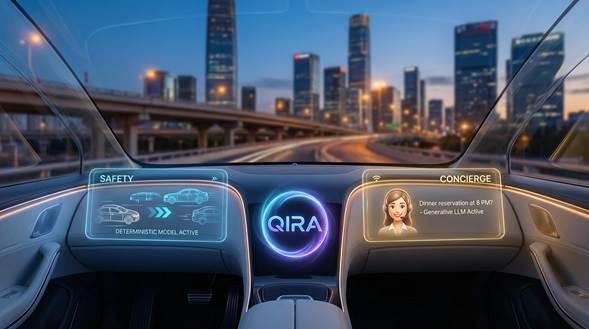
Dynamic Selection: The New Standard for Automotive Safety
The primary beneficiary of AI orchestration is, without question, safety. In the automotive world, latency is the enemy. When a car needs to make a split-second decision regarding Active Safety systems, it cannot afford the "thinking time" often associated with massive cloud-based LLMs. Furthermore, generalized AIs are prone to hallucinations—errors that are amusing in a chatbot but fatal in a car.
Qira improves safety by ensuring that critical driving functions are never handled by "creative" models. Instead, it dynamically selects deterministic, low-latency models that are purpose-built for Automotive Safety Integrity Levels (ASIL). Because Qira manages the compute priority, it can ensure that if a safety-critical event occurs, the entertainment or navigation models are instantly de-prioritized to free up every available cycle for the safety engine. This hierarchical orchestration is a massive leap forward in trust; we no longer have to worry about a car’s "brain" being distracted by a passenger’s complex voice query when a pedestrian steps into the road.
The Motorola Synergy: Creating a Seamless Digital Identity
One of the most compelling aspects of Qira is how it leverages Lenovo’s broader ecosystem, specifically its Motorola mobile offerings. For years, the industry has struggled with the "handoff"—the clunky transition when a user moves from their phone to their car.
With Qira, the car doesn't just see a phone; it sees a partner compute node. Because Lenovo owns the stack from the Motorola smartphone to the Qira orchestrator in the dash, the two devices can share a Personal Digital Twin. Your Motorola device knows your habits, your schedule, and your preferences. Through Qira, the car can "borrow" this context without the user having to sync anything or upload personal data to a third-party car cloud.
This also allows for distributed processing. If a user asks a highly personal question about their finances or health while driving, Qira can route that processing to the secure enclave on the Motorola phone rather than the car's general processor. This keeps private data on the user's person, enhancing data privacy and security while still providing a seamless voice-activated experience through the car’s speakers.
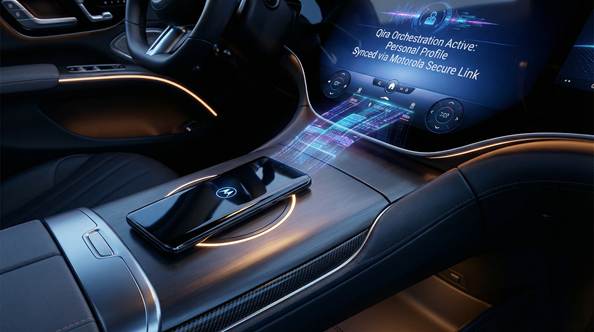
Redefining the Value of the Software-Defined Vehicle
Perhaps the most disruptive element of Lenovo’s Qira is how it changes the lifecycle of the vehicle. Currently, a car's intelligence is largely fixed at the time of purchase. Even with Over-the-Air (OTA) updates, you are usually limited to what the original manufacturer provides.
Qira redefines the SDV as a modular platform. Because it is an orchestration layer, the "engines" underneath can be swapped or upgraded as the technology evolves. If a new, revolutionary AI model for EV battery management is released in 2027, an automaker using Qira can simply add that model to the orchestration pool.
This future-proofs the vehicle in a way we haven't seen before. It turns the car into a living platform that can adopt the best technologies from Google, Microsoft, NVIDIA, or niche automotive startups simultaneously. For the consumer, this means the car doesn't feel "obsolete" two years into a five-year lease. For the automaker, it provides a flexible architecture that can adapt to changing global regulations or localized market preferences without a total software rewrite.
Wrapping Up
The introduction of Qira at CES 2026 marks the moment the automotive industry grew up and realized that one AI "brain" is not enough. By embracing orchestration, Lenovo is providing the missing link for the software-defined vehicle—a way to manage complexity while increasing both safety and personalization. The synergy with Motorola provides a blueprint for how our personal lives and our mobility lives will finally merge without sacrificing privacy. We are moving toward an era where the car is no longer just a vehicle, but a dynamically optimized environment that chooses the best intelligence for every moment of the drive. Lenovo just took the lead in that race.
Disclosure: Images rendered by Nano Banana Pro
Rob Enderle is a technology analyst at Torque News who covers automotive technology and battery developments. You can learn more about Rob on Wikipedia and follow his articles on Forbes, X, and LinkedIn.
Set Torque News as Preferred Source on Google
Follow us today...