
LAS VEGAS—The floor of CES 2026 is, as always, a chaotic glimpse into the near future. But amidst the holographic displays and household robots, the most significant shift is happening under the hood of the automobile. The car has officially completed its transition from a mechanical beast to a high-performance computer on wheels.
Leading that charge this year is AMD. In a keynote that reverberated through the Las Vegas Convention Center, AMD Chair and CEO Dr. Lisa Su unveiled the company’s newest generation of processors specifically designed for the automotive and embedded markets. The headline numbers are staggering for the mobile space: a single chip delivering up to 50 AI TOPS (Tera Operations Per Second).
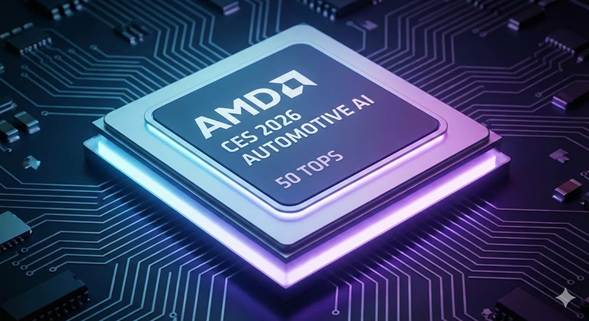
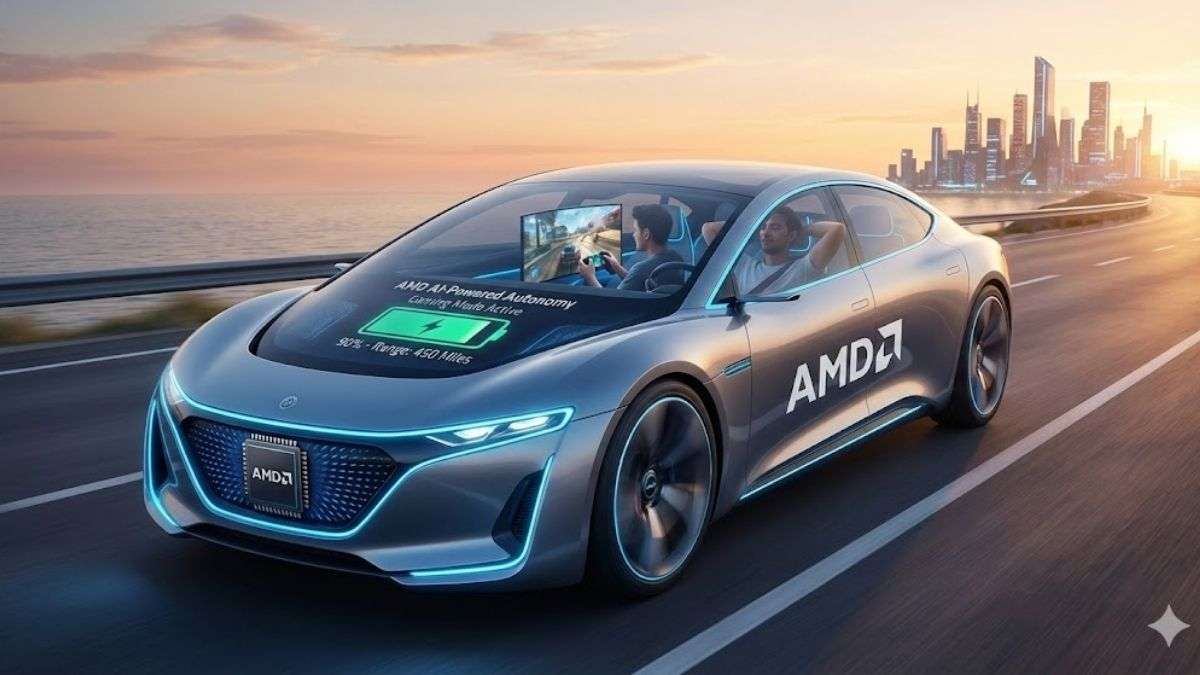
A New Engine for the Digital Age: AMD's new automotive AI processor is the heart of this revolution, delivering unprecedented performance in a compact, energy-efficient package.
This isn't just about raw numbers; it's about a fundamental shift in what an electric vehicle (EV) can do without inducing range anxiety. AMD is promising a threefold increase in AI performance, capable of driving real-time 4K and even 8K cockpit visualizations. It opens the door for massive in-car gaming and advanced audiovisual processing power, crucially, without rapidly draining EV batteries—a factor that has become the central battleground in the industry.
The Insatiable Hunger for Compute in the Software-Defined Vehicle
Why does a car need the processing power of a high-end gaming PC? Because the modern EV is a "Software-Defined Vehicle" (SDV). In the past, adding a feature meant bolting on a new hardware module. Today, it means pushing an over-the-air (OTA) software update.
Consumers now expect their vehicle's infotainment system to be as responsive as their newest smartphone and visually as impressive as their home game console. Furthermore, the centralization of electronic control units—moving from dozens of small chips scattered around the car to a few central "brains"—requires massive computational throughput.
See recent Torque News coverage on the rise of the SDV here.
The demand for seamless, high-resolution digital cockpits, augmented reality heads-up displays (HUDs), and simultaneous multi-passenger entertainment is pushing current silicon to its breaking point. AMD's new offering is designed to satisfy this hunger, ensuring the digital experience matches the instant torque of the electric drivetrain.
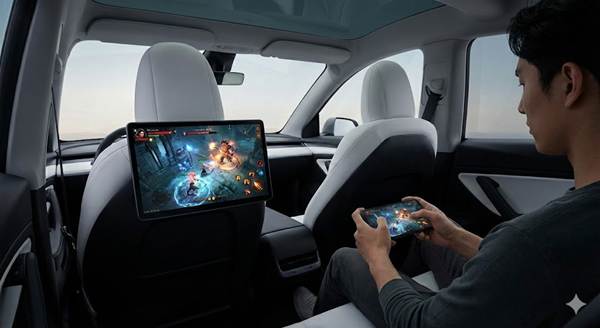
Console-Quality Gaming on the Go: Thanks to AMD's powerful new silicon, passengers can now enjoy immersive, high-fidelity gaming experiences from the comfort of the back seat.
AMD’s Efficiency Miracle: 50 TOPS Without the Power Penalty
The brilliance of Dr. Su’s announcement lies not just in the 50 TOPS figure, but in the energy efficiency accompanying it. In the EV world, every watt consumed by the onboard computer is a watt not used for propulsion.
Historically, high-performance computing, particularly the matrix math required for AI and high-end gaming graphics, has been energy-intensive. Running a console-quality game or processing complex sensor data for driver assistance usually meant watching the estimated range indicator tick down faster than usual.
AMD has leveraged its experience in high-efficiency laptop and handheld gaming architectures to solve this automotive paradox. By delivering a 3x AI performance boost for visualization while maintaining a tight thermal and power envelope, AMD is allowing automakers to offer AAA gaming experiences to passengers (when parked or in rear seats) and stunning 8K interfaces without consumers worrying if they'll make it to the next charging station.
Enhancing Autonomy and Range Simultaneously
This efficiency is doubly critical when applied to Autonomous Driving (AD) capabilities. The path from Level 2+ driver assistance to true Level 3 and Level 4 autonomy requires processing oceans of data from cameras, LiDAR, and radar in real-time. This "sensor fusion" is AI-heavy work.
By providing 50 TOPS in a highly efficient package, AMD allows for more sophisticated AI models to run locally in the car. This means better object detection, smoother path planning, and increased safety redundancies.
Crucially, because these processors sip rather than gulp power, automakers don't have to sacrifice vehicle range to offer advanced safety features. An EV running a sophisticated highway autopilot system on AMD silicon should see negligible impact on its overall mileage, addressing a major consumer concern regarding advanced driver assistance systems (ADAS).
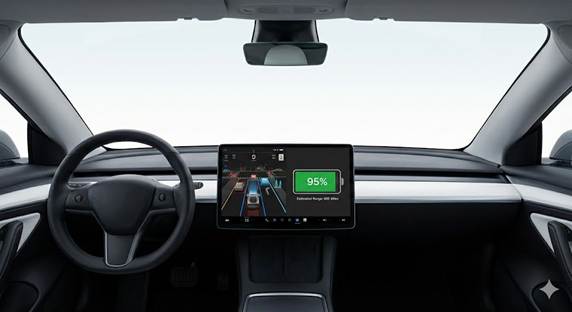
Powering the Future, Preserving the Range: AMD's technology allows for advanced autonomous driving features to run simultaneously with other high-demand applications without a significant impact on the vehicle's battery range.
The Vendor Wars: Why OEMs are Warming to AMD over NVIDIA
While the specs are impressive, the business dynamics behind this announcement are equally compelling. For years, NVIDIA has been the dominant force in high-performance automotive AI. However, the tide may be turning, and Dr. Su’s keynote highlighted why AMD is becoming the preferred partner for many traditional automakers (OEMs).
The industry buzz suggests AMD has been significantly more "responsive" to the specific needs of automakers, offering flexible, semi-custom solutions rather than a "take it or leave it" black box. AMD is positioning itself as the ultimate partner—the engine supplier for the digital age—empowering OEMs to build their own unique software experiences on top of powerful silicon.
In contrast, NVIDIA is increasingly viewed with suspicion by major carmakers. NVIDIA’s public ambition to launch its own autonomous robotaxi fleet creates a profound conflict of interest.
Why would Ford, GM, or Toyota want to pour billions into buying chips from a company that is actively building a direct competitor to their future business models? It raises concerns about data sharing, roadmap prioritization, and long-term partnership viability. By staying squarely in the semiconductor business, AMD avoids this conflict, making them a safer, more reliable long-term bet for OEMs terrified of tech giants encroaching on their territory.
A Partnership Built on Trust: AMD's collaborative approach and lack of competing ambitions make it an ideal long-term partner for automakers looking to define the future of mobility.
Wrapping Up
CES 2026 will be remembered as the moment the "gaming car" became a viable reality without compromising the fundamental utility of the EV. AMD’s new automotive processors, with their 50 TOPS of AI power and intense focus on energy efficiency, have resolved the tension between high-end digital experiences and vehicle range. By offering a powerful, efficient, and partnership-focused alternative to NVIDIA, Dr. Lisa Su has positioned AMD as the essential engine room for the next generation of mobility.
Disclosure: Images rendered by Nano Banana Pro
Rob Enderle is a technology analyst at Torque News who covers automotive technology and battery developments. You can learn more about Rob on Wikipedia and follow his articles on Forbes, X, and LinkedIn.
Set Torque News as Preferred Source on Google
Follow us today...