
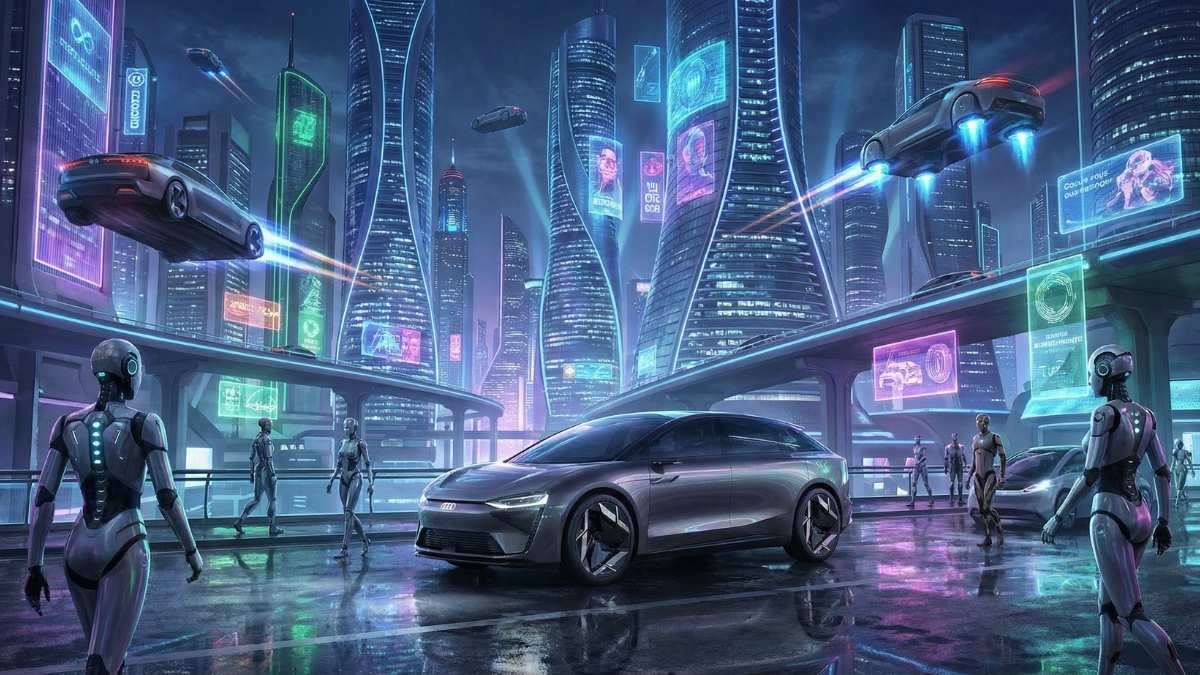

To understand why the automotive world is currently shaking, one must first understand the powerhouse behind the movement. Chery Automobile Co., Ltd., headquartered in Wuhu, Anhui Province, China, is no longer the "budget-friendly" copycat manufacturer it was in the late 1990s. Founded in 1997 as a state-owned enterprise, Chery began its journey in 1999 with the Fengyun, a vehicle built using a licensed SEAT Toledo chassis.
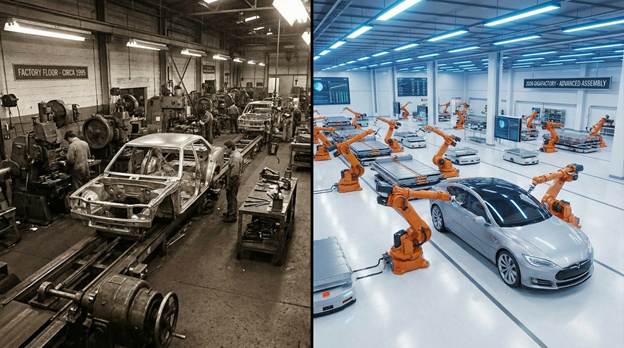
Since then, Chery has transformed into China’s leading vehicle exporter, shipping hundreds of thousands of units annually to over 80 countries. Their portfolio has expanded from the iconic (and once controversial) Chery QQ to the sophisticated Tiggo SUV series and the Arrizo sedans. Today, Chery operates under a multi-brand strategy that includes Omoda, Jaecoo, and their high-end luxury arm, Exeed. According to MIT Wiki’s corporate overview, Chery has transitioned from a provincial player to a global orchestrator of automotive technology, with R&D centers in Germany, the United States, and Brazil.
The "Holy Grail" of Electric Mobility: Overcoming Range Anxiety
For over a decade, the "range anxiety" bogeyman has been the primary barrier to mass EV adoption. While lithium-ion batteries have improved, they have hit a ceiling in terms of energy density and thermal stability. Current liquid-electrolyte batteries typically hover around 250 to 300 Wh/kg. For a consumer, this translates to a real-world range that often leaves them tethered to a charging map on long trips.
Chery understands that to truly displace the Internal Combustion Engine (ICE), an EV cannot just be "as good" as a gas car—it must be significantly better. The importance of battery technology to EV sales cannot be overstated; it is the single most expensive component and the defining factor of a vehicle's utility. By introducing a battery that doubles current energy densities, Chery isn't just selling a car; they are selling the freedom of the open road, traditionally reserved for fossil fuels. This shift is essential for addressing the critical limitations holding back widespread EV adoption.
The Solid-State Advantage: Why "Solid" Wins
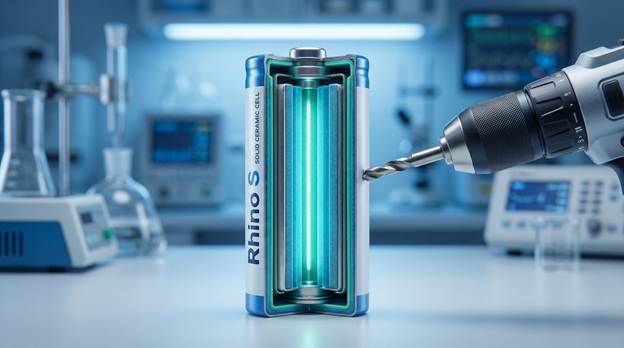
The Exeed Liefeng utilizes Chery’s new Rhino S solid-state battery. Unlike the lithium-ion batteries found in a Tesla or a Ford Mustang Mach-E, which use a flammable liquid electrolyte, solid-state batteries (SSBs) utilize a solid ceramic or polymer electrolyte. The advantages, as outlined by technical industry reports, are transformative:
- Energy Density: Chery claims a staggering cell energy density of 600 Wh/kg. This allows for a theoretical range of over 1,500 km (932 miles) on a single charge—nearly double what the best long-range EVs offer today.
- Safety: Because there is no liquid electrolyte to leak or ignite, the Rhino S battery is virtually fireproof. In company testing, cells were punctured with power drills without emitting smoke or catching fire.
- Extreme Weather Performance: One of the greatest weaknesses of current EVs is their performance in the cold. Chery’s SSB maintains high efficiency even at -30°C, a feat that liquid-based batteries simply cannot replicate.
- Charging Speed: Leveraging an 800V architecture, these batteries can charge at rates that make a gas station stop seem slow, potentially adding hundreds of miles of range in under 10 minutes.
The Exeed Liefeng: A Design From the Future
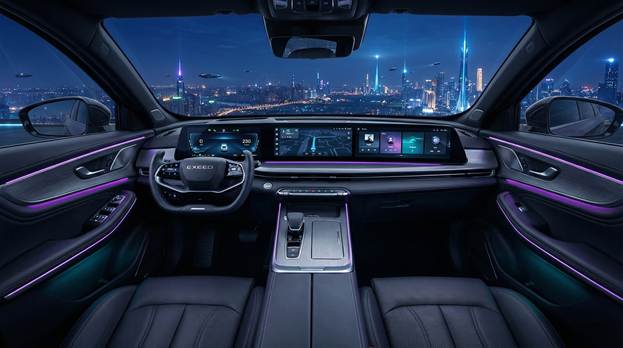
The vehicle chosen to debut this technology is the Exeed Liefeng, a "shooting brake" (a sleek, performance-oriented wagon) that looks like it was driven straight off a cyberpunk movie set. This isn't a traditional sedan or a bulky SUV. The Liefeng features a "ONE-BOX" interstellar design language with a drag coefficient of just 0.22.
The aesthetics are aggressive yet functional. It sports a low, athletic stance, starlight-inspired lighting, and a floating D-pillar that gives the car a sense of movement even when stationary. Inside, the "Lingxi" smart cockpit features a naked-eye 3D display and an AIOS 8397 chip, making it as much a mobile supercomputer as it is a vehicle. With a 30,000 rpm motor capable of 0 to 100 km/h in under 3 seconds, the Liefeng is designed to be a high-performance rival to the world’s elite sports cars.
The Survival of the Fittest: Chery’s Backing vs. Market Risks
The EV graveyard is full of ambitious startups like Fisker and HiPhi. However, Chery is not a startup. As a state-owned enterprise with 2024 sales exceeding 2.6 million vehicles, Chery has the deep pockets and government backing required to weather the "Valley of Death" in automotive manufacturing.
However, buying a first-generation technology always carries risks. For the Exeed Liefeng, these include:
- Cost: Solid-state batteries are currently estimated to cost 2.8 times more than liquid batteries. While Chery is subsidizing early units, long-term pricing stability is unproven.
- Serviceability: Independent mechanics will be unable to service these high-tech components, making owners entirely dependent on Chery’s official service network.
- Historical Reliability: Chery has faced quality and durability complaints in the past, and while their modern luxury brands like Exeed are a step up, the "first-gen" stigma remains a hurdle for cautious buyers.
Global Ambitions: Where and When?
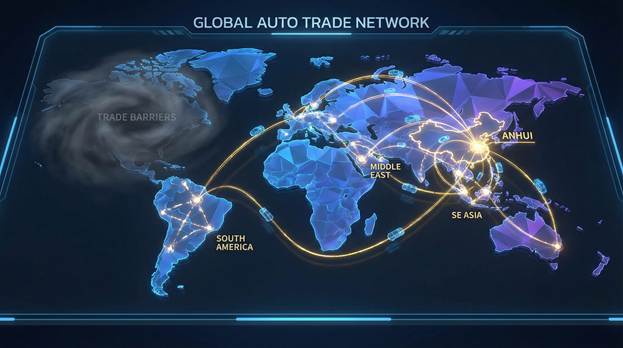
Chery is not keeping this technology for the domestic Chinese market alone. They have confirmed a phased rollout. In 2026, the first batch of Exeed Liefeng units will be deployed in ride-hailing and rental fleets to gather "real-world" operational data. Large-scale mass production for the general public is slated for 2027.
The company is targeting high-value markets including Southeast Asia (Malaysia, Thailand), the Middle East (UAE, Saudi Arabia), Eastern Europe, and South America (Brazil). While North American availability remains complicated by trade tariffs, Chery's presence in Mexico suggests a backdoor into the continent may be in the works. As for price, while official figures are still being finalized, early luxury-segment estimates suggest the Liefeng will compete in the $70,000 to $90,000 luxury bracket initially, though standard EV versions of the Exeed brand start much lower, around $22,500 for the Exlantix series.
The Displacement of the West: China’s Strategic Dominance
The launch of the Liefeng is more than just a new car release; it is a geopolitical statement. China currently controls approximately two-thirds of global battery production capacity. By being the first to commercialize solid-state technology at scale, Chery and its Chinese peers are pulling ahead of Western "legacy" automakers who are still struggling to master traditional lithium-ion production.
Companies like Volkswagen, GM, and Ford are now facing a "technology gap" that may be impossible to close. Western carmakers are "in a fight for their lives" against Chinese rivals, as stated by industry leaders. If a consumer can buy a Chinese car with double the range, better safety, and faster charging for the same price as a Western EV, the choice becomes purely logical. This offering has the potential to displace Western luxury brands in neutral markets, further cementing China’s role as the "Detroit of the 21st Century."
Wrapping Up
Chery’s announcement of the Exeed Liefeng with a solid-state battery marks the beginning of the "EV 2.0" era. By addressing the fundamental flaws of current battery technology—range, safety, and cold-weather performance—Chery is positioning itself at the absolute vanguard of the industry. While risks regarding first-generation tech and global trade tensions remain, the sheer engineering might displayed here is undeniable. The era of the 900-mile EV has arrived, and it is firmly rooted in the high-tech R&D labs of Wuhu.
Disclosure: Images rendered by Artlist.io
Rob Enderle is a technology analyst at Torque News who covers automotive technology and battery developments. You can learn more about Rob on Wikipedia and follow his articles on Forbes, X, and LinkedIn.
Set Torque News as Preferred Source on Google
Follow us today...




Comments
Another shoe-shaped EV?…
Permalink
Another shoe-shaped EV? Perfect!