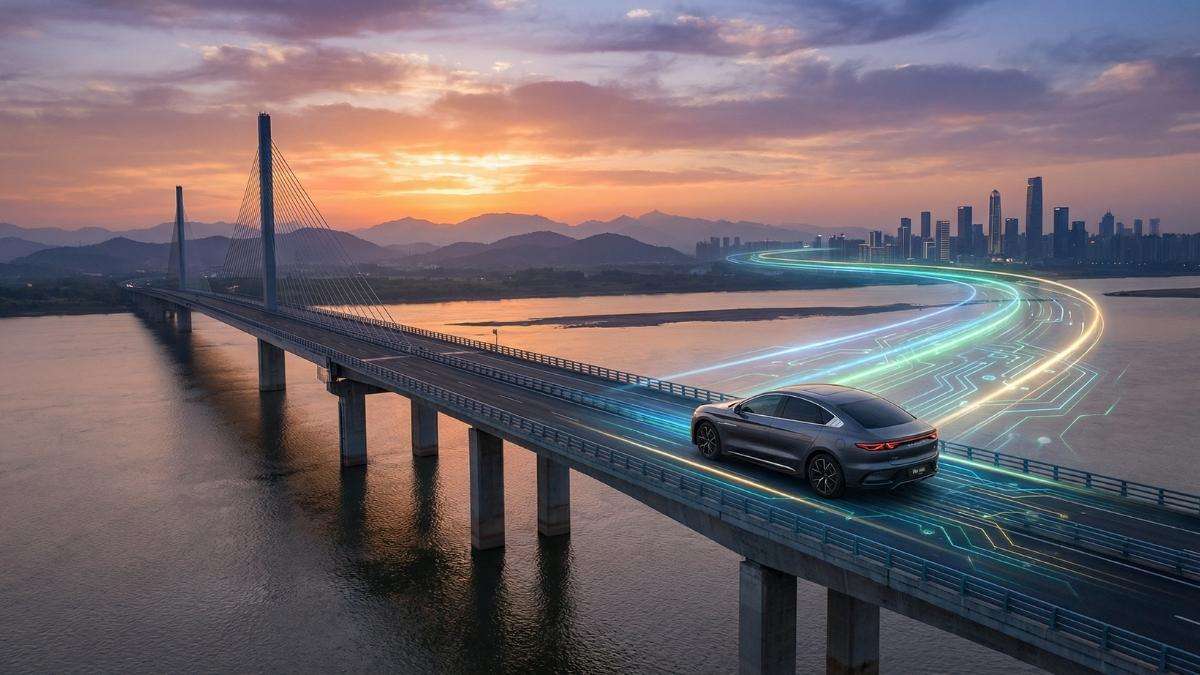

The automotive world just shifted on its axis, and most Western legacy manufacturers didn't even feel the vibration until it was too late. While we have been arguing about charger reliability and whether the average American is "ready" to go full battery-electric, BYD has quietly—well, not so quietly—dropped a technological tactical nuke. Their new DM-i 6.0 (Dual Mode intelligent) powertrain isn't just a minor iteration; it is a fundamental redefinition of what a car can be.
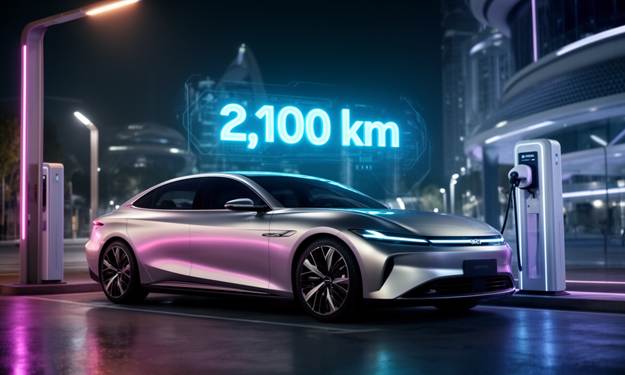
The 2,000-Kilometer Breakthrough: More Than Just a Number
The headline figures for BYD’s sixth-generation hybrid system are, frankly, ridiculous. We are looking at a thermal efficiency of over 46% for the internal combustion engine (ICE) component, paired with a massive leap in battery density. The result? A combined range that exceeds 2,100 kilometers (roughly 1,300 miles) on a single tank of gas and a full charge.
To put that in perspective, you could drive from Vancouver to San Francisco without stopping for fuel or a charge. For the average commuter, that translates to filling up the tank perhaps four times a year. This isn't just about saving money at the pump; it's about eliminating "range anxiety" and "charging anxiety" in one fell swoop. By increasing the electric-only range of these plug-in hybrids (PHEVs) to nearly 150–200 kilometers (93–124 miles), BYD has created a vehicle that is an EV for 95% of your life and a long-haul cruiser for the other 5%.
The Practicality Gap: Volvo EX60 vs. BYD DM-i 6.0
Last week, I wrote about my own pivot to the Volvo EX60, a vehicle I called a "400-mile range marvel." The EX60 is a masterpiece of Swedish engineering, utilizing the new SPA3 architecture and 800-volt systems to deliver what is arguably the most advanced pure-EV experience on the market. But as much as I love the EX60, we have to talk about the "practicality gap."
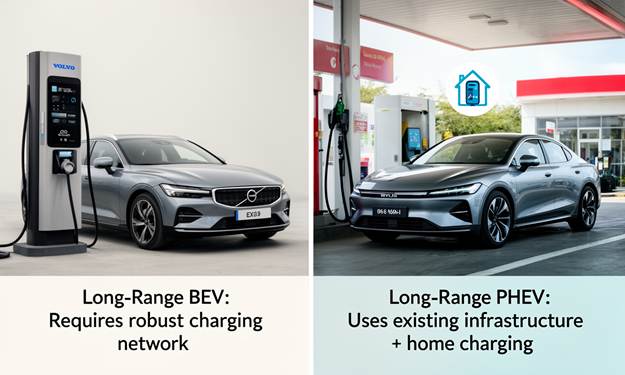
The EX60, with its 117 kWh battery, is a heavy, resource-intensive machine. It requires a robust DC fast-charging infrastructure to be truly viable for road trips. In contrast, the BYD Seal 06 DM-i (the first to carry the 6.0 tech) uses a much smaller battery, making it lighter and significantly cheaper to produce.
- Volvo EX60: Best-in-class for those committed to zero-tailpipe emissions and who have high-speed home charging.
- BYD DM-i 6.0: The ultimate "security blanket" car. It offers the smoothness of an EV for the daily commute but uses the existing, universal gas station infrastructure for everything else.
For a driver migrating from a traditional gas car, the leap to an EX60 feels like moving to a new planet. The leap to a DM-i 6.0 feels like moving to a better house in the same neighborhood.
How Did They Do It? Semi-Solid State Rumors and Efficiency Gains
The secret sauce of the DM-i 6.0 isn't just one thing—it’s a synergy of hardware and software. BYD has refined its "Blade Battery" technology to be even thinner and more energy-dense, but the industry is currently buzzing with rumors that the 6.0 "pro" variants may be testing semi-solid-state batteries.
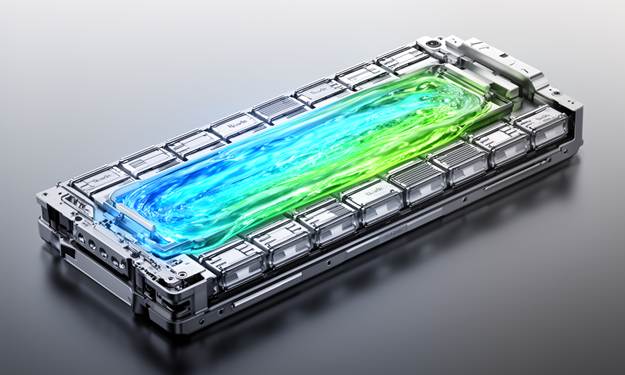
While BYD has been publicly cautious about solid-state timelines, industry insiders suggest they are already integrating semi-solid electrolytes to boost safety and energy density without the massive cost of a full solid-state transition. This would explain how they are achieving such massive ranges without turning the car into a lead weight.
Are PHEVs a Dead End or a Decades-Long Bridge?
There is a school of thought that PHEVs are a "distraction"—a complex compromise that carries the weight of two powertrains. I disagree. As long as battery raw materials remain a geopolitical bottleneck and charging infrastructure lags in rural areas, the PHEV is the most efficient use of lithium on the planet.
You can build six 20kWh PHEV batteries for the amount of lithium it takes to build one 120kWh EX60 battery. In terms of total carbon reduction across a fleet, the PHEV is a force multiplier. I expect high-range PHEVs to remain dominant well into the mid-2030s, only fading when 1,000-mile pure EVs become the affordable norm.
The Canadian Factor: A New Gateway for Chinese Tech
The most fascinating development in this saga is Canada’s recent trade pivot. By massively reducing tariffs on Chinese EVs from 100% down to 6.1%, Prime Minister Carney has effectively opened the floodgates.
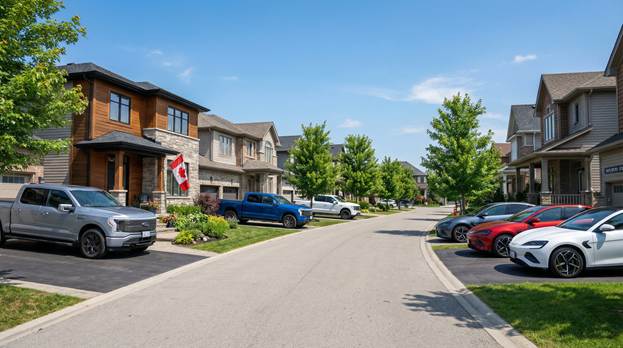
Will these new hybrids eclipse US-made cars in Canada? In a heartbeat. The Canadian consumer is practical. Faced with a choice between a $60,000 USD pure EV with 300 miles of range and a $35,000 CAD BYD hybrid with 1,300 miles of range, the "Buy North American" sentiment will likely evaporate. These vehicles aren't just competition; they are a disruption of the entire value proposition of the Ford-GM-Stellantis trio.
Can the West Keep Up?
The short answer? Not at the current pace. Western automakers are still focused on "matching" China’s 2023 specs, while China has already moved to 2026. Companies like Ford and GM are currently scaling back EV plans to focus on traditional hybrids, but BYD isn't doing "traditional" hybrids—they are doing super-hybrids.
Western legacy brands are hamstrung by legacy supply chains and a lack of vertical integration. BYD makes its own batteries, its own semiconductors, and even its own transport ships. Unless Western governments and automakers engage in a "Manhattan Project" for battery and power-electronics manufacturing, they will be relegated to niche players or "assemblers" of Chinese-designed tech.
Wrapping Up
The BYD DM-i 6.0 is a wake-up call that the "EV transition" is not a linear path from gas to battery. It is a technological arms race where the winner is whoever can solve for "human nature." We want the convenience of gas with the silence and torque of electric. BYD has delivered that in a package that makes 1,300 miles feel like the new baseline. For drivers in markets like Canada, the choice is about to become painfully simple: do you want to worry about your next charge, or do you want to forget where the gas station even is?
Disclosure: Images rendered by Artlist.io
Rob Enderle is a technology analyst at Torque News who covers automotive technology and battery developments. You can learn more about Rob on Wikipedia and follow his articles on Forbes, X, and LinkedIn.
Set Torque News as Preferred Source on Google
Follow us today...