
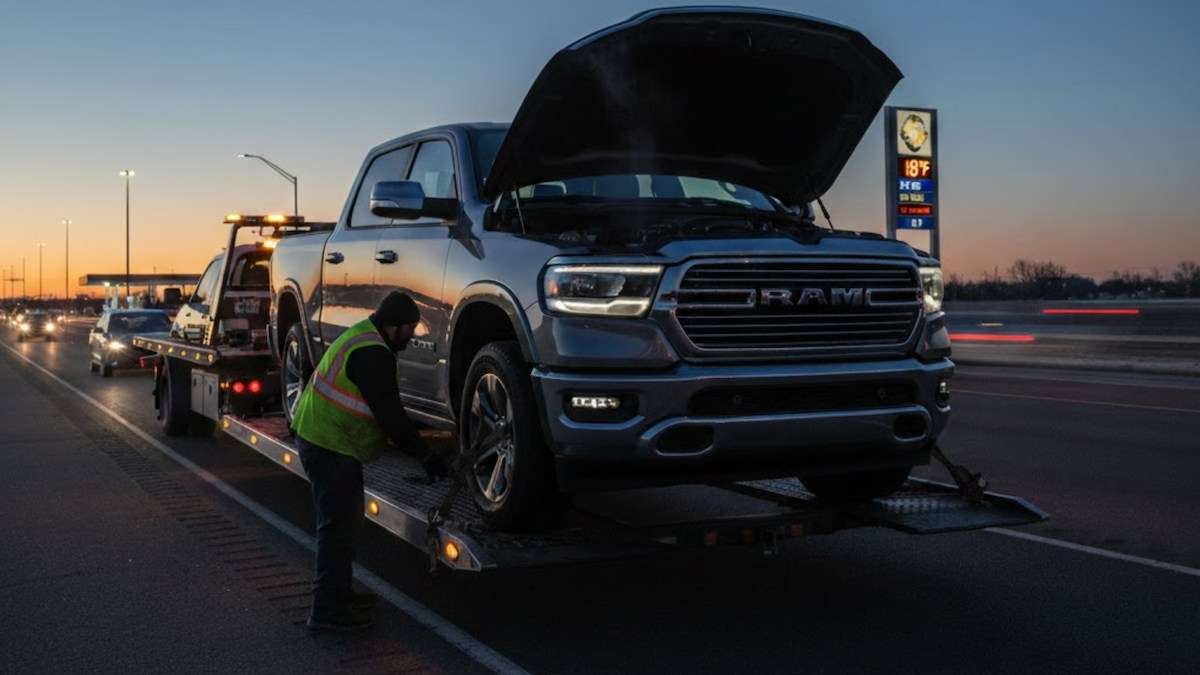

If a brand-new $60,000 truck can't make it to its first oil change without a catastrophic cooling failure, is the HEMI-killing Hurricane engine actually ready for the real world?
Imagine driving your dream 2026 Ram 1500 Bighorn off the lot, only to watch the temperature gauge scream toward the red zone before you even reach your first thousand miles. This is the frustrating reality of one new owner who discovered that even a brand-new "Hurricane" powertrain doesn't guarantee a trouble-free honeymoon phase.
In this recent post I found shared in the 6th Gen Ram 1500 (2024+) Facebook community, owner Alex Carder highlighted growing concerns about the real-world reliability of the new SST (Straight-Six Turbo) Hurricane engine and the frustration of a brand-new truck already sidelined for repairs. He says,
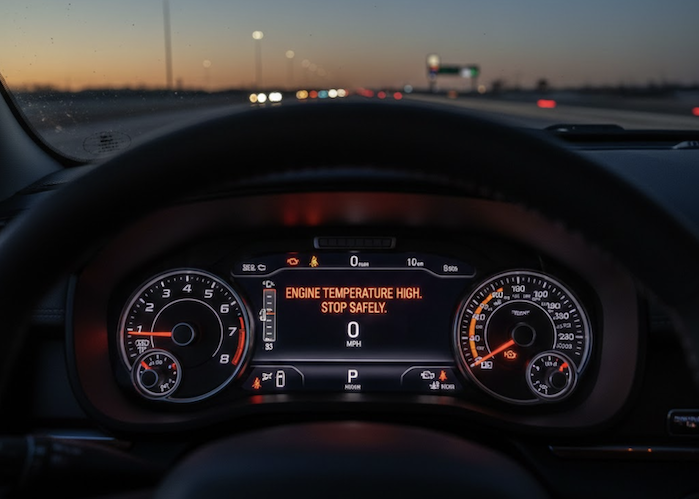
“Well, the first major issues at only 800 miles have shown up on my $56k 2026 Ram Bighorn Hurricane. The thermostat died, and the truck overheated. I have the standard output Hurricane engine. I figured there might be a few gremlins in the beginning, but at 800 miles, and it’s already in the shop? However, so far I've been very impressed with this truck. Stellantis has an engine nightmare on their hands.”
Our Personal Take: The Hurricane's "Gremlin" Problem
I have spent over 30 years in the automotive industry, and I can tell you that nothing kills the excitement of a new purchase faster than a tow truck ride. While Alex Carder is remaining optimistic, as a Senior Reporter who has covered hundreds of these launches, I see a much larger red flag waving over the 2026 Ram lineup. Experts at The Lemon Law Experts have already begun documenting that the thermostat regulates the engine's temperature by controlling coolant flow, and its failure is becoming a top-tier concern for the 3.0-liter SST platform.
In my own investigative research into why some owners are starting to regret the trade-off for the new, I found that these high-tech cooling systems are significantly more fragile than the iron-clad mechanicals of the past.
I believe Stellantis is walking a razor-thin line by replacing the legendary HEMI with an engine that requires such precise thermal management. When a thermostat fails at 800 miles, it isn't just a "bad part"; it is a failure of quality control at the Saltillo Engine Plant, where these units are born. If the cooling loop cannot survive the first two weeks of light-duty driving, I have to ask how it will handle a 10,000-pound trailer on a Colorado mountain pass in July.
Why This Failed for Us: The Complexity Tax
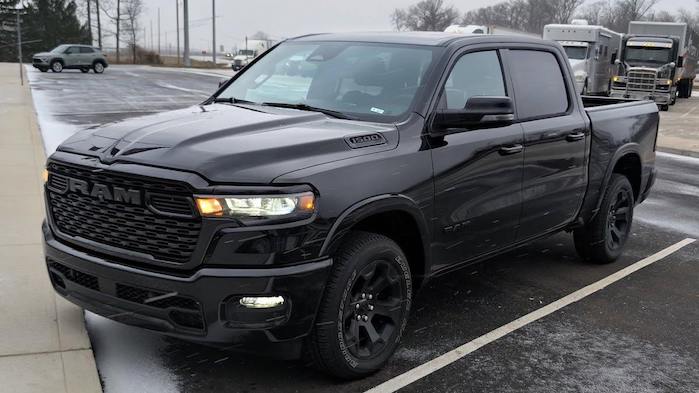
The move to the Hurricane Straight-Six Turbo (SST) was marketed as a leap forward in efficiency, but I see it as a massive increase in the "complexity tax" consumers pay. Analysts at SlashGear have reported that frequent thermostat failures are occurring across the Hurricane-powered Stellantis lineup, often leading to abnormal temperatures that risk internal engine damage. I previously warned my readers that the 2026 Ram 1500 is essentially a "science project" where the raw horsepower numbers are losing the battle against real-world reliability and that unmistakable V8 soul.
I've tested both the Standard Output (SO) and High Output (HO) versions of this engine, and while the 420-540 horsepower is intoxicating, the plumbing required to keep those twin turbos cool is a nightmare of plastic connectors and electronic sensors. I am seeing a shift from the mechanical reliability of the old 5.7L Hemi V8 to a highly complex, software-driven architecture that seems to be struggling under its own weight. If the "brain" of the cooling system glitches, you aren't just looking at a simple repair; you're looking at a potential catastrophic overheat that could warp the cylinder head before you even get a warning on the dash.
Is Stellantis Facing A Major Engine Nightmare?
I have seen automakers rise and fall on the strength of a single powertrain. Right now, Stellantis is at a crossroads. The transition from the simple, pushrod 5.7L HEMI V8 to the high-tech, twin-turbocharged 3.0L Hurricane Straight-Six (SST) was supposed to be a seamless evolution. Instead, for many early adopters, it feels more like an expensive experiment.
When I look at the data, the "nightmare" isn't just a single part like a thermostat; it is the sheer complexity of the system. We are seeing reports of plastic thermostat housings that crack under the extreme heat of twin-turbo operation, and a growing backlog of replacement parts that leaves trucks grounded for weeks. I have spoken with technicians who are seeing a "complexity tax" in real time; the Hurricane engine features an air-to-water intercooler system with its own dedicated cooling circuit and an electric pump to keep the turbos cool after the engine is off. While this is great for performance, it adds dozens of potential failure points that simply didn't exist on the old V8.
The real question for my readers is whether this is a "first-year fluke" or a systemic design flaw. I am leaning toward the latter being a quality control crisis. One technician recently noted that nearly half of the Hurricane-powered trucks coming off the transport trailers require some form of repair before they even hit the showroom floor. For a brand that built its reputation on "Guts and Glory," having a $60,000 Bighorn sidelined by a $50 plastic part at 800 miles is a catastrophic blow to consumer trust.
If Stellantis doesn't address these thermal management "gremlins" with a permanent fix soon, rather than just swapping in the same faulty parts, they risk alienating the most loyal truck buyers in the world. I’ll be keeping my eyes on the NHTSA databases for a formal recall, but until then, my advice remains firm: keep your HEMI as long as you can.
What Ram Owners Are Saying
The frustration isn't limited to Facebook; the broader community is sounding the alarm on these early failures. One user on Reddit noted the severity of the situation, stating, "The 2025s have a lot of problems... my 20-year master tech spent 2.5 months trying to find why it was misfiring, and the engineers just said 'shrug,'" which you can read in this full discussion here.
Another owner highlighted the new design's vulnerability, noting, "The check engine light is throwing bogus readings... Stellantis needs to really figure out this Atlantis electrical architecture and get the bugs fixed," in this Reddit thread.
Key Takeaways for 2026 Ram Buyers
- The "First Year" Rule: I always advise my readers to avoid the first two years of a new powertrain; let the "early adopters" be the test subjects for Stellantis.
- Monitor Your Gauges: Don't rely on the "dummy lights." Keep a close eye on the digital temperature readouts during the break-in period.
- The Warranty is Your Best Friend: Ensure your dealer documents every "gremlin" immediately to build a paper trail for potential Lemon Law claims.
Weak Links In the Chain
The 2026 Ram 1500 Bighorn should be a triumph of modern engineering, but stories like Alex Carder’s remind us that complexity is the enemy of reliability. While the Hurricane engine offers world-class power, the supporting systems, like the cooling loop and the Atlantis electrical architecture, are proving to be the weak links in the chain. I will continue to track these thermostat failures to see if this turns into a full-scale recall or if Stellantis can quietly patch the "nightmare" before it destroys the Ram brand's hard-earned reputation.
How About You? Have you experienced "gremlins" with your new Hurricane engine, or are you waiting for the Hemi to make its full return before signing the papers? Click the red link below to write your comment and join the community in sharing experiences.
Next Up: While some owners are struggling with the software and cooling issues, others are finding that the new Hurricane engine is a "dinosaur killer" thanks to its sheer highway performance. I dig into why some Ford owners are actually switching to Ram despite these issues in my report: Ford F-150 Owner Says He's Done With Ford at 83K Miles With Too Many Issues, He Adds, "I'm Making the Jump To a 2026 Ram Hemi With a 100k 10-Year Warranty".
Denis Flierl is a Senior Reporter at Torque News with over 30 years of hands-on experience in the automotive industry. Having served as a professional test driver and industry consultant for major automakers such as Chevrolet, Ford, Toyota, Honda, and Tesla, Denis provides a "boots-on-the-ground" perspective that goes beyond standard reporting. Since joining Torque News in 2012, he has specialized in cutting through market noise to deliver data-backed analysis and real-world owner stories. His work focuses on navigating the transition to EVs and the shifting automotive market.
Have a tip or question for Denis? > Engage with him directly on LinkedIn for industry analysis, or follow his latest updates on X @DenisFlierl and @WorldsCoolestRides. You can also find his latest car features on Facebook and Instagram.
Photo credit: Denis Flierl via Alex Carder
Set Torque News as Preferred Source on Google
Follow us today...






Comments
Thermostat problem .big deal…
Permalink
Thermostat problem .big deal!!
Go get a Toyo , engine grenade
GM trans and engine
Ford Same trans as GM
I'll keep my Laramie
I owned 2025 ram 1500…
Permalink
I owned 2025 ram 1500 lonestar for 14 months, it went to shop at 400 miles for the first time and then back in shop another 8 times in which they replaced ambient sensor three times and trailer switch etc. This truck is plagued with electrical issues and I just couldn't take it anymore so took the loss and traded it in.
I just limped my 2026 Ram…
Permalink
I just limped my 2026 Ram 1500 Hurricane back to the dealer with just over 500 miles. I was 30 minutes into a 2 hour trip with my travel trailer when I was hit with a high engine temp alarm without warning. Then came the white smoke from the oil leak coming from the front of the engine. The engine temp reading was normal as soon as I pulled off the highway and put the truck in park. I had to rent a truck from a commercial rental company to salvage our vacation after having my camper towed off the interstate. It's been about a month and I already miss my Hemi that towed my camper from NJ to the Keys.
I just bought my first Ram…
Permalink
I just bought my first Ram Laramie Hurricane 3/31/26. 271 miles it’s in the shop! Low oil pressure during acceleration. Gauge was saying 10psi!!! My local dealer is small and only has 1 tech certified to work on the SST. Solenoid in the oil pump is stuck closed. If it needs a new pump the earliest they can get to it is the 20th. Oh and the passenger princess screen decides to work only when it wants to. I can’t drive a $77k truck I just bought for almost a month! 🤬🤬🤬 Brand new and broken…