
Moving is one of those events that reveals exactly how well you know your vehicle. Every cubic foot of cargo space suddenly matters. Every decision about what goes where has consequences for your visibility, your suspension, your fuel economy, and the safety of everything you own.
Here at Torque News, we spend our days thinking about cars: how they're built, how they perform, and how they serve the people who drive them. A moving day is one of the most demanding real-world tests you'll ever put your car through. Get it right and your vehicle becomes a workhorse that saves you hundreds of dollars. Get it wrong and you're dealing with a lopsided ride, blocked rear visibility, or a cracked laptop at 70 mph on the highway.
Let's break it down the right way.
Step 1: Know Your Vehicle Before You Load It
This is the part most people skip, and it's a mistake. Every car, truck, and SUV has a gross vehicle weight rating (GVWR) and a maximum cargo capacity listed in the owner's manual. Your 2022 Toyota RAV4 and your neighbor's Ford F-150 are very different propositions for a move. Before you touch a single box, look up your vehicle's cargo capacity.
Sedans typically offer 12 to 16 cubic feet of trunk space. Compact SUVs jump to 60 to 70 cubic feet with the rear seats folded. Full-size trucks offer a flat bed with real payload capacity - often 1,500 to 2,000 pounds or more. Understanding your vehicle's architecture is what separates a smart move from a chaotic one. And if you're still shopping for the right vehicle, you'll want to know that not all compact SUVs are created equal when it comes to usable cargo room - Consumer Reports measured each one and the results may surprise you.
Before moving day, take your car in for a basic checkup. Have your mechanic verify tire pressure, brake condition, and fluid levels. A heavy load stresses your suspension and brakes, especially going downhill on a long drive. Don't skip this step.
Also, clean your car out completely before you begin loading. We all accumulate things in our vehicles: an umbrella under the seat, a gym bag in the trunk, tools you forgot about. Every inch counts when you're moving, so start from a clean slate.
Step 2: Declutter First, Then Pack
The single biggest favor you can do for yourself before a move is to reduce what you're moving. It sounds obvious but most people don't actually do it. The fewer items you have to transport, the more efficiently you can pack what remains.
Sort everything into three categories: must-move, sell or donate, and trash. If you haven't touched something in six months, ask yourself hard questions about whether it deserves real estate in your car. A garage sale or a weekend on Facebook Marketplace can turn clutter into gas money for the trip.
Pay special attention to food. Perishables have no business in a moving car unless they're for the road trip itself. Heavy canned goods are dead weight that'll eat into your cargo capacity fast. Work through your pantry in the weeks before the move.
Step 3: Choose Bags Over Boxes Whenever Possible
This is one of the most practical and underrated packing tips you'll ever hear. Cardboard boxes are designed for stacking on flat floors, not for fitting into the contoured, irregular cargo space of a car. They waste enormous amounts of space.
Soft-sided bags, duffel bags, and heavy-duty garbage bags conform to the shape of your cargo area. They fill gaps that rigid boxes cannot. For clothing specifically, vacuum storage bags are a game-changer. They compress a week's worth of clothes into something the size of a throw pillow, freeing up space for items that can't be compressed.
Clear plastic bins are the best of both worlds for fragile or frequently-accessed items. They're rigid enough to protect contents, and you can see what's inside without digging. Use them strategically for the things you'll need first when you arrive.
Step 4: Load Heavy Items First and Low
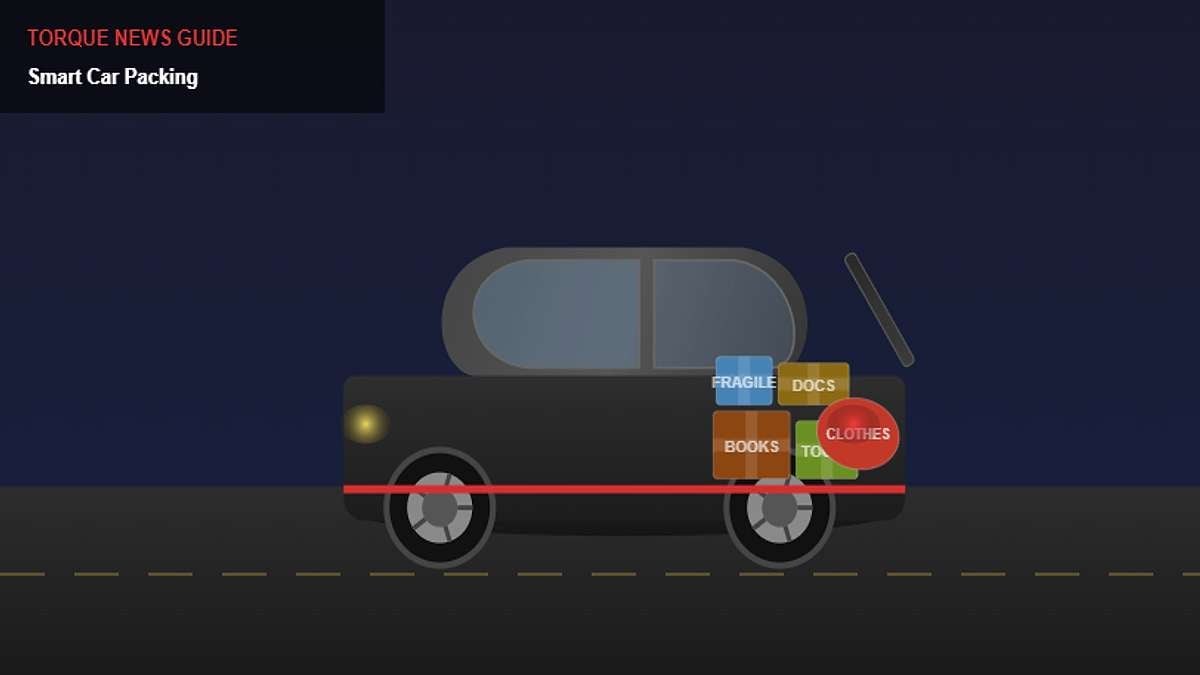
Weight distribution is not just a packing tip. It's a vehicle dynamics issue. Placing heavy items high in your cargo area raises the center of gravity and can make your car handle unpredictably, especially in emergency maneuvers or on curvy roads. Load your heaviest items - books, tools, small appliances - directly onto the cargo floor, as low as possible.
Distribute weight side to side as evenly as you can. A car loaded heavily on one side will pull and wear your tires unevenly on a long drive. Pack deliberately, not just whatever fits in whatever order.
Lighter items, such as pillows, stuffed animals, bagged clothing, go on top. They won't damage anything beneath them and they cushion any items that might shift during the drive.
Step 5: Protect What Cannot Be Replaced
Some items should always ride with you personally, never in a moving truck. Keep these in your car's passenger cabin where you control them directly:
- Important documents: passports, birth certificates, financial records, insurance papers
- Prescription medications and daily supplements
- Jewelry, family heirlooms, and irreplaceable sentimental items
- Laptops, tablets, external hard drives, and phones
- Car keys (always - never let them go into a moving truck)
- Anything that needs climate control: certain medications, plants, pets
For fragile items like glassware or ceramics, wrap each piece individually in bubble wrap or pack them tightly in clothing - clean clothing works perfectly as natural cushioning and saves you from buying extra packing material. Just make sure nothing can shift freely during the drive.
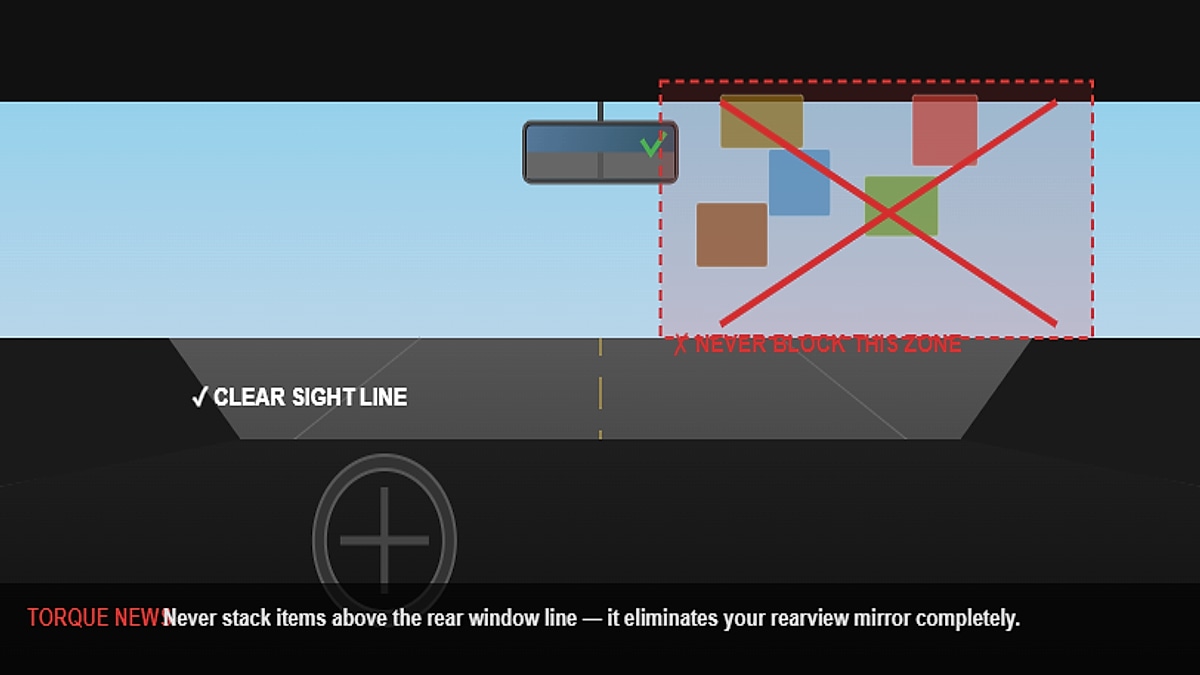
Visibility is non-negotiable. Never stack items above the rear window line. Safety and smarter packing go hand in hand. Illustration: Torque News
Step 6: Never Compromise Your Sight Lines
This is where safety becomes the conversation. It is tempting, especially on a single-trip move, to stack things as high as possible to get everything in one load. Don't. Items packed above your rear window line eliminate your rearview mirror entirely. You are now driving a vehicle with one fewer safety tool, relying entirely on your side mirrors.
This isn't just dangerous in theory. It is illegal in many states. Law enforcement can pull you over for an obstructed rear view, and if you're involved in an accident while your visibility is compromised, it will be a factor in liability.
Keep your rear window clear. Keep your side mirrors adjusted. If you can't fit everything safely in one load, schedule two trips or consider renting a small trailer or a roof cargo carrier. A waterproof rooftop bag typically runs $75 to $100 and dramatically expands what you can carry without touching your interior sight lines.
Step 7: Secure Everything as Nothing Should Move
Even a short, sudden stop at 35 mph can send unsecured items flying forward with significant force. Anything heavy enough to break your seat or injure a passenger becomes a projectile if it isn't restrained.
Use bungee cords, cargo nets, or tie-down straps to secure loads in truck beds and SUV cargo areas. Fill gaps between items with soft items like blankets and pillows - gaps allow things to shift and build momentum during braking. If you're using a roof rack, double-check the tie-downs at every fuel stop.
Never place items in the driver's foot well or in a position where they could roll under your brake pedal. This is a worst-case scenario that requires zero imagination to picture. It happens, and it ends badly. Keep that area completely clear.
Step 8: Pack a Dedicated "First Night" Bag
Here's a move most first-time movers wish someone had told them about. Pack one bag - a duffel, a backpack, whatever works - with everything you'll need for the first 24 hours in your new place. Keep it in the passenger cabin, immediately accessible.
This bag should contain a change of clothes, toiletries, phone chargers, medications, snacks and water, a basic toolkit (screwdriver, Allen wrench for furniture), and anything else you'll need before a single box gets unpacked. When you pull into your new home tired after a long drive, the last thing you want to do is dig through a fully loaded trunk looking for your toothbrush.
One Woman Did a 10,000-Mile Solo Road Trip in Her Tesla Model Y - Here's Every Lesson She Learned
Bonus: What Vehicle Works Best for Moving?
Since this is Torque News, we'd be remiss not to weigh in on the vehicle side of this equation. If you're choosing which vehicle to use for a move among vehicles you have access to, here's the real-world ranking:
A full-size pickup truck like a Ford F-150 or a Toyota Tundra gives you the most payload capacity and the most flexibility. You can bungee down items, haul awkward shapes, and carry serious weight. A midsize SUV with folded rear seats is the second-best option, offering a flat, enclosed cargo floor. Crossovers like the RAV4, Equinox, or Rogue are practical and weather-protected. Sedans can work for light moves but require more discipline and almost certainly multiple trips.
Electric vehicles deserve a specific note: if you're driving a Tesla Model Y or a Rivian R1T for your move, keep in mind that a heavy load reduces range more significantly than highway driving alone. One Tesla Model Y owner documented exactly this when he moved from Pennsylvania to Texas towing a U-Haul trailer - efficiency took a serious hit, but the power was remarkable. Plan your charging stops with a loaded car in mind, and budget extra time.
The Bottom Line
Packing a car for a move is a genuinely learnable skill. It rewards preparation, rewards knowing your vehicle, and rewards thinking before you load rather than improvising as you go. A well-packed car protects your belongings, handles safely on the road, and gets you to your new home without drama.
The car you've driven to work, to road trips, to the grocery store. It's about to do one of the most practically useful things it'll ever do for you. Treat the loading process with the same care you'd give to anything else that depends on that vehicle performing well, and it won't let you down.
We Want to Hear From You
Drop your experience in the comments below. Whether it was a perfectly packed RAV4 or a cautionary tale about an overloaded sedan on the highway, our readers learn from the real thing.
About The Author
Armen Hareyan is the founder and Editor-in-Chief of Torque News and an automotive journalist with over 15 years of experience writing car reviews and industry news. Now based in the Charlotte region (Indian Land, SC, he founded Torque News in 2010, which since then has been publishing expert news and analysis about the automotive industry. He can be reached at Torque News on X, Linkedin, and Youtube. Armen holds three Masters Degrees, including an MBA, and has become one of the known voices in the industry, specializing in the landscape of electric vehicles and real-world stories of actual car owners. Armen focuses on providing readers with transparent, data-backed analysis bridging the gap of complex engineering and car buyer practicality. Armen frequently participates in automotive events throughout the United States, national and local car reveals and personally test-drives new vehicles every week. Armen has also been published as an automotive expert in publications like the Transit Tomorrow, discussing how will autonomous vehicles reshape the supply chain, and emerging technologies in vehicle maintenance.
Set Torque News as Preferred Source on Google
Follow us today...