

When you think about getting to the airport in Chicago or Philadelphia, what comes to mind? Traffic. Parking fees. Spotty cellular data. Maybe that anxious feeling when your phone drops signal right as you’re trying to pull up a boarding pass.
Now here’s the unexpected part.
A motorcoach company (a bus company) has decided it doesn’t want to act like a bus company anymore.
Instead, it wants to act like part of the airline, and that’s where this story gets interesting.
Airport Bus With Starlink Wi-Fi: What Is Landline Doing?
The company is Landline Company, and it operates premium motorcoach service to major airline hubs, including airports serving the Chicago and Philadelphia regions.
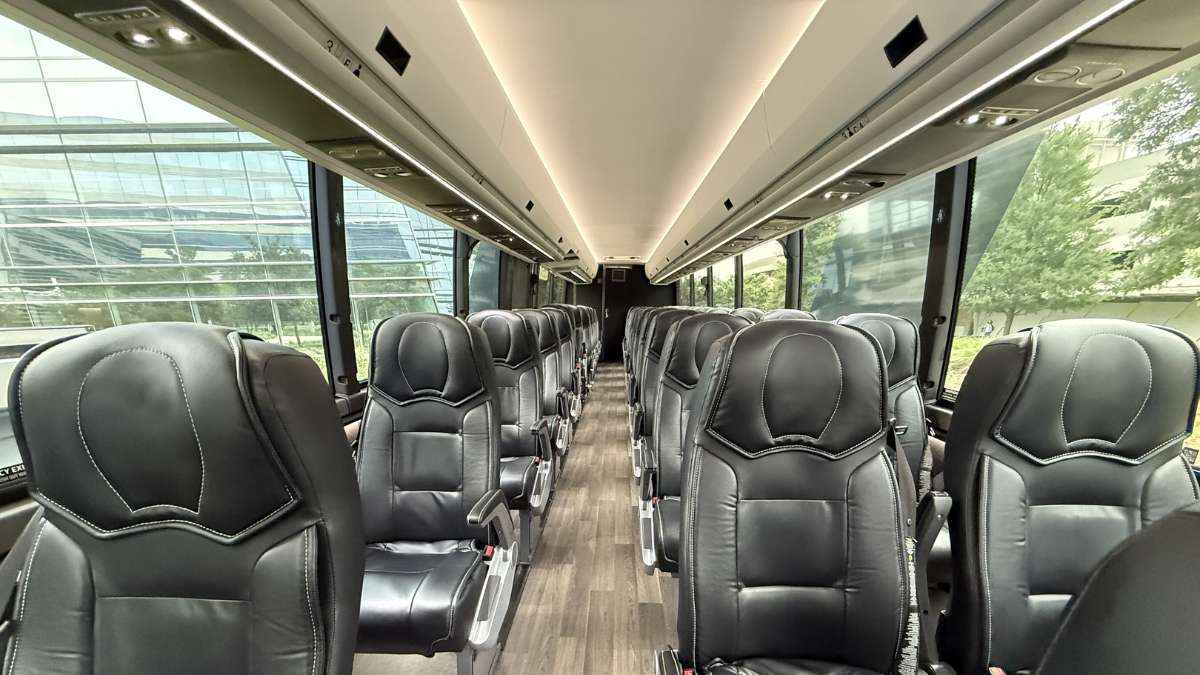
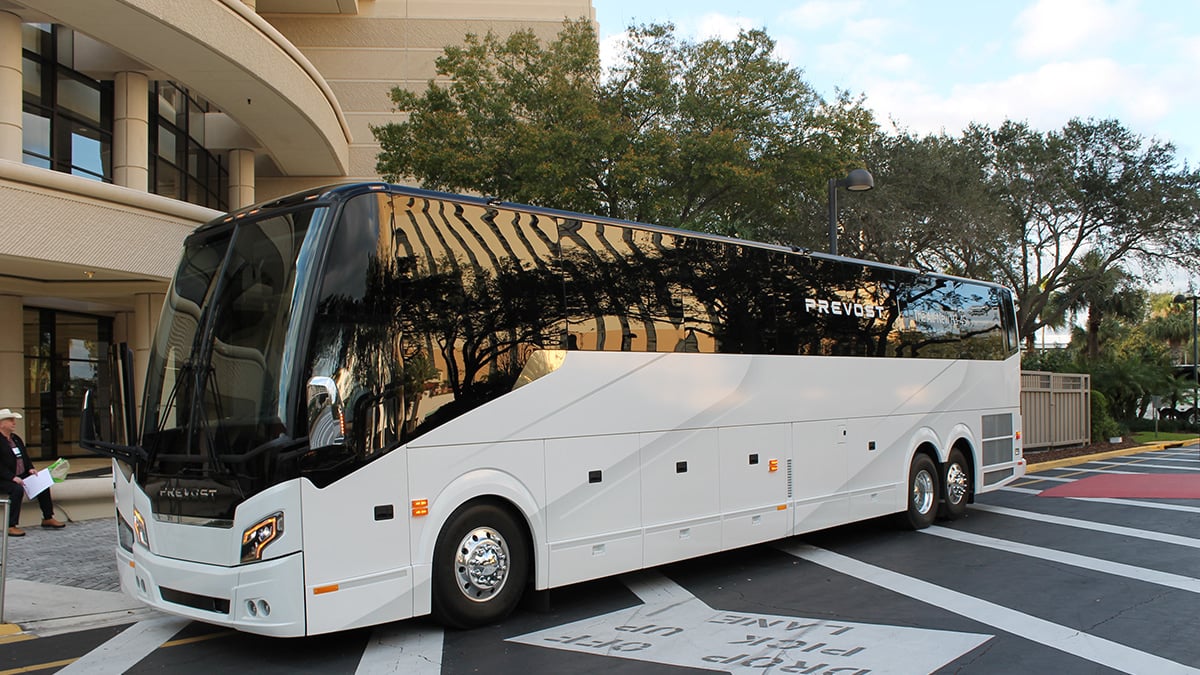
Today, Landline announced that its entire fleet of Prevost H3-45 motorcoaches is now equipped with free Wi-Fi powered by Starlink.
Not some routes. Not a pilot program. The entire fleet.
And here’s the key phrase they’re using: “gate-to-gate connectivity.”
That’s airline language.
Usually, you hear “gate-to-gate” when an airline talks about in-flight Wi-Fi. Now a ground transportation company is using the same language to describe your bus ride to the airport.
According to the CEO, the goal is a seamless, airline-integrated experience from ground to air. In simple terms, they want you to feel like your trip begins the moment you board their coach, not when you step onto the aircraft.
That’s a shift in mindset.
If you’ve ever considered how high mileage and durability factor into real world transportation value, think about this example Torque News writer Dim Angelov wrote recently about an overlooked American luxury sedan that’s becoming the ultimate Uber car because it keeps going strong mile after mile. That kind of longevity matters in real travel choices just as much as connectivity does whether you’re going to the airport or picking up a gig ride.
Gate-to-Gate Airport Transportation in Chicago and Philadelphia
If you’ve ever flown out of O’Hare, Midway, or Philadelphia International, you know the pre-flight process can be chaotic.
Parking can cost more than your flight if you’re gone long enough. Rideshare prices surge at the worst times. Cellular dead zones on highways can make streaming or working online unreliable.
Landline’s pitch is straightforward: skip driving, skip parking, and stay connected the entire way.
Now here’s where it gets technical, but stay with me.
Starlink uses low-Earth orbit satellites rather than traditional cell towers. On highways where coverage fluctuates, satellite connectivity can provide more consistent bandwidth. That means video calls, streaming, email downloads, and cloud-based work are less likely to stall.
In theory.
And that matters more than it sounds.
Because today’s traveler isn’t just scrolling social media. They’re uploading presentations, attending Zoom meetings, and managing real-time travel changes. If your airport transfer becomes dead time instead of productive time, that changes how you value it.
It also reframes the bus - which, let’s be honest, some people still find unlikeable - into something closer to a rolling business lounge.
Airline-Integrated Bus Service for Travelers
Here’s the part many readers may not realize.
Landline doesn’t operate like a traditional charter bus company. It partners with airlines so passengers can book motorcoach segments as part of their flight itinerary.
That means baggage handling coordination, scheduled connections, and structured integration into the broader air travel ecosystem.
If this model scales, it could quietly reshape how regional airport access works in the U.S.
Instead of adding short-haul regional flights - which are expensive, carbon-intensive, and operationally complex - airlines can use luxury motorcoaches to move passengers from secondary cities to hub airports.
It’s efficient. It reduces congestion in the air. And it may lower operational costs for airlines.
From an automotive industry perspective, this is fascinating.
We’ve talked for years about electrification, autonomy, connectivity. But rarely do we discuss how buses might integrate into aviation systems in a meaningful way.
This is one of those overlooked shifts that could become normal before people even notice.
I like the X user igniteXi's comment under Sawyer Merritt's post on this subject, in which igniteXi writes "Starlink is becoming the default for premium transportation."
Starlink is becoming the default for premium transportation.
Landline just equipped their entire fleet of luxury Prevost coaches with free high-speed Starlink Wi-Fi — delivering reliable gate-to-gate connectivity straight to major airport hubs.
Highway to runway, uninterrupted.… pic.twitter.com/ApGnRFLWD0— igniteXi (@igniteXi) March 4, 2026
Is Starlink Wi-Fi on a Bus Actually a Big Deal?
Let’s cut through the marketing for a second.
Free Wi-Fi isn’t new.
But high-speed satellite Wi-Fi deployed across an entire airport-focused fleet is different. It’s a capital investment decision. It signals long-term commitment, not a gimmick.
The real question is reliability.
If Starlink performs consistently at highway speeds and in varying weather conditions, Landline gains a serious competitive advantage over traditional ground transportation.
If it doesn’t, passengers will notice quickly.
And in today’s review-driven economy, word spreads fast.
From a traveler’s standpoint, the value equation becomes simple:
- Can I work productively?
- Is the ride comfortable?
- Does it eliminate parking stress?
- Does it integrate smoothly with my airline ticket?
If the answer is yes, the traditional airport parking model starts to look outdated.
Why This Matters Beyond Just One Bus Company
Here’s the broader takeaway.
"Travel's biggest pain isn't the flight anymore, it's the hours before and after. Companies like this are quietly turning that wasted time into productive (or relaxing) time. If you're traveling for work or just dislike downtime, this changes the game faster than any airline upgrade. Starlink on buses? Not a gimmick, it's the future of connected travel starting from the ground up," comments Ekpedeme Ime under Sawyer Merritt's X post, referenced in this article.
Transportation is merging.
Airlines are looking at ground logistics differently. Automotive connectivity is no longer just about cars; it’s about ecosystem integration. Satellite internet is moving from remote cabins and RVs into mainstream mobility networks.
And travelers are becoming less tolerant of friction.
The lesson for all of us?
Pay attention to small infrastructure shifts. They often signal larger changes ahead.
Sometimes the unexpected innovation isn’t in a flashy electric supercar or autonomous prototype. Sometimes it’s in a luxury coach quietly turning into an airline extension.
And there’s a personal angle here, too.
Instead of defaulting to what we’ve always done, like driving ourselves, paying for parking, stressing about traffic, it may be worth stepping back and asking whether there’s a smarter option.
Being a better decision maker doesn’t always mean choosing the fastest or the cheapest option. Sometimes it means choosing the one that reduces stress, saves fuel, lowers congestion, and benefits more people than just ourselves.
Ground-to-air integration might sound technical.
But at its core, it’s about making travel smoother for everyone involved.
Now I’m curious.
Would you trust a Starlink-equipped airport bus as part of your airline itinerary, or would you still rather drive yourself and park at the airport?
And if you’ve traveled through Chicago or Philadelphia recently, what was your biggest pain point: parking costs, connectivity, timing, or something else?
Share your experience in the comments below. I’d genuinely like to hear how you handle airport travel today.
Images by The Landline Company.
About The Author
Armen Hareyan is the founder and Editor-in-Chief of Torque News and an automotive journalist with over 15 years of experience writing car reviews and industry news. Now based in the Charlotte region (Indian Land, SC, he founded Torque News in 2010, which since then has been publishing expert news and analysis about the automotive industry. He can be reached at Torque News on X, Linkedin, and Youtube. Armen holds three Masters Degrees, including an MBA, and has become one of the known voices in the industry, specializing in the landscape of electric vehicles and real-world stories of actual car owners. Armen focuses on providing readers with transparent, data-backed analysis bridging the gap of complex engineering and car buyer practicality. Armen frequently participates in automotive events throughout the United States, national and local car reveals and personally test-drives new vehicles every week. Armen has also been published as an automotive expert in publications like the Transit Tomorrow, discussing how will autonomous vehicles reshape the supply chain, and emerging technologies in vehicle maintenance.
Set Torque News as Preferred Source on Google
Follow us today...



Comments
Would rather take a Waymo…
Permalink
Would rather take a Waymo. Though I could take the Waymo to the bus if it was a bus just for my flight. As long as everybody else is also taking a ride to the bus so it doesn't stop after I get on it.
But what I would really pay extra for would be a bus that has a security screening station on it. (X-ray screeners work remotely.) TSA Pre only. Then it drives me to my gate on the air-side, not the land side. That I would pay extra for. (Also picks me up at my landing gate, air-side.)
I'd do Waymo if that existed…
Permalink
In reply to Would rather take a Waymo… by Brad Templeton (not verified)
I'd do Waymo if that existed at Oakland, Burbank, Las Vegas, or Portland airports. Good idea on a bus that can do security screening, that would be extra luxurious.
Did you ever use the Tokyo…
Permalink
In reply to Would rather take a Waymo… by Brad Templeton (not verified)
Did you ever use the Tokyo City Air Terminal pre 9/11? It operated as you say: you checked your bags, and went through security, then took a bus that dropped you off at Narita on the other side of security. Unfortunately, it doesn't operate that way anymore.I would love to see such city terminals with secure high-speed rail service to the airport. If they had a few such terminals around LA, they could even take you to an outlying airport that would be faster than going to LAX.
David that's not what I was…
Permalink
In reply to Did you ever use the Tokyo… by David Shier (not verified)
David that's not what I was saying. I say have the security station on the bus (or train.) It's a bit easier on a train. You need to be OK with people standing on the bus (easier to get approved on the train) when they walk through the metal detector and to put their bag into the scanner. There's a challenge of what to do with the rare people who fail the screening -- do they miss their flight, or get dropped at a special station. You don't want to have to get there so early as to have time for regular screening, after all. Unfortunately, airlines penalize you for arriving at last minute (no place for your bags) which hurts that.
I already have, multiple…
Permalink
I already have, multiple times. United had this from Denver to Fort Collins/Loveland, At DEN it would pick you up airside at the gate, transfer your bags to the bus and drop you off at FNL. On the way back they'd tag your bags but you still had to go through TSA to get to your flight. Yes, they had satellite-connected WiFi on the bus, and I got UA miles for the trip. There's also been a bus/train from Philly to Newark(EWR) for years now. PAE(Paine Field, WA. right next to Boeing in Everett, WA) had a similar bus route for a while for those people who didn't want to commute from Everett & Northern Seattle to SEA. Most of these last only for a short time and most of them are backed by a major airline as a test to see if there's enough demand from a growing exurb to warrant starting actual flight service into a nearby regional airport. Usually the answer is no. The Airport bears the cost of the site upgrades, incl. ramp expansion, TSA build-out & compliance, hiring the additional trained ground staff, etc. and the population growth WRT paying, traveling public turns out not to be there.
There's nothing particularly innovative here, but I'd be interested in hearing how this latest experiment goes.