

A Shock to Oil, A Boost to Batteries
War has a way of clarifying economics. The latest Middle East conflict has disrupted roughly 20% of global seaborne oil trade, pushing crude prices up by 40% to 50% and jolting consumers worldwide. Brent crude hovering above $120 per barrel is not merely a market fluctuation, it is a stress test. In China and Europe, the response has been swift and rational. Drivers are pivoting toward electric vehicles, reinforcing China’s already dominant position in the global EV market.
The Road to $200 Oil
Markets are now contemplating a more severe scenario. Analysts suggest that oil could climb into the high $100s or even exceed $200 per barrel if supply remains constrained. This is not speculation detached from history. In 2008, demand destruction required oil prices near $150 per barrel. Adjusted for inflation, that threshold now sits above $200.
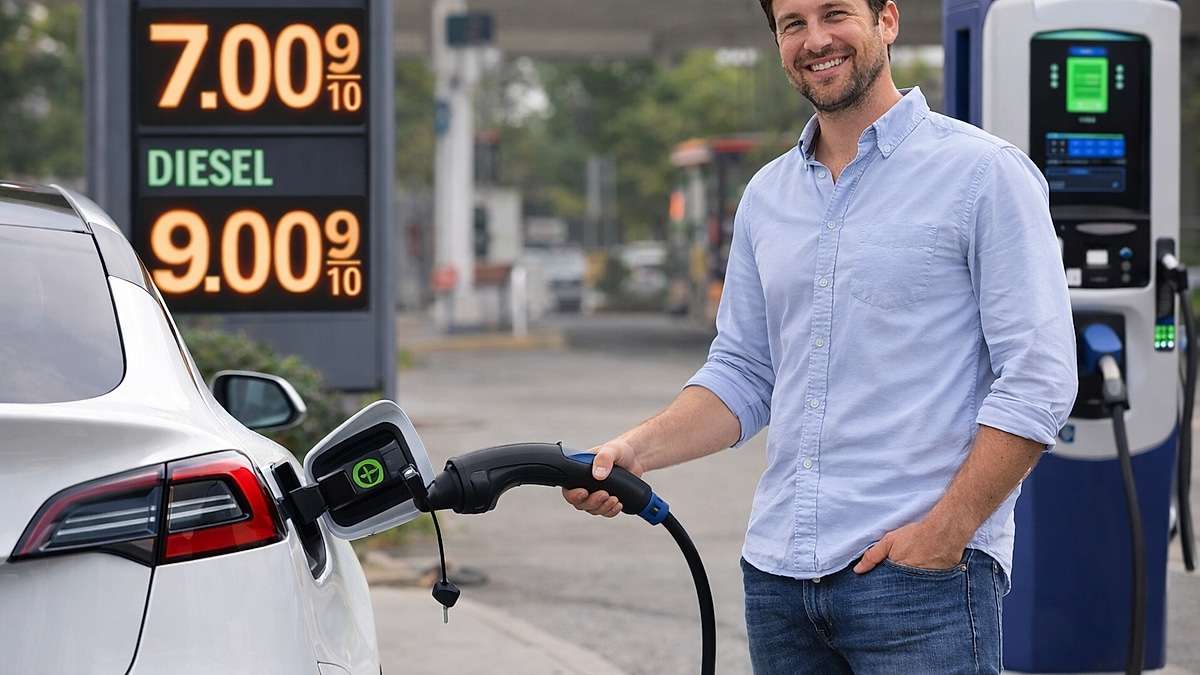
At such levels, U.S. gasoline prices will likely approach $7 per gallon, well above the previous record of $5.02 set in 2022. Prices would rise not because markets fail, but because they function. High prices ration demand when supply cannot expand. The mechanism is blunt, but effective.
Pain at the Pump, Profits in the Patch
American consumers are feeling the consequences quickly. Gasoline prices have risen by over $1 per gallon since the conflict began. The global nature of oil markets ensures that domestic production offers limited insulation.
Oil companies, however, are enjoying a windfall. U.S. producers could capture roughly $60 billion in additional profits if prices remain elevated. The crisis has also delivered unexpected gains to geopolitical rivals. Sanctions relief has allowed Russia and Iran to boost exports, potentially adding tens of billions of dollars to their revenues. Energy markets, like nature, abhor a vacuum. Someone always fills it.
Meanwhile, allies in Asia face harsher adjustments. Liquefied natural gas prices have roughly doubled. Governments are rationing fuel, cutting services, and in some cases confronting unrest. The economic burden is uneven, but widespread.
The EV Advantage
Against this backdrop, electric vehicles gain a structural advantage. Their appeal is not ideological, it is solid math. EVs convert more than 75% of electrical energy into motion, compared with just 12% to 30% for gasoline vehicles. This makes EVs roughly two and a half times more efficient than gas-powered vehicles.
Efficiency translates directly into cost. When fuel prices spike, the relative savings of electricity become more pronounced. Consumers respond accordingly. The shift is gradual in normal times, but accelerates during shocks. Each oil crisis quietly rewrites the economics of mobility.
Depending on where you live, some portion of your electricity is generated by burning fossil fuel and some from renewable sources like wind and solar. Even if EVs were powered 100% by electricity generated from fossil fuels (which they aren’t), EVs convert a far greater share of that energy into motion. Less energy is lost as heat, and more is used to move the car forward. The result is lower cost per mile and a smaller environmental footprint, another case where efficiency and sustainability align neatly.
War Meets Energy Infrastructure
The conflict itself has reached deep into energy systems. Military strikes have hit more than 12,000 targets, while retaliatory attacks have spread across the region. Nearly 80 strikes have affected energy infrastructure across multiple countries, from the Gulf states to Iraq.
The closure of the Strait of Hormuz is the pivotal development. This narrow passage normally carries about 20% of global seaborne oil. Its effective shutdown has transformed a geopolitical conflict into a supply shock of historic scale. Oil markets are now balancing not on sentiment, but on physical scarcity.
China’s EV Machine Accelerates
China entered this crisis with momentum. It already produces about half of the world’s plug in vehicles. The shock has only accelerated adoption. Retail sales of new energy vehicles reached about 900,000 units in March 2026, a 94% jump from February. The country now has more than 36 million EVs and plug in hybrids on the road, with full year sales projected between 15.5 million and 16.5 million units.
Consumers are responding to price signals with textbook efficiency. A Beijing taxi driver recently switched to an EV citing lower operating costs. A white-collar commuter made the same calculation for daily travel. Dealerships report brisk demand, with some selling more than 240 vehicles per day. Oil prices rise, EV sales follow. The relationship is becoming mechanical.
Subsidies and Structural Distortions
Despite these dynamics, fossil fuels retain significant policy support. The U.S. federal government provides at least $34.8 billion annually in subsidies to oil, gas, and coal production. Additional incentives could push support much higher in coming years, particularly through carbon capture and related programs.
These subsidies soften the impact of high prices on producers, while doing little to shield consumers from volatility. They also complicate the transition to cheaper, cleaner alternatives by preserving legacy cost structures. Markets signal change, policy often delays it.
Bottom Line
The current oil shock is both a disruption and a preview. It reveals how tightly the global economy remains tied to a handful of strategic chokepoints. It also shows how quickly consumers adapt when prices rise.
China’s EV surge is not an anomaly, it is a leading indicator. As oil markets tighten, the economics of electric mobility strengthen. Each spike in gasoline prices nudges the transition forward, not through policy mandates, but through simple cost comparisons.
Energy crises rarely produce winners in the short term. Over the longer term, however, they tend to reward efficiency. This time appears no different. When considering the advantages of buying an EV like much lower maintenance costs, better performance, and a smoother ride, add the massive savings from lower “fuel” costs.
What Do You Think?
At what price per gallon would you seriously consider switching to an EV?
Do you believe EVs are actually cheaper to own long term, or is that overstated?
Chris Johnston is the author of SAE’s comprehensive book on electric vehicles, "The Arrival of The Electric Car." His coverage on Torque News focuses on electric vehicles. Chris has decades of product management experience in telematics, mobile computing, and wireless communications. Chris has a B.S. in electrical engineering from Purdue University and an MBA. He lives in Seattle. When not working, Chris enjoys restoring classic wooden boats, open water swimming, cycling and flying (as a private pilot). You can connect with Chris on LinkedIn and follow his work on X at ChrisJohnstonEV.
Photo credit: Provided by author, ChargePoint media kit
Set Torque News as Preferred Source on Google
Follow us today...







Comments
For those of old enough to…
Permalink
For those of old enough to recall the 1973 Arab Oil Embargo, and for those who were shown this important chapter in American history class, there's something interesting about the current global oil situation. How the U.S. failed to become more resilient to this kind of disruption. Our "addiction to oil" as Mr Bush put it, has made us sleepy and lazy. For those in our society who scoff at alternative energy and think its ok to keep all our eggs in one basket, enjoy your cheap oil while it lasts, because you havent yet seen expensive oil, at least not here.
Hi Allen, thanks for your…
Permalink
In reply to For those of old enough to… by Allen Fischer (not verified)
Hi Allen, thanks for your comment. You make a good point. In the EU, gasoline is much more expensive. For example, in Germany, gas is €2.23/L which is about $9.88 per gallon. I fear that U.S. consumers are going to have a painfully expensive summer driving season.
Currently over 60% of the…
Permalink
Currently over 60% of the grid is powered by natural gas. If everyone bought an EV tomorrow, the grid would crash shortly thereafter. The damage done to the environment to create batteries is staggering. What happens to these batteries and solar panels once they are no longer capable of holding a charge?
Hi Mike, thanks for your…
Permalink
In reply to Currently over 60% of the… by Mike (not verified)
Hi Mike, thanks for your comments. Fortunately for all of us, they are completely wrong. First off, only about 2% of U.S. vehicles are battery electric. We’re not going to be at 100% anytime soon.
Research from the National Renewable Energy Laboratory shows that today’s U.S. power grid can handle both current EV charging needs and even a scenario where electric vehicles make up about 25% of cars on the road. This is because charging patterns that occur during off-peak hours, when electricity demand is lower. EV growth will be slow, and any required grid improvements can be rolled out gradually at the local level rather than through an immediate, large-scale overhaul of the entire national system.
When it comes to end-of-life EV batteries, modern processes can recover more than 90% of the valuable metals contained in lithium-ion batteries. Also, the timing is often misunderstood. The bulk of electric vehicles on the road today are relatively young. Their batteries, designed to last well over a decade, are not about to flood recycling facilities. The much-feared wave of end-of-life batteries remains several years away and there are facilities in place to process them.
Lastly, natural gas is 43% (not 60%) of the U.S. power grid and declining, where renewables are about 26% and growing rapidly.