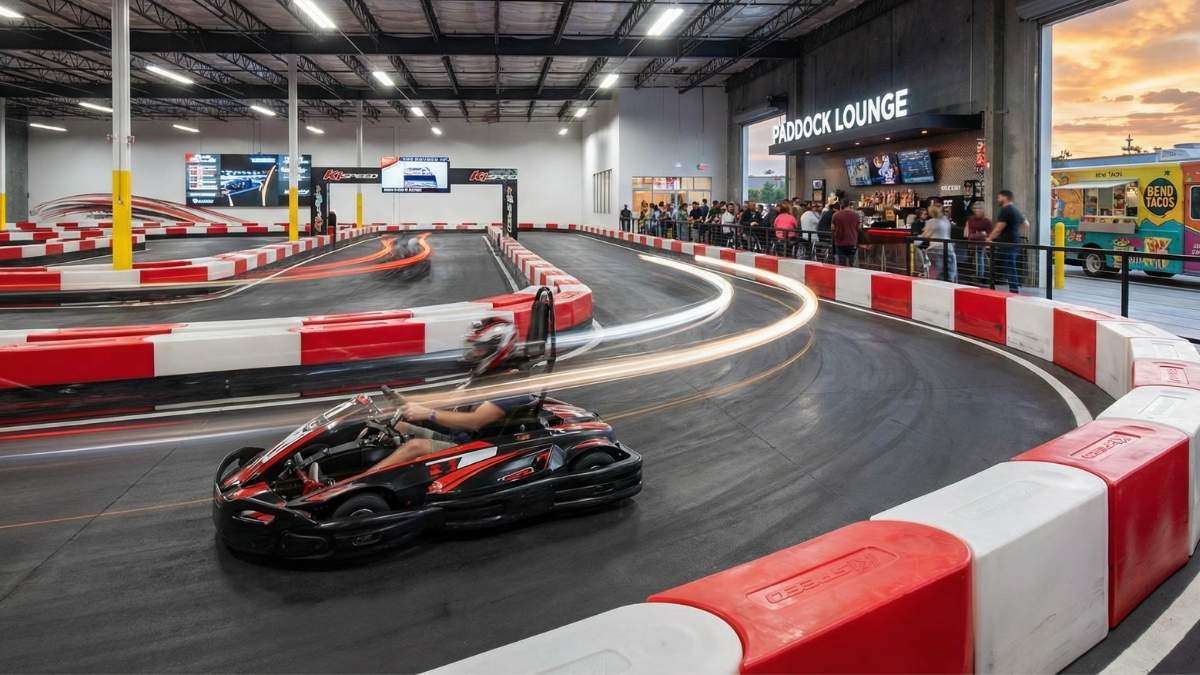

There is a specific kind of adrenaline that only comes when your backside is hovering exactly two inches above the pavement. At that height, the world doesn't just go by—it blurs. I spent my afternoon at K1 Speed in Bend, Oregon, and let me tell you: if you think "electric go-karts" sound like a quiet stroll through a park, you’ve clearly never been pinned to the seat of an OTL Storm EFD kart while pulling -forces in a hairpin turn.
K1 Speed has established itself as the gold standard for indoor karting, and for good reason. From the moment you walk into the sleek, neon-lit facility, you realize this isn't the "putt-putt" track of your childhood. This is a legitimate racing environment designed for people who appreciate torque, precision, and the sweet smell of... well, not exhaust, because these beauties are 100% emission-free.
The Bend Experience: Small But Mighty
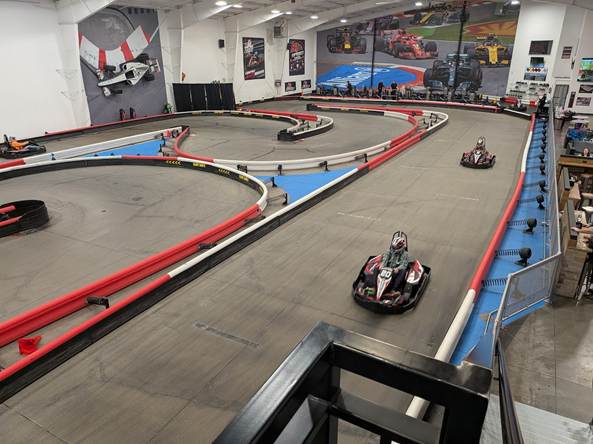
The Bend, Oregon location holds a unique distinction: it is the second smallest track in the entire K1 Speed ecosystem. But don’t let the square footage fool you. In the world of racing, smaller often means more technical. While some of the massive flagship tracks allow karts to reach speeds of up to 45 mph, the tight configuration in Bend sees karts topping out at roughly half that.
However, speed is relative. When you are strapped into a low-profile chassis with zero suspension, 22 mph feels like warp speed. The track is a "work-out" in the truest sense of the word. You aren't just sitting there; you are wrestling with the steering wheel, bracing your core through the corners, and using every bit of your peripheral vision to nail the apex. By the time I finished my 13 laps, my forearms were burning and I had a grin wide enough to split my helmet.
The Tech Behind the Torque
What sets K1 Speed apart is the use of European-made electric karts. Unlike gas-powered karts that need to "rev up" to find their power band, electric motors deliver 100% of their torque instantly. The moment you floor the pedal, you’re gone.
The karts feature four distinct speed levels, but you have to earn your way to the top. Most racers start at Level 3. If you want to unlock the "boss mode" of Level 4, you have to prove your mettle. On the Bend track, that means consistently clocking a lap time under 19 seconds. To put that in perspective, my fastest lap today was a 23-second blazer. I felt like Mario Andretti until I looked at the digital scoreboard and saw the all-time track record: a blistering 16.9 seconds.
The precision is tracked by a sophisticated timing system that records your performance down to the thousandth of a second. At the end of your session, you receive a detailed report of your individual lap times, allowing you to see exactly where you gained (or lost) those precious fractions of a second.
Leagues, Lessons, and Lifelong Skills
K1 Speed isn’t just for "Arrive and Drive" hobbyists. They have built a robust competitive community through their three monthly leagues:
- Junior League: For the rising stars (minimum height 48").
- Teen League: For the high-school speedsters.
- Adult League: For those of us who never grew out of our "need for speed."
If you find yourself lagging behind the pack, they even offer professional karting lessons. These sessions cover the physics of racing, from understanding the "racing line" to mastering the art of late braking. It’s the kind of skill set that translates surprisingly well to real-world driving safety.
Drift Night: The Ultimate Controlled Chaos
If grip-and-grin racing isn't enough for you, you have to check out Drift Night. This is easily one of the most entertaining events on the calendar. The staff slides hard plastic covers over the rear tires, effectively neutralizing the karts' natural traction.
The result? Pure, unadulterated chaos. You spend the entire race trying to maintain a delicate balance between a stylish slide and a 360-degree spin-out. It’s a masterclass in throttle control and counter-steering. It’s less about the clock and more about the "soul" of the drive.
The Logistics of the Lap
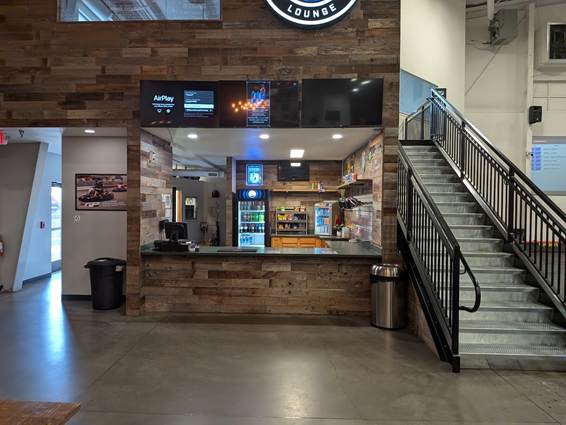
Let’s talk turkey—or rather, tacos. The Bend facility is top-notch, featuring a Paddock Lounge where you can grab food and drinks to refuel between heats. While the in-house snacks are great, I have a personal tradition: there is a taco truck right outside the Bend location that is hands-down my favorite in the city. I find myself visiting the truck more often than the track, but combining the two makes for the perfect afternoon.
Pricing and Requirements:
- Membership: A $8.50 annual license is required. It tracks your stats globally and gets you a free race on your birthday.
- Race Cost: Roughly $25 per race (approx. 13-14 laps).
- Safety Gear: Helmets are provided for free, but you’ll need to buy a $3.00 head sock (balaclava). Trust me, you want your own—no one wants to share "helmet hair" with the previous three racers. You can also bring your own DOT-approved helmet if you're a regular.
The Struggle is Real (Getting In and Out)
If there is one "con" to the experience, it’s the physical entry and exit. As someone who isn't quite as limber as a teenager anymore, folding myself into a cockpit that sits two inches off the floor is an exercise in humility.
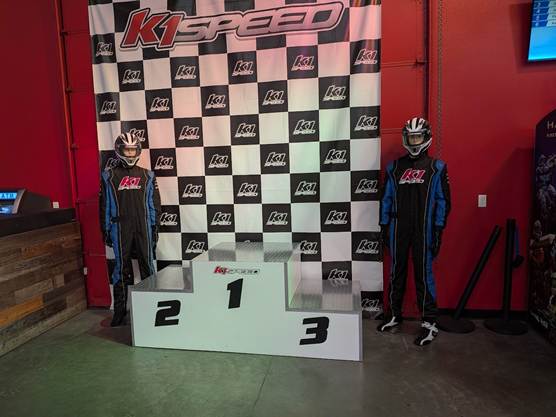
However, the "undignified shimmy" required to get into the seat is a small price to pay. Once you are strapped in, the ergonomics are perfect. You feel like a part of the machine. And the payoff is worth it: standing on that winner's podium for a photo op is a memory that sticks. Today, I took first place in my race. Granted, I was the only person on the track at the time, but the trophy on the podium doesn't ask questions about the size of the grid!
Wrapping Up
Experience high-torque thrills at K1 Speed Bend, where electric karts offer technical challenges, competitive leagues, and drift nights. Despite the small track size, it’s a rigorous, rewarding, and recommended workout.
Disclosure: Images taken by me or rendered by Artlist.io
Rob Enderle is a technology analyst at Torque News who covers automotive technology and battery developments. You can learn more about Rob on Wikipedia and follow his articles on Forbes, X, and LinkedIn.
Set Torque News as Preferred Source on Google
Follow us today...