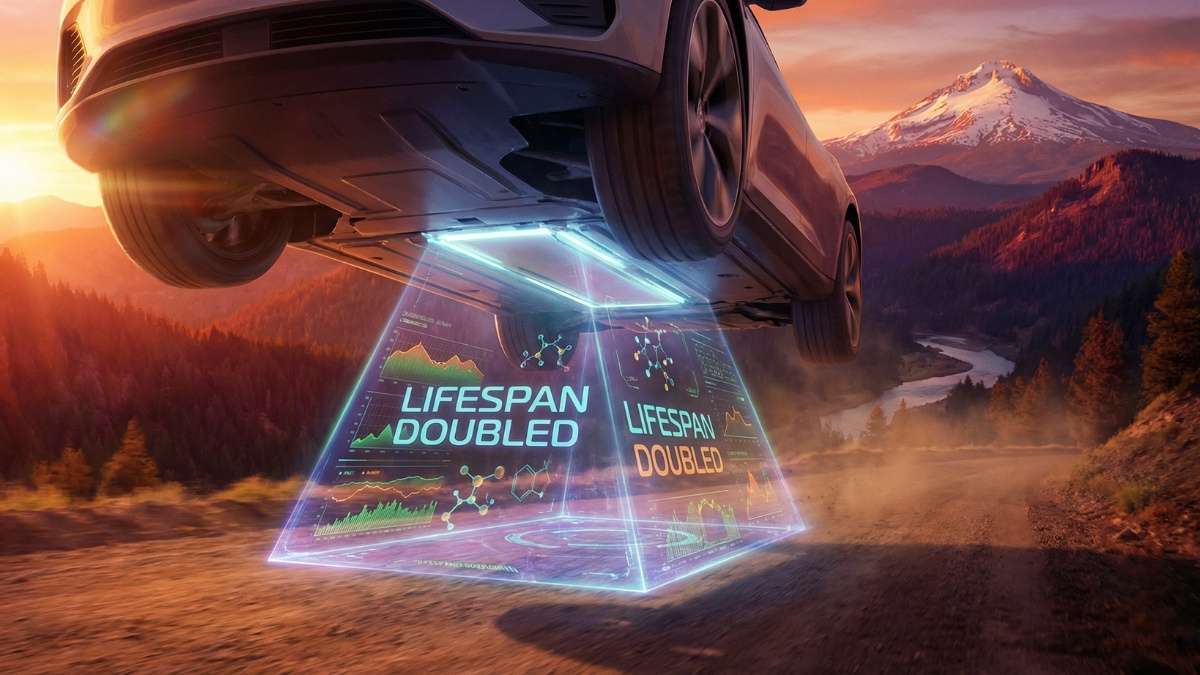

In the late 1990s, the automotive world watched the birth and controversial death of the GM EV-1. While pioneering, its lead-acid and later nickel-metal hydride (NiMH) batteries were the project's Achilles' heel, offering limited range and a predictable, relatively rapid degradation curve. Fast forward to the present, and the landscape has shifted fundamentally. We are no longer just improving chemistry; we are improving intelligence.
Modern lithium-ion and upcoming solid-state batteries are now managed by sophisticated AI-driven Battery Management Systems (BMS). While early modern EVs were expected to last roughly 100,000 miles before significant degradation, AI is pushing that horizon toward the 200,000 and even 300,000-mile mark. This evolution ensures that the battery will likely outlast the vehicle’s chassis, fundamentally altering the total cost of ownership and the secondary market value of electric cars.
Predictive Maintenance and the Magic of Dynamic Impedance Spectroscopy
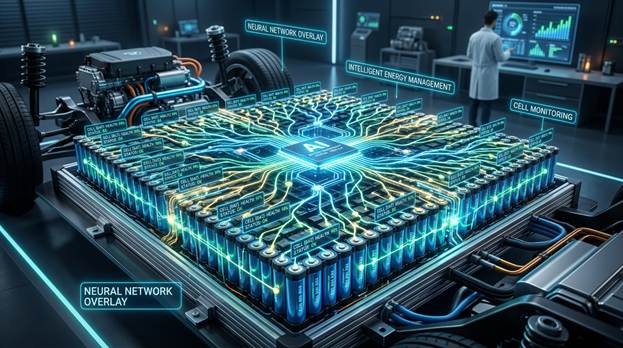
The secret sauce in this longevity doubling is the move from reactive to proactive management. Traditional BMS used static look-up tables to guess battery health. Today, AI utilizes Dynamic Impedance Spectroscopy (DIS) to perform what is essentially a real-time MRI of the battery’s internal state.
By analyzing the electrochemical "pulse" of the cells during operation, AI can detect the earliest signs of lithium plating or dendrite formation—microscopic structures that cause short circuits and capacity loss. Instead of waiting for a cell to fail, the AI adjusts charging speeds and thermal management in real-time to "heal" or mitigate these stressors. This level of granular control was impossible a decade ago and is a primary driver behind the top battery industry trends of 2026.
Boosting EV Demand Through Reliability
For years, "range anxiety" dominated the conversation, but it has recently been eclipsed by "replacement anxiety." Potential buyers fear a five-figure bill for a new battery ten years down the line. By using AI to double the effective lifespan of these units, manufacturers are effectively removing the final psychological barrier to EV adoption.
When a consumer knows that an EV purchased today will still have 90% of its capacity in 2035, the depreciation curve flattens. This makes financing more attractive and resale values more stable. According to market analysis from BloombergNEF, battery longevity is now a top three consideration for fleet operators, who are the "canaries in the coal mine" for mass-market trends.
Enhancing the Owner Experience Beyond the Battery
AI isn't just a chemist; it’s a concierge. Beyond the battery tray, AI is transforming how we interact with our vehicles.
- Predictive Routing: AI now calculates routes based on real-time weather, elevation, and individual driving style to provide "to-the-mile" accuracy on range.
- Charging Optimization: AI learns your schedule. If it knows you don't leave for work until 8:00 AM, it can slow-charge the vehicle during the coolest part of the night to minimize heat stress, even if you plugged it in at 6:00 PM.
- Cabin Personalization: Advanced AI interfaces, like those seen in recent NVIDIA-powered cockpits, use biometric data to adjust ergonomics and climate, reducing the energy draw of the HVAC system by targeting the passenger directly rather than the entire cabin.
The Roadmap of EV AI: 2026 to 2030
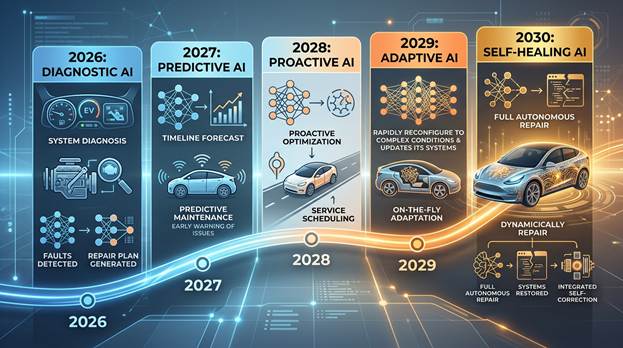
The rest of this decade will see a rapid acceleration of these technologies:
- 2026: The Year of Edge AI. We will see the mass deployment of "Edge" processing within the battery pack itself. This allows for millisecond-level adjustments to current flow during rapid charging, significantly reducing the heat damage associated with 350kW fast chargers.
- 2027: V2G Integration. AI will manage Vehicle-to-Grid (V2G) systems, allowing your car to sell power back to the grid during peak times without harming the battery’s long-term health, essentially making the car a revenue-generating asset.
- 2028: Self-Healing Algorithms. Software-defined vehicles will receive "chemistry-aware" updates that can rebalance aged cells using high-frequency pulse charging, effectively reclaiming "lost" capacity.
- 2029: Fully Autonomous Energy Management. The car will autonomously navigate to wireless charging pads when rates are lowest and health-impact is minimal, requiring zero human intervention for "fueling."
- 2030: The Million-Mile Battery. By the turn of the decade, the combination of solid-state chemistry and mature AI management will make the "million-mile battery" a standard consumer expectation, not a lab experiment.
Wrapping Up
The transition from the primitive management of the GM EV-1 era to the AI-driven systems of today represents the most significant leap in automotive history. By leveraging tools like Dynamic Impedance Spectroscopy and predictive maintenance, AI is effectively doubling the lifespan of the modern EV battery. This isn't just a win for the environment; it is the fundamental shift needed to make EVs more reliable, more affordable, and more desirable than their internal combustion predecessors. As we move toward 2030, the "brain" of the car will be just as important as the chemistry of the battery in defining the future of mobility.
Disclosure: Images rendered by Artlist.io
Rob Enderle is a technology analyst at Torque News who covers automotive technology and battery developments. You can learn more about Rob on Wikipedia and follow his articles on TechNewsWord, TGDaily, and TechSpective.
Set Torque News as Preferred Source on Google
Follow us today...