
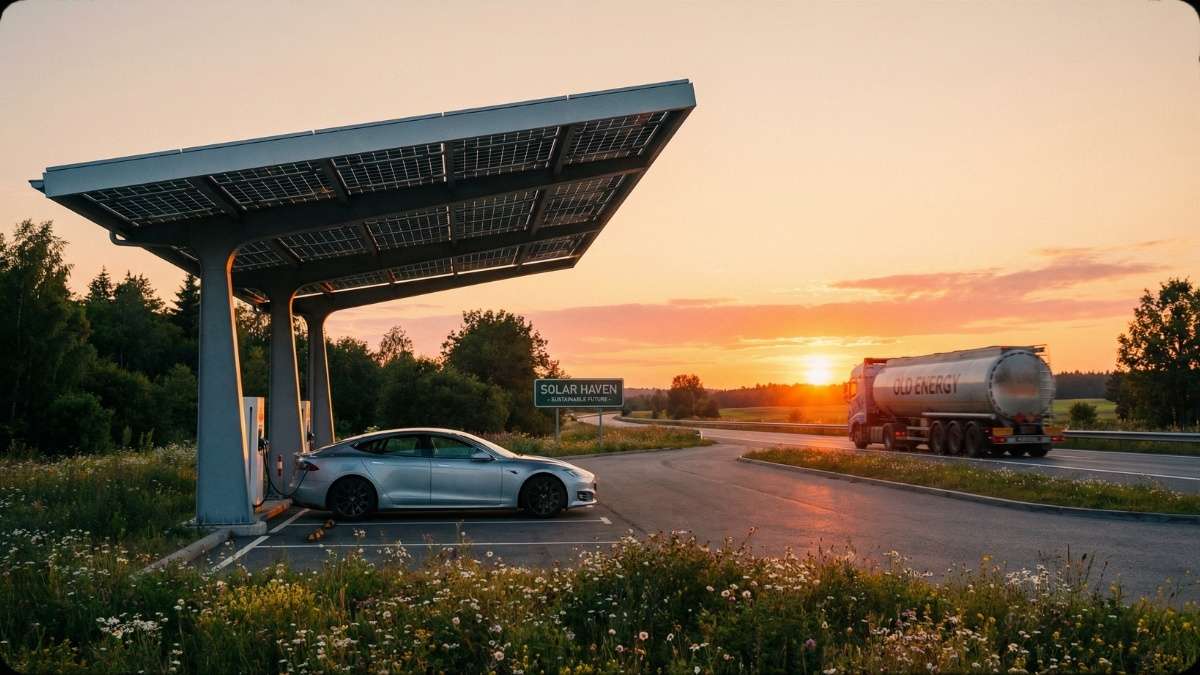

For years, the narrative surrounding electric vehicles (EVs) has been framed as a zero-sum game: a battle between the "green" future and the "internal combustion" past. Critics often argue that EV mandates and subsidies are a burden on the average consumer. However, a groundbreaking 2026 study has flipped this script entirely. It turns out that adopting an EV doesn't just save the owner money; it triggers a market-wide "knock-on" effect that lowers the price of fossil fuels for everyone else.
The Science of Lower Demand: How EVs Trigger Cheaper Gas
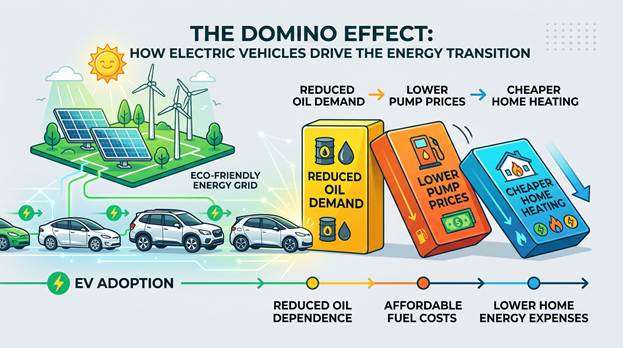
The logic is simple but the impact is profound. As more drivers switch to electric, the aggregate demand for gasoline drops. According to research published in Anthropocene Magazine, aggressive EV policies trigger a cascade of benefits. By slashing oil demand, these policies result in lower gasoline prices and cheaper home energy.
The study, led by researchers at the Georgia Institute of Technology, found that even low-income households—who are currently less likely to afford a new EV—stand to benefit the most. Their energy bills could drop by as much as 6.6% simply because the reduced demand for fossil fuels forces prices down across the board. This "domino effect" is a powerful argument for the societal value of electrification: the EV driver is effectively subsidizing the gas driver's next fill-up.
Long-Term Implications: Savings, Health, and the Planet
The shift to EVs isn't just about the price at the pump today; it's about the total cost of living and the health of our environment tomorrow.
- Owner Savings: By 2026, the data is clear—driving electric is significantly cheaper. On average, U.S. drivers are saving $800 to $1,500 per year on fuel alone. When you factor in the reduced maintenance (no oil changes, fewer moving parts), the total cost of ownership becomes an undeniable win for the consumer.
- Environmental Impact: Beyond the wallet, the transition is the primary lever for hitting climate goals. Widespread adoption reduces tailpipe CO2 emissions and, perhaps more importantly for urban dwellers, eliminates nitrogen oxides and particulate matter that contribute to respiratory illnesses.
- Climate Resilience: As we face more frequent extreme weather events, moving away from a volatile global oil market to a diversified, domestic electrical grid improves national energy security.
Bridging the Gap: What Must Happen Next
Despite the clear benefits, the transition is at a critical "policy-sensitive" juncture. To move from the early adopter phase to total market dominance, three groups need to step up:
- Governments: Stable federal tax credits are essential. Recent fluctuations in subsidies have caused sales volatility. Governments must also prioritize "standalone battery storage" for the grid to prevent high EV penetration from driving up electricity prices.
- EV OEMs: Manufacturers need to focus on the sub-$25,000 market. While luxury EVs are plentiful, the "average" American family needs affordable, versatile options.
- Infrastructure Providers: "Range anxiety" is being replaced by "reliability anxiety." The industry must ensure that fast-charging stations are as reliable and ubiquitous as gas stations.
The War Factor: Gas Shortages and Price Forecasts
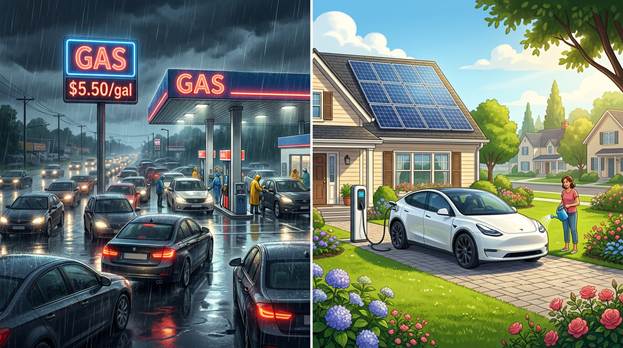
The current geopolitical climate has turned gasoline into a luxury good. With the ongoing conflict in Ukraine and the 2026 military conflict with Iran, the global oil supply is under immense pressure. Gas prices in the U.S. have recently spiked over 17% due to infrastructure being at risk in the Middle East.
In this environment, the EV's greatest advantage is its "fuel agility." While an ICE vehicle is a prisoner to global oil markets, an EV can be powered by solar, wind, or hydro—energy sources that aren't affected by a blockade in the Middle East. However, even with high prices, Why $4 gas won’t spark an EV buying spree highlights that high upfront costs and infrastructure gaps still make many consumers hesitant to pull the trigger immediately.
The Tipping Point: When Will You Be "Forced" to Switch?
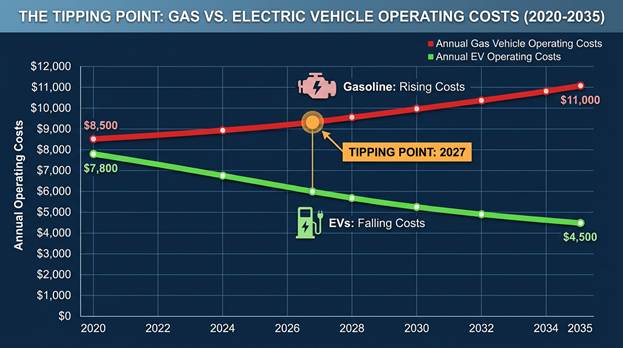
For many, the switch to an EV won't be a choice made out of environmental concern, but one of economic survival. Experts suggest that as gas stays consistently above $4.50 to $5.00 per gallon, the "math" for the average commuter becomes impossible to ignore.
We are approaching a "forced migration" window. With battery prices nearing the $100/kWh parity threshold in 2026, the barrier to entry is falling just as the cost of staying with ICE is rising. Most analysts predict that by 2027, the combination of high gas prices and battery price parity will make buying a new gas car feel like a massive financial liability.
Wrapping Up
The adoption of electric vehicles is creating a rare "win-win-win" scenario. Owners save thousands in operating costs, the planet gets a reprieve from toxic emissions, and—most surprisingly - those who continue to drive gas vehicles benefit from the downward pressure on fuel prices caused by lower demand. However, this transition requires aggressive policy support and continued infrastructure investment to remain equitable. As global conflicts continue to destabilize the price of oil, the move to a domestic, electric-powered transport system isn't just a green initiative - it’s an economic necessity.
Disclosure: Images rendered by Artlist.io
Rob Enderle is a technology analyst at Torque News who covers automotive technology and battery developments. You can learn more about Rob on Wikipedia and follow his articles on TechNewsWord, TGDaily, and TechSpective.
Set Torque News as Preferred Source on Google
Follow us today...







Comments
Selling more Electric…
Permalink
Selling more Electric Vehicles causes the price of gasoline to drop?
Perhaps in the short term, but I'm betting Adam Smith's "Invisible Hand" of the Free Market ensures that capacity will adjust to meet demand, and so will price, to keep gasoline profitable.