
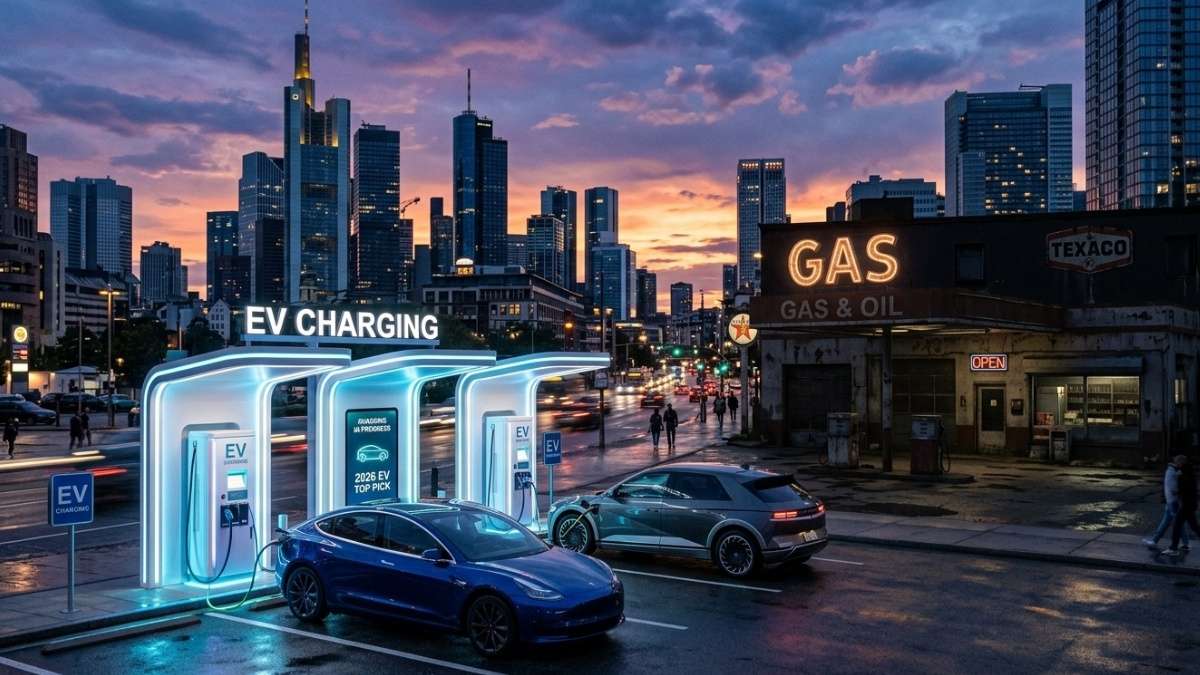

The automotive industry has reached a rubicon. For decades, the transition from internal combustion engines (ICE) to electrified powertrains was framed as a niche movement for early adopters or a forced march dictated by environmental regulation. However, the release of Consumer Reports’ 2026 Top Picks has shattered that narrative. For the first time in history, every single vehicle on the prestigious list is either a hybrid, a plug-in hybrid (PHEV), or a full battery electric vehicle (BEV).
This isn't just a win for "green" tech; it is a validation of mainstream reliability, performance, and value. When the ultimate arbiter of consumer practicality declares that there is no longer a pure gasoline vehicle worthy of a "Top Pick" designation, the market has moved. We are witnessing the collapse of the pure ICE car’s long-term viability, accelerated by global conflict and a fundamental shift in what drivers expect from their machines.
The Death Toll for Pure ICE Market Viability
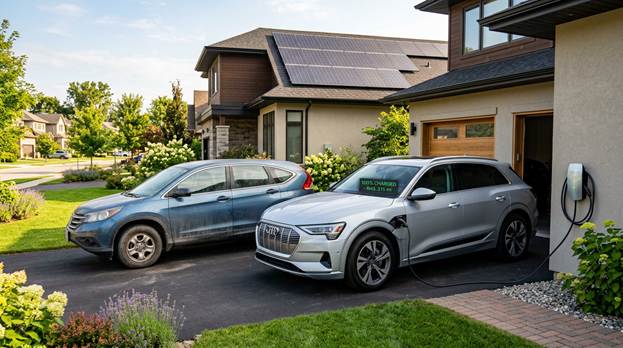
The long-term market viability of pure ICE cars is now on life support. Consumer Reports’ data-driven approach focuses on reliability, safety, and owner satisfaction—metrics where electrified vehicles are now outperforming their gasoline counterparts.
The primary threat to ICE isn't just regulation; it’s depreciation. As mainstream buyers flock to hybrids and EVs, the resale value of pure gasoline cars is projected to crater. In a world where EV battery costs have reached price parity with ICE engines, the complexity of a vibrating, heat-generating, multi-gear transmission system is becoming a liability rather than an asset.
For the average consumer, a car is their second-largest investment. If the market signals that "the best" cars are all electrified, the psychological shift follows quickly. We are approaching a tipping point where buying a pure ICE car in 2026 feels like buying a flip phone in 2010—it still works, but you know you’re buying into a dead-end ecosystem.
The Iran War: A Geopolitical Catalyst for Electrification
The current conflict involving Iran has acted as a massive accelerant for this trend. Energy security has moved from a political talking point to a daily kitchen-table concern. With the Strait of Hormuz—a chokepoint for 20% of the world’s oil—constantly under threat, gasoline prices have become a volatile rollercoaster that consumers are desperate to exit.
Historically, high gas prices drove people toward smaller cars. Today, it drives them toward different powertrains. The "security" of being able to charge a vehicle from the domestic grid, or even better, from home solar panels, has become a powerful marketing tool. Electrification isn't just about the environment anymore; it’s about personal and national energy independence.
As global oil supply chains remain fragile, the hybrid and EV options on CR’s Top Picks list represent a "safe harbor" for consumer capital. The Iran war has effectively removed the "convenience" argument for gasoline by making the cost of that convenience unacceptably high and unpredictable.
Beyond the Battery: The Hidden Advantages of Electrification
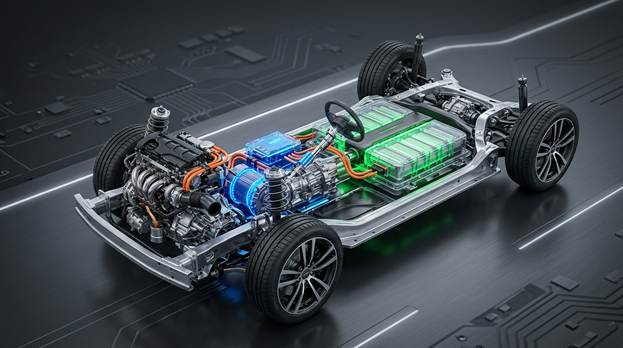
While fuel savings and geopolitics dominate the headlines, other advantages are quietly driving this trend. Modern electrified vehicles offer a superior driving experience that ICE simply cannot match.
- Instant Torque and Smoothness: Even basic hybrids now utilize electric motors to fill in the gaps of an engine’s power band, providing a level of responsiveness that makes pure ICE cars feel sluggish and "jumpy" by comparison.
- Simplified Maintenance: Full EVs have significantly fewer moving parts, while hybrids reduce the wear and tear on the combustion engine and braking systems through regenerative braking.
- Digital Integration: Electrified platforms are built on modern "software-defined" architectures. This allows for better over-the-air updates, advanced driver-assistance systems (ADAS), and cabin technologies that feel more like a modern smartphone than a legacy machine.
The Consumer Reports 2026 list highlights vehicles that aren't just "good for an EV," but are simply the best vehicles in their class regardless of what is under the hood.
The Strategic Blunder: Why the "Pivot Back to ICE" is Failing
In the last 18 months, several major automakers—notably some legacy American and European brands—announced they were "pivoting back" to ICE or slowing their EV transitions due to cooling demand. The 2026 Consumer Reports list suggests this was a catastrophic strategic error.
These companies mistook a temporary plateau in EV growth for a permanent rejection of the technology. By shifting R&D budgets back to 19th-century technology, they have effectively yielded the high ground to companies like Toyota, Hyundai, and Tesla, who stayed the course with hybrid and electric innovation.
Companies doubling down on ICE are now stuck with inventories of vehicles that no longer represent "top-tier" choices for informed consumers. They are competing for a shrinking slice of the market that is increasingly price-sensitive and less profitable. The CR list proves that the demand wasn't cooling for electrification; it was cooling for badly executed electric vehicles. Those who focused on making great hybrids and refined EVs are the ones reaping the rewards today.
Advice for the 2026 Car Buyer: Plan for the Transition
If you are in the market for a vehicle today, the Consumer Reports list should serve as your primary roadmap. Here is how you should be planning:
- Avoid Pure ICE for New Purchases: Unless you have a very specific use case that requires it (such as heavy-duty remote towing with no infrastructure), a pure ICE vehicle is a poor financial move. The "all-electrified" nature of the Top Picks suggests that the market is moving toward a future where gasoline-only cars will be harder to sell and more expensive to maintain.
- The "Hybrid Bridge" is Real: If you aren't ready for a full BEV, the 2026 Top Picks show that hybrids and PHEVs have reached peak refinement. They offer the security of a gas tank with the efficiency and performance of an electric motor.
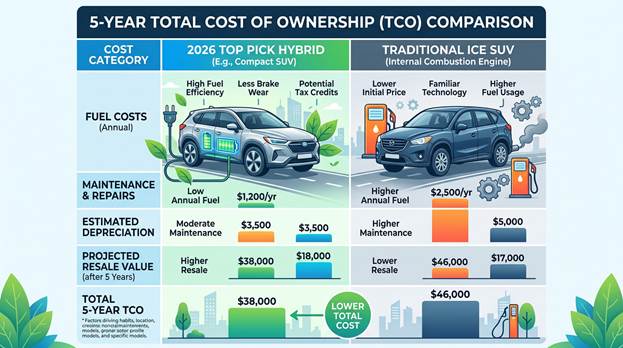
- Look at Total Cost of Ownership (TCO): Do not be fooled by the sticker price. Between the volatility caused by the Iran war and the lower maintenance costs of electrified systems, the TCO of an EV or Hybrid is now significantly lower than a comparable ICE vehicle over a 5-year period.
Wrapping Up
The 2026 Consumer Reports Top Picks list is a watershed moment for the automotive industry. By excluding pure ICE vehicles entirely, CR has signaled that the era of the "standard" gasoline car is over. This shift is being driven by a perfect storm: the technological superiority of electrified powertrains, the harsh reality of energy insecurity brought on by the Iran war, and a consumer base that is increasingly wary of the long-term value of obsolete technology.
For car companies, the message is clear: innovate or evaporate. For consumers, the message is equally stark: the future is electrified, and the safest place for your money is in a vehicle that embraces that reality. The "Great Electric Pivot" is no longer a prediction—it is the documented present.
Disclosure: Images rendered by Artlist.io
Rob Enderle is a technology analyst at Torque News who covers automotive technology and battery developments. You can learn more about Rob on Wikipedia and follow his articles on TechNewsWord, TGDaily, and TechSpective.
Set Torque News as Preferred Source on Google
Follow us today...







Comments
If it came from consumer…
Permalink
If it came from consumer report, you know its not true!