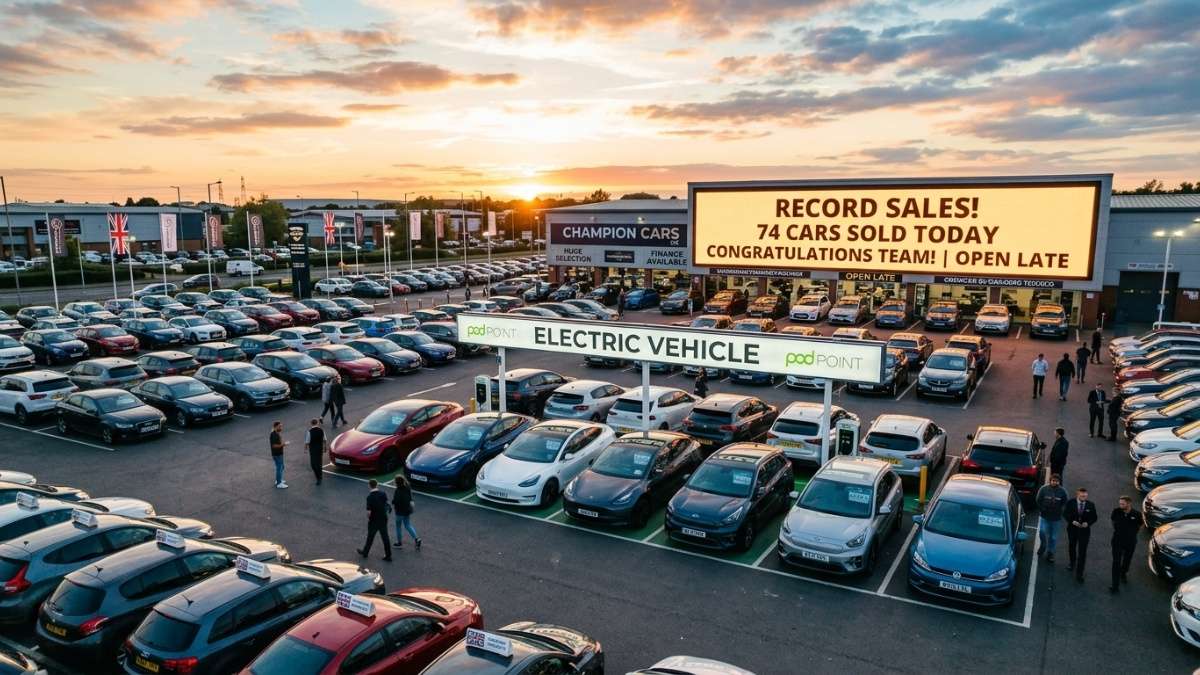

The automotive world is shifting, and if you listen closely, the roar of the internal combustion engine is being replaced by the quiet hum of a secondary market finding its feet. For years, skeptics argued that electric vehicles (EVs) would collapse on the used market—victims of battery degradation fears and proprietary tech obsolescence. But the latest data from the https://www.smmt.co.uk/tells a very different story. In fact, used BEV (Battery Electric Vehicle) transactions in the UK have surged by 71% in the first quarter of 2024 alone, outperforming every other powertrain category.
I’ve long argued that technology markets follow a predictable curve. We are moving out of the "Early Adopter" phase and into the "Early Majority," where pragmatism outweighs the "cool factor." As someone who drives a 2022 Audi E-Tron GT, I can tell you firsthand: the transition is seamless when the tech is right. I love my E-Tron; it’s a masterpiece of engineering that proves EVs don't have to be sterile. But while I bought into the dream early, the rest of the UK is now buying into the reality of the used market because the price-to-performance ratio has finally hit the "sweet spot."
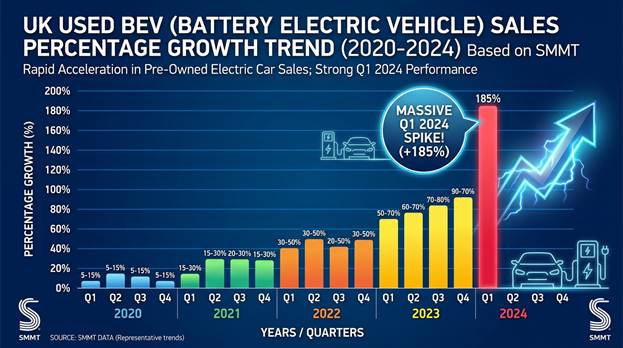
Why the UK Used EV Market is Exploding Right Now
The primary driver here isn't just environmental consciousness; it’s cold, hard economics. A few years ago, used EVs were priced prohibitively high because supply was nonexistent. Today, we are seeing a massive influx of ex-fleet and lease vehicles hitting the forecourts. These are three-to-four-year-old cars that have already taken their biggest depreciation hit, making them significantly more accessible to the average family. Recent analysis from Zapmap highlights that as these vehicles enter their second and third lives, the total cost of ownership (TCO) becomes undeniably superior to petrol equivalents.
Furthermore, the UK’s Infrastructure is finally catching up—or at least appearing to. With the expansion of the Ultra Low Emission Zone (ULEZ) in London and similar Clean Air Zones in cities like Birmingham and Bristol, the "cost of entry" for internal combustion is rising. For the average commuter, a used EV isn't just a statement; it's a tax hedge. According to Transport & Environment, the UK’s used EV market is growing faster than the new market, largely because the price parity on the second-hand lot has already been achieved.
The Winners and Losers of the Secondary Forecourt
Not all EVs are created equal in the eyes of the British used buyer. The clear winners are the "Practical Pioneers." The Nissan Leaf and the Renault Zoe continue to move quickly because they represent the entry point of the market. They are the "Volkswagen Beetles" of the electric age—simple, affordable, and understood by local mechanics.
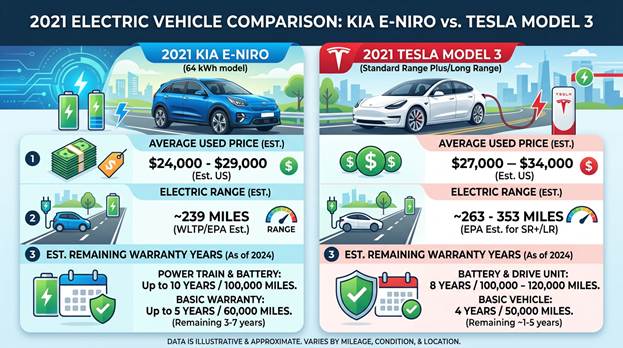
The Tesla Model 3 is also seeing a massive secondary surge. Because Tesla frequently updates its software over the air, a 2021 Model 3 feels significantly more modern than a 2021 Jaguar I-PACE. This "future-proofing" is a critical metric for used buyers who fear their car will become a "brick" in five years. Market data from AutoVISTA Group indicates that Tesla's aggressive new-car price cuts have actually helped stimulate the used market by resetting price expectations across the board.
Conversely, we see "The Losers" - high-end early adopters like the early Audi e-tron (the SUV version, not my GT) and the Jaguar I-PACE. These vehicles suffer from high original MSRPs and relatively inefficient range-to-weight ratios compared to newer Korean offerings. Buyers are wary of the out-of-warranty repair costs on these complex luxury machines, leading to steeper depreciation.
The UK vs Europe: A Tale of Two Trajectories
While the UK is celebrating record used sales, how do we compare to our continental neighbors? The UK is currently punching above its weight in the used sector but lagging in new-car incentives. Countries like Norway and France have more mature ecosystems because their governments incentivized the "new" market much more aggressively five years ago. The European Automobile Manufacturers’ Association (ACEA) notes that while the UK’s used market is vibrant, our new-car BEV market share is slightly more volatile compared to the steady growth in the EU.
However, the UK is unique in its rapid price correction. According to Auto Trader’s Price Index, UK used EV prices have fallen faster than in Germany or France. While this is painful for original owners, it has made the UK one of the most vibrant used EV hubs in the world. We are effectively "democratizing" the EV faster than our neighbors because our market-driven price drops are so aggressive.
The Rise of the EV Conversion Trend
An interesting side-effect of this maturing market is the rise of EV conversions. As early "donor" EVs like the first-gen Nissan Leaf or crashed Tesla Model S units become cheaper, we are seeing a cottage industry explode in the UK. Companies are taking the guts of these crashed or high-mileage EVs and stuffing them into classic Defenders, Minis, and E-Types.
This isn't just a hobby; it’s a sustainability play. It bridges the gap between the soul of a classic British car and the reliability of a modern powertrain. Outfits like Electrogenic and Lunaz are leading this charge, but the "trickle down" effect is now reaching smaller garages. For most, the "conversion" that matters is moving their daily driver from a diesel pump to a Type 2 charger.
The Best Value Used EVs in the UK Today
If you are looking to enter the market, there are specific "sweet spots" where technology meets value:
- 2020-2021 Kia e-Niro / Hyundai Kona Electric: These are the gold standard for used value. They offer nearly 300 miles of real-world range and are still often covered by manufacturer warranties—Kia’s 7-year warranty is a massive safety net for used buyers. What Car? consistently rates these as the best used buys for reliability.
- 2022 Audi E-Tron GT: I’m biased, but the 2022 models have seen significant depreciation from their £100k+ starting prices. You are getting Porsche Taycan DNA for a fraction of the cost, making it the performance bargain of the decade.
- 2019-2020 BMW i3 (120Ah): The i3 is a future classic. Its carbon fiber chassis means it won't rust, and the 120Ah battery provides a solid 160-180 miles of range for city dwellers.
Wrapping Up
The surge in UK used EV sales is the clearest indicator yet that the electric transition is no longer a government mandate—it’s a consumer choice driven by value. As prices stabilize and the "fear of the unknown" regarding battery health is debunked by real-world longevity data from groups like Geotab, the secondary market is providing the volume necessary to meet climate goals. Whether you’re looking for a bargain Zoe or a high-performance GT like mine, the UK market is currently a buyer’s paradise. The "Electric Revolution" didn't happen when the cars were new; it's happening right now on the used car lot.
Disclosure: Images rendered by Artlist.io
Rob Enderle is a technology analyst at Torque News who covers automotive technology and battery developments. You can learn more about Rob on Wikipedia and follow his articles on TechNewsWord, TGDaily, and TechSpective.
Set Torque News as Preferred Source on Google
Follow us today...