
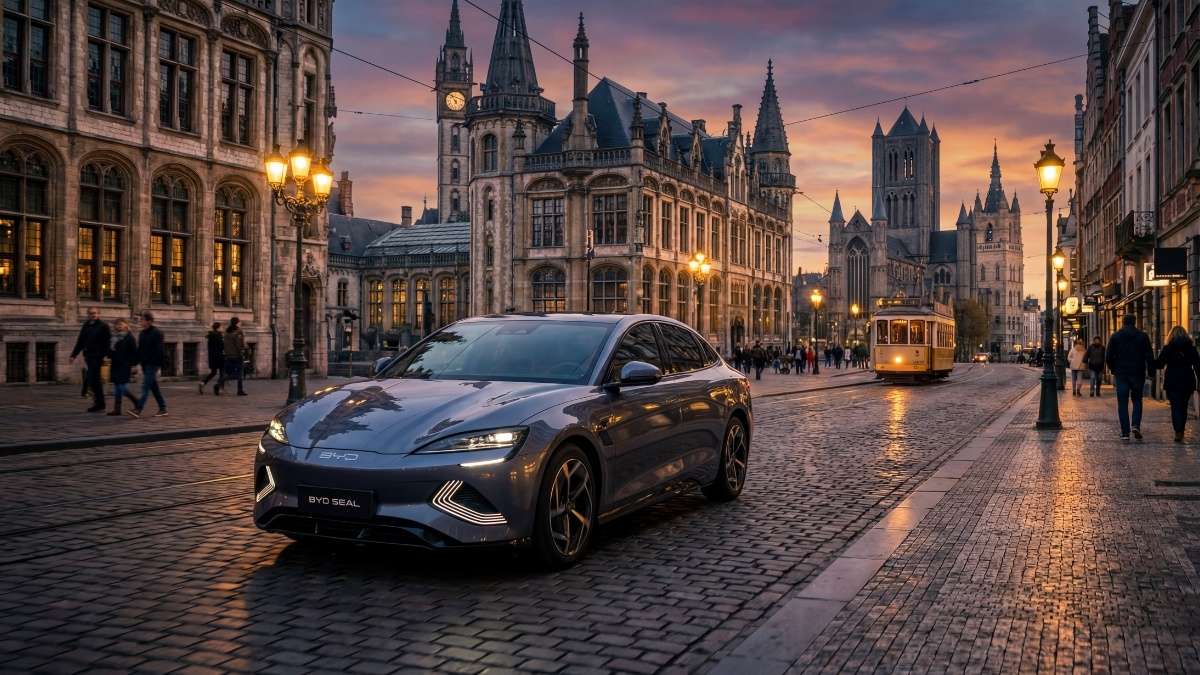

In the world of technology and automotive convergence, we often talk about "disruption." But what BYD is doing right now isn’t just disruption; it’s a wholesale re-architecting of the global automotive landscape. If you are sitting in a boardroom at Volkswagen, Stellantis, or Renault right now, you aren't just worried—you are likely in an "emergency" strategy session.
According to a report by Nikkei Asia, BYD has successfully overtaken Tesla in sales across more than 20 key markets, including Thailand, Brazil, and Israel. This isn't a fluke of regional policy; it is the result of a decades-long vertical integration strategy that makes Tesla look like a boutique assembly shop and makes legacy European OEMs look like they are still fighting the last war.
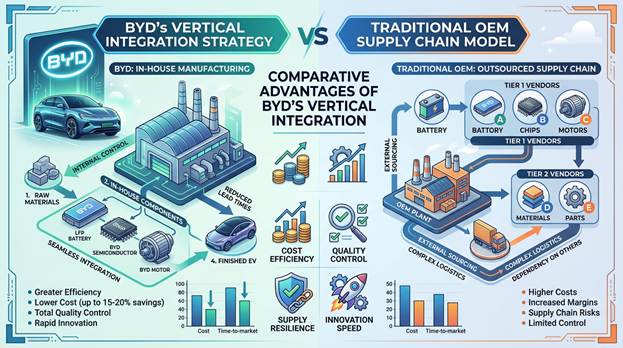
From Batteries to Dominance: The History of BYD
To understand why BYD is winning, you have to look at its DNA. Unlike Ford or GM, which started with internal combustion engines (ICE), or Tesla, which started with a luxury sports car, BYD started in 1995 as a rechargeable battery manufacturer. Founded by Wang Chuanfu, the company’s initial focus was competing with Japanese giants in the cellular phone market.
This foundation is critical. While other car companies view the battery as a "part" to be sourced from a supplier like CATL or LG, BYD views the car as a wrapper for their battery technology. This led to their acquisition of the Qinchuan Machine Works in 2003, signaling their entry into the automotive world. For years, Western critics laughed at their early models. But while the West was laughing, BYD was perfecting the Blade Battery, a lithium-iron-phosphate (LFP) chemistry that is more stable, cheaper, and longer-lasting than the nickel-cobalt-manganese (NCM) cells preferred by early EV adopters.
BYD’s strategy has always been about extreme vertical integration. They don't just make the car; they make the batteries, the semiconductors, the motors, and even the electronics. This level of control allows them to iterate faster than any company in history, moving from design to production in a fraction of the time required by a legacy OEM.
The Market Leaders: Luxury Quality at Commodity Prices
The cars fueling this global expansion are not "cheap" in the traditional sense; they are high-value. Three models, in particular, are dismantling the competition:
- The BYD Atto 3 (Yuan Plus): This is the spearhead of their global export. It’s a compact SUV that offers a premium-feeling interior with "guitar string" door pockets and a rotating touchscreen. In markets like Australia and Germany, it offers a range and safety suite that rivals the VW ID4 but at a significantly lower price point.
- The BYD Dolphin: This is perhaps the most dangerous car for European legacy makers. It is an affordable hatchback that provides a real EV experience without the "budget" feel. It’s priced to compete with entry-level ICE vehicles, effectively removing the "EV tax" for the average consumer, as noted in recent Euro NCAP safety ratings.
- The BYD Seal: This is BYD’s direct answer to the Tesla Model 3. Utilizing "Cell-to-Body" (CTB) technology, where the battery is integrated into the vehicle structure, the Seal offers superior rigidity and handling. In many European reviews, the Seal is being praised for having better build quality and a more "logical" interior than the minimalist Tesla cabin.
By offering these vehicles with 5-star safety ratings and price tags that often undercut domestic rivals by 15-20%, BYD isn't just asking consumers to "go green"—they are making it the only financially sensible choice.
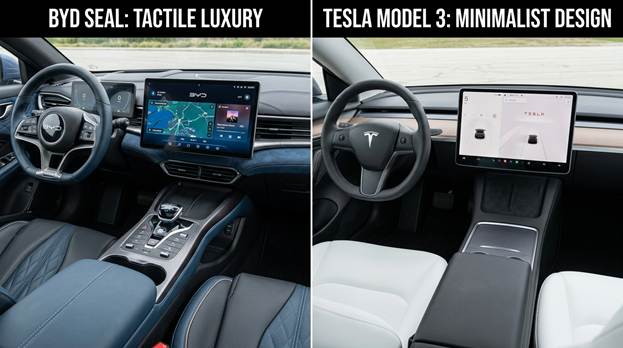
BYD vs. Tesla and the Legacy Guard
When we evaluate BYD through the lens of E.E.A.T. (Experience, Expertise, Authoritativeness, and Trustworthiness), we see a shifting paradigm.
Value: Tesla has historically relied on software and its massive Supercharger network to justify its premium. However, BYD's manufacturing scale allows them to offer hardware features—like 360-degree cameras and heat pumps—as standard equipment while Tesla often hides features behind software paywalls or omits them for cost-cutting.
Reliability: BYD’s use of LFP chemistry in their Blade Battery is a masterstroke for reliability. LFP batteries can be charged to 100% daily without the degradation seen in NCM batteries. This gives BYD a long-term "trust" advantage in the used car market, a metric where Tesla has struggled due to varying build quality and high repair costs, a common theme in Consumer Reports reliability rankings.
Customer Satisfaction: In Southeast Asia and South America, BYD is winning because they are building physical dealership networks. While Tesla maintains a "digital-first" service model that can leave customers frustrated with long lead times, BYD is partnering with established local distributors. This "boots on the ground" approach builds trustworthiness faster than a mobile app ever could.
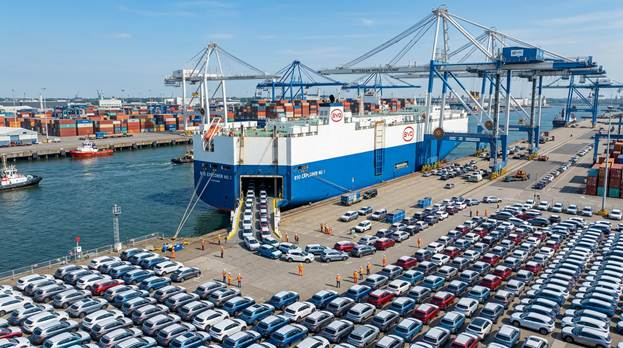
The European "Emergency": Why the Empire is Striking Back
The sudden dominance of BYD in 22 markets has forced the European Commission to launch an anti-subsidy investigation. Legacy OEMs are realizing that they cannot compete on price because they don't own their supply chains. A Volkswagen or a Renault has to buy batteries from a third party, pay a margin, and then fit them into a platform that was often originally designed for an engine.
BYD’s aggressive export strategy involves their own fleet of massive "Ro-Ro" (Roll-on/Roll-off) ships, like the BYD Explorer No. 1, which can carry 7,000 vehicles at a time. This level of logistical independence means BYD can bypass the shipping bottlenecks that plague other manufacturers.
Wrapping Up
The rise of BYD is a testament to the power of long-term strategic planning over short-term quarterly gains. By focusing on battery technology for two decades before trying to dominate the global car market, BYD has built a vertical fortress that is currently impregnable to legacy OEMs.
Tesla may still hold the crown for "cool factor," but BYD is winning the "war of the masses." They have proven that they can deliver reliable, high-tech, and affordable EVs to every corner of the globe. For the legacy manufacturers in Europe and the U.S., the "emergency" meetings are justified. The window to compete with BYD on a hardware and cost basis is closing rapidly.
Disclosure: Images rendered by Artlist.io
Rob Enderle is a technology analyst at Torque News who covers automotive technology and battery developments. You can learn more about Rob on Wikipedia and follow his articles on TechNewsWord, TGDaily, and TechSpective.
Set Torque News as Preferred Source on Google
Follow us today...






