
For nearly a century, the automotive dashboard has served as the primary interface between man and machine, yet it has rarely been a masterclass in ergonomics. In the early days of the "Golden Age" of motoring, the dashboard was less about information and more about lifestyle experimentation. We saw peak eccentricity in the 1950s and 60s with features like the Chrysler Highway Hi-Fi—a literal record player mounted under the dash that used proprietary extra-fine-groove discs to keep the music playing over bumps. There were even brief experiments with dash-mounted coffee makers and mobile bars, reflecting a time when "safety" was a secondary concern to luxury.
As we moved into the 1980s, the industry pivoted toward "high-tech" functionality, giving us the era of the talking car. While meant to be helpful, the synthesized voices barking that "your door is ajar" or "your fuel is low" quickly became one of the most lampooned and annoying features in automotive history. These "voice idiot lights" were the first sign that car companies didn’t quite know how to manage the increasing amount of data being fed to the driver.
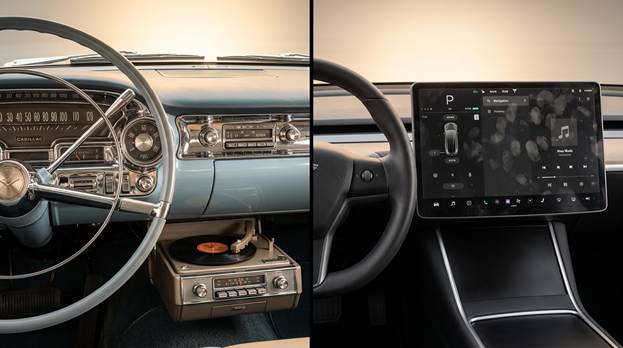
Fast forward to today, and we are in a state of interface anarchy. We have moved from the cluttered physical buttons of the 2000s to a "screen-only" philosophy that is arguably worse. Drivers are now forced to navigate three layers of sub-menus on a fingerprint-smudged iPad-style tablet just to adjust the fan speed or heated seats. The lack of consistency between manufacturers—and even between models in the same lineup—is more than just annoying; it’s a cognitive load issue that creates genuine safety concerns. A revolutionary change isn’t just welcome; it’s long overdue.
The Powerhouse Partnership Behind Avatr
The Avatr Vision Xpectra, recently revealed at the IAA Mobility show in Munich, represents a seismic shift in how we think about the cabin. To understand why the Xpectra is different, you have to look at its pedigree. Avatr is not a scrappy startup building cars in a garage; it is a "national team" joint venture between Changan Automobile, lithium-ion battery giant CATL, and the global technology powerhouse Huawei.
This partnership is critical. While traditional OEMs struggle with software, Huawei brings a decade of experience in user interface (UI) and user experience (UX) design. CATL provides the energy density required to power high-energy-demand electronics without sacrificing range. This synergy allows the Xpectra to bypass the "dumb screen" phase of automotive design and move straight into a unified, intelligent environment. This isn’t a car company trying to write code; it’s a tech company building a mobile living space.
Xpectra and the End of the Dashboard as We Know It
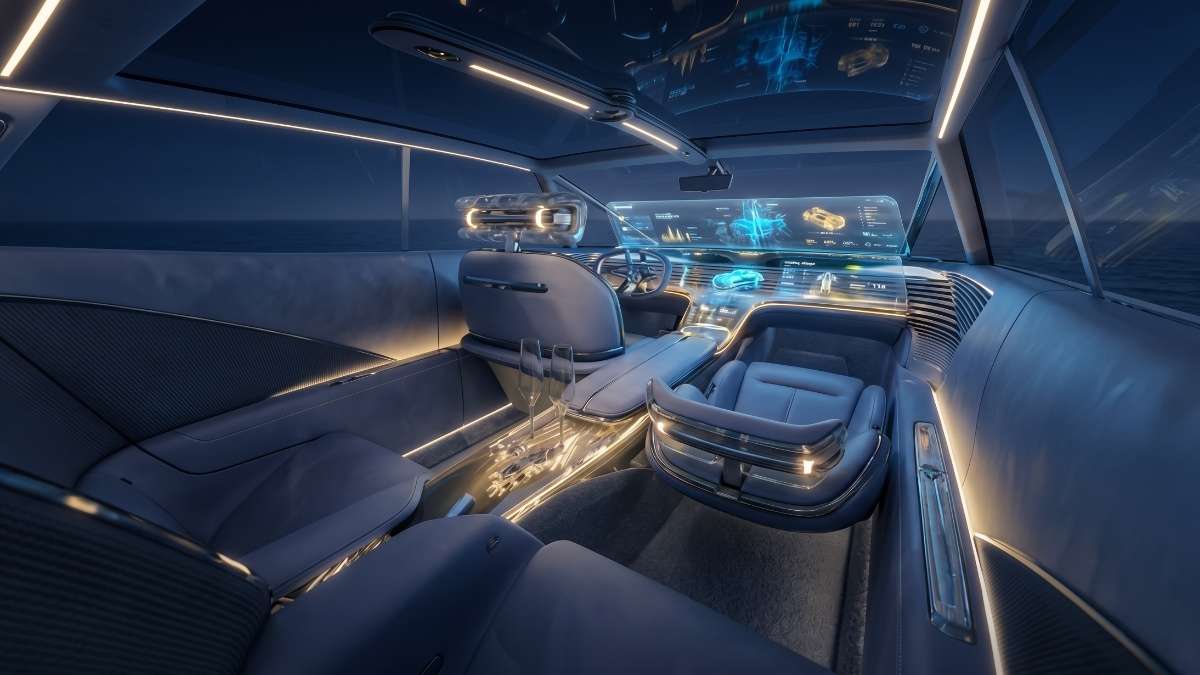
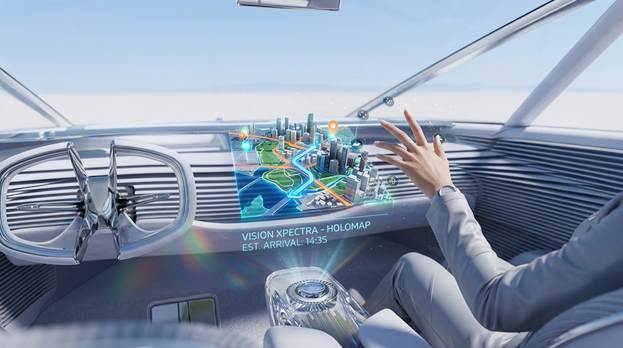
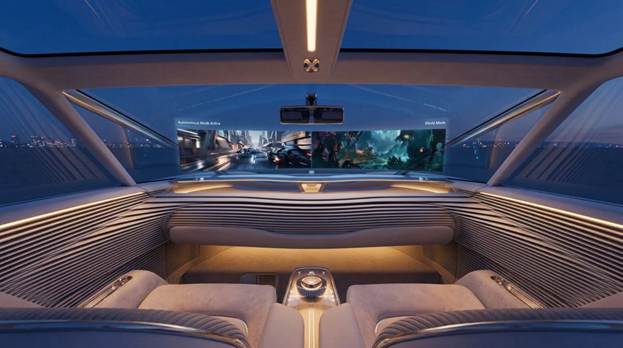
The centerpiece of the Vision Xpectra is the "Halo Screen" and its accompanying holographic projection system. This technology effectively kills the traditional dashboard. Instead of a physical plastic slab with screens embedded in it, the Xpectra uses a massive, pillar-to-pillar display combined with advanced holographic overlays that appear to float in the space between the driver and the windshield.
Why is this the future? As we move toward Level 3 and Level 4 autonomous driving, the driver’s role changes from an active pilot to a supervisor and, eventually, a passenger. In an autonomous world, a fixed dashboard is an obstacle. The Xpectra’s holographic interface can "re-skin" itself based on the driving mode. When you are driving, the information is focused on the road, projected in a way that doesn’t require your eyes to refocus from the distance to a near screen. When the car takes over, the dashboard transforms into a cinema or a productivity suite.
The holographic element addresses the "button vs. screen" debate by using mid-air haptics and gesture control. Imagine reaching out to adjust the temperature and feeling a "click" in the air, without ever having to look away from the road or touch a physical surface. It provides the tactile feedback of a physical button with the infinite flexibility of a digital interface.
Advanced Features: China’s Aggressive Tech Adoption
The Xpectra prototype isn't just about the screen. It features a "cocoon" seating arrangement where the seats can rotate and recline into a zero-gravity position, and an exterior design that uses "E-mirror" cameras instead of traditional glass.
One must acknowledge that China is currently the world’s laboratory for automotive tech. While Western manufacturers are often slowed by legacy supply chains and a "wait and see" approach to consumer sentiment, Chinese firms like Avatr are deploying LiDAR, 800V fast-charging, and AI-driven cockpits at a breakneck pace. The features we see in the Xpectra—such as the integrated AI assistant that can monitor the health and stress levels of the occupants—are much closer to production than many Westerners realize. In China, "concept" cars often reach the showroom floor with 80% of their "impossible" features intact within 24 months.
Projecting the Future: When Will We Drive It?
Based on Avatr’s rapid production cycle (they have already moved from the Avatr 11 to the 12 and 07 in record time), we can expect the design language and the core holographic technology of the Xpectra to begin appearing in production models by late 2027.
When this happens, the driving experience will undergo its most significant transformation since the invention of the automatic transmission. We will stop "operating" cars and start "inhabiting" them. The frustration of hunting for a physical volume knob or navigating a laggy touchscreen will be replaced by an intuitive, spatial interface that anticipates our needs. The dashboard will cease to be a piece of furniture and will instead become a dynamic, digital atmosphere.
Wrapping Up
The Avatr Vision Xpectra is a loud signal that the era of the "messy" dashboard is ending. By combining the manufacturing muscle of Changan, the battery tech of CATL, and the software brilliance of Huawei, Avatr has created a roadmap for the future of the automotive interior. The holographic interface solves the ergonomic nightmare of the modern touchscreen while preparing us for a future where we are no longer tethered to the steering wheel.
The transition from record players and "door is ajar" voice alerts to floating 3D interfaces has been long and often painful. However, if the Xpectra is any indication, the wait was worth it. The dashboard isn't just evolving; it’s disappearing, replaced by something far more capable and infinitely more elegant.
Disclosure: Images rendered by Artlist.io
Rob Enderle is a technology analyst at Torque News who covers automotive technology and battery developments. You can learn more about Rob on Wikipedia and follow his articles on TechNewsWord, TGDaily, and TechSpective.
Set Torque News as Preferred Source on Google
Follow us today...